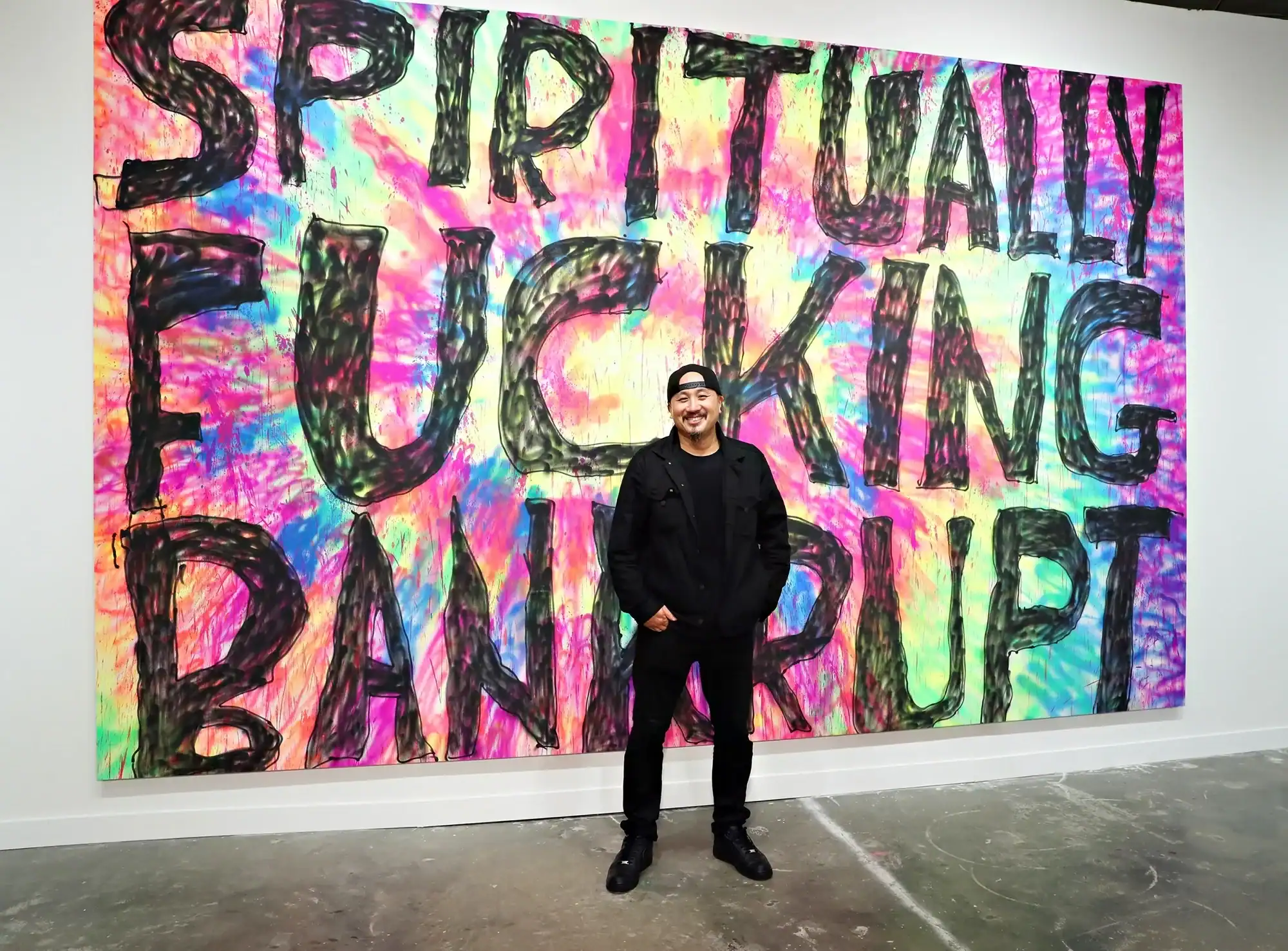
Madsaki: The Artist Making Collectibles That Blur Pop Art and Street
Madsaki is not an easy artist to categorize, and that is precisely the point. Born in Osaka, raised in New Jersey, and now operating out of Tokyo, he occupies a genuinely rare position in the contemporary art world: a Japanese-American artist fluent in both the graffiti-saturated visual language of the American East Coast and the hyper-refined otaku aesthetics of Japan. The result is work that feels simultaneously familiar and disorienting, a quality that serious collectors recognize immediately and casual buyers often miss entirely.
His rise has not been accidental. A long-standing relationship with Takashi Murakami and Kaikai Kiki Co. gave Madsaki institutional credibility at a critical moment. But credibility borrowed from proximity only lasts so long. What has sustained the demand for his work, and pushed certain pieces into genuine secondary market territory, is a cohesive artistic vision that becomes more legible the deeper you look.
The Visual Language: What Madsaki Is Actually Doing
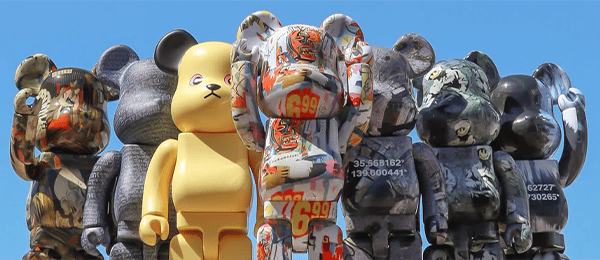
Madsaki works primarily in spray paint and acrylic, and his signature aesthetic involves taking iconic source material, art historical, cinematic, commercial, and rendering it through a deliberately degraded, graffiti-influenced filter. Think blurred edges, dripping paint, spray-can textures applied to subjects that might otherwise belong in a museum. He has repainted Monet, Warhol. He has done Basquiat doing Warhol. The recursion is intentional.
This is not pastiche for its own sake. Madsaki is making a specific argument about reproduction, originality, and cultural transmission. When a kid in New Jersey sees a Basquiat print on a dorm room poster and grows up to spray-paint his own version of it on a Tokyo canvas, what exactly is being communicated? That question sits at the center of his practice.
For collectors, this means the work rewards layered reading. The surface pleasure is real: these are visually striking objects. But the conceptual depth is what separates Madsaki from the hundreds of street-adjacent artists producing superficially similar work in 2024.
The Kaikai Kiki Connection
Murakami’s Kaikai Kiki Co. has functioned as an incubator for a specific kind of artist: technically rigorous, conceptually ambitious, commercially aware without being commercially compromised. Madsaki fits that profile precisely. His affiliation with Kaikai Kiki is not just a marketing relationship. It is an artistic alignment. Both artists are interested in what happens when high art and low culture occupy the same visual space, though they approach that question from very different angles.
The collaborations between the two men have produced some of the most sought-after collectibles in the Kaikai Kiki ecosystem. Which brings us to the objects themselves.
The Collectibles: What to Buy and Why
Madsaki’s collectible output spans prints, posters, skate decks, and collaborative objects. Not all of it is equally significant. Here is how the major categories break down for serious collectors.
Kung Fu Hustle II: Cinema as Raw Material
The Madsaki Kung Fu Hustle II at $600 is the piece in this lineup that most clearly demonstrates Madsaki’s range as a source-material operator. Stephen Chow’s 2004 film is itself a masterwork of genre collision: kung fu cinema, slapstick comedy, Hong Kong nostalgia, and Hong Kong destruction occupying the same frame simultaneously. Madsaki’s engagement with that material is not reverential. It is interrogative.
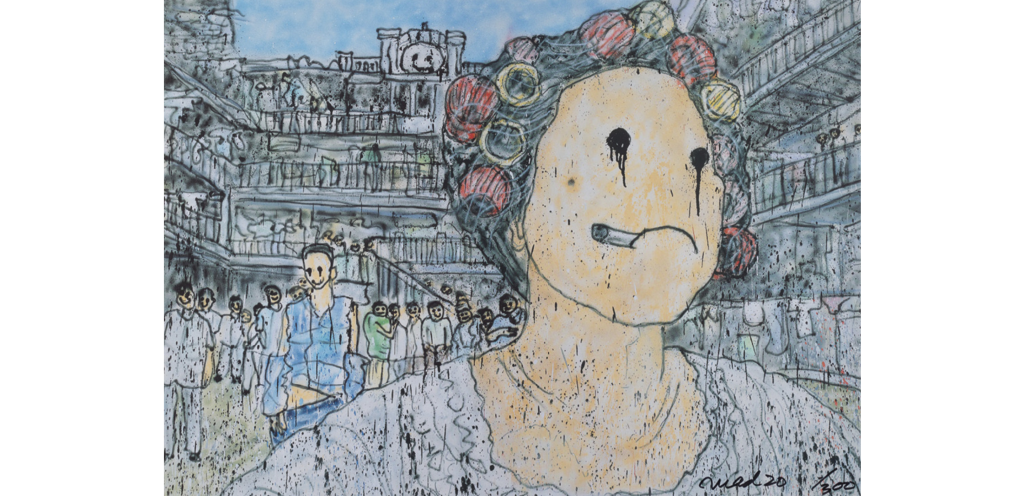
This piece sits in a lineage of work Madsaki has produced engaging with film imagery, particularly Asian cinema, through his spray-paint vocabulary. The $600 price point reflects both the specificity of the subject matter and the signed, editioned nature of the work. For collectors building a Madsaki-focused position, this is a significant piece: it shows the breadth of his source vocabulary beyond the art-historical references he is better known for, and it speaks directly to the cross-cultural biography that makes his practice distinctive.
The Stephen Chow connection also plays well in the Japanese and Hong Kong collector markets, where Kung Fu Hustle maintains genuine cult status. Cross-market appeal matters for long-term value retention.
Studio 2020 Edition Signed Poster
Signed posters occupy a specific and often undervalued niche in the collectibles market. The Madsaki x Studio 2020 Edition Signed Poster at $400 is the kind of document-grade object that serious collectors acquire during an artist’s mid-career ascent, before the institutional retrospectives and the Christie’s appearances that push signed works into different pricing territory entirely.
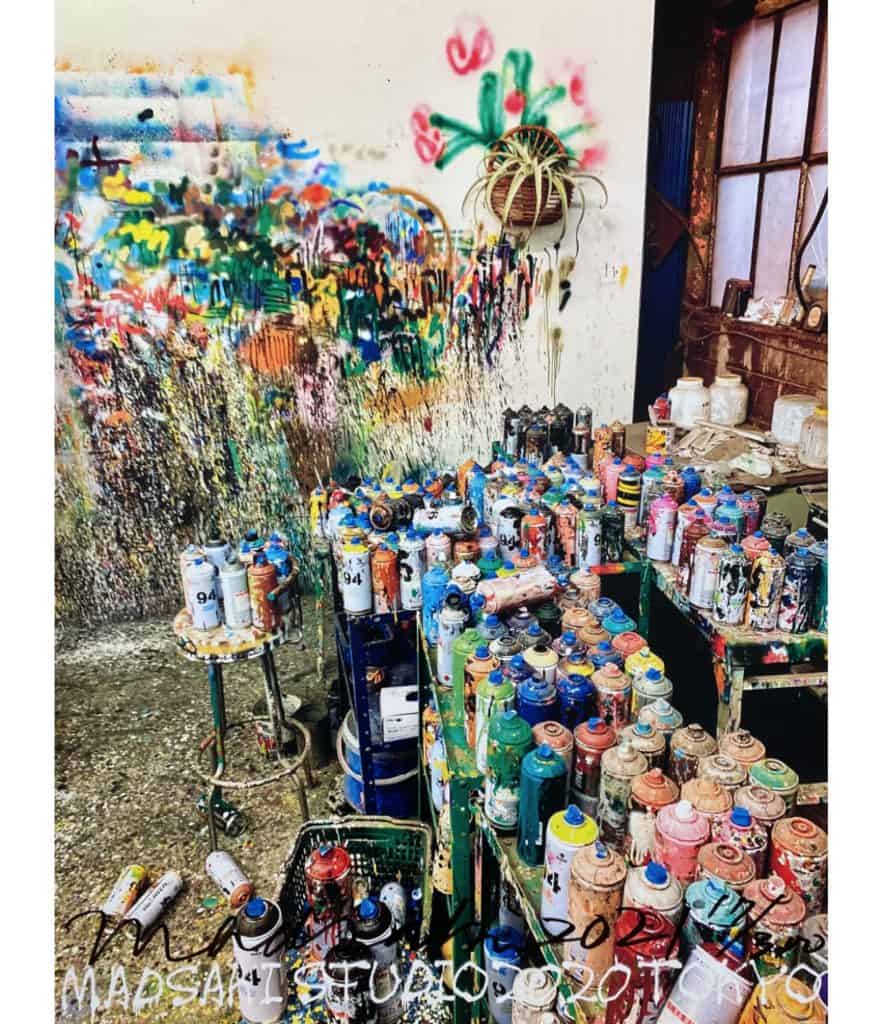
The 2020 edition is significant contextually. Madsaki’s output during this period represented a consolidation of his aesthetic vocabulary, and the Studio collaboration added production values that elevate it above standard print-run poster territory. At $400 signed, this is acquisitive value for anyone building a paper works position in his practice.
The Murakami Ecosystem: Context for Madsaki Collectors
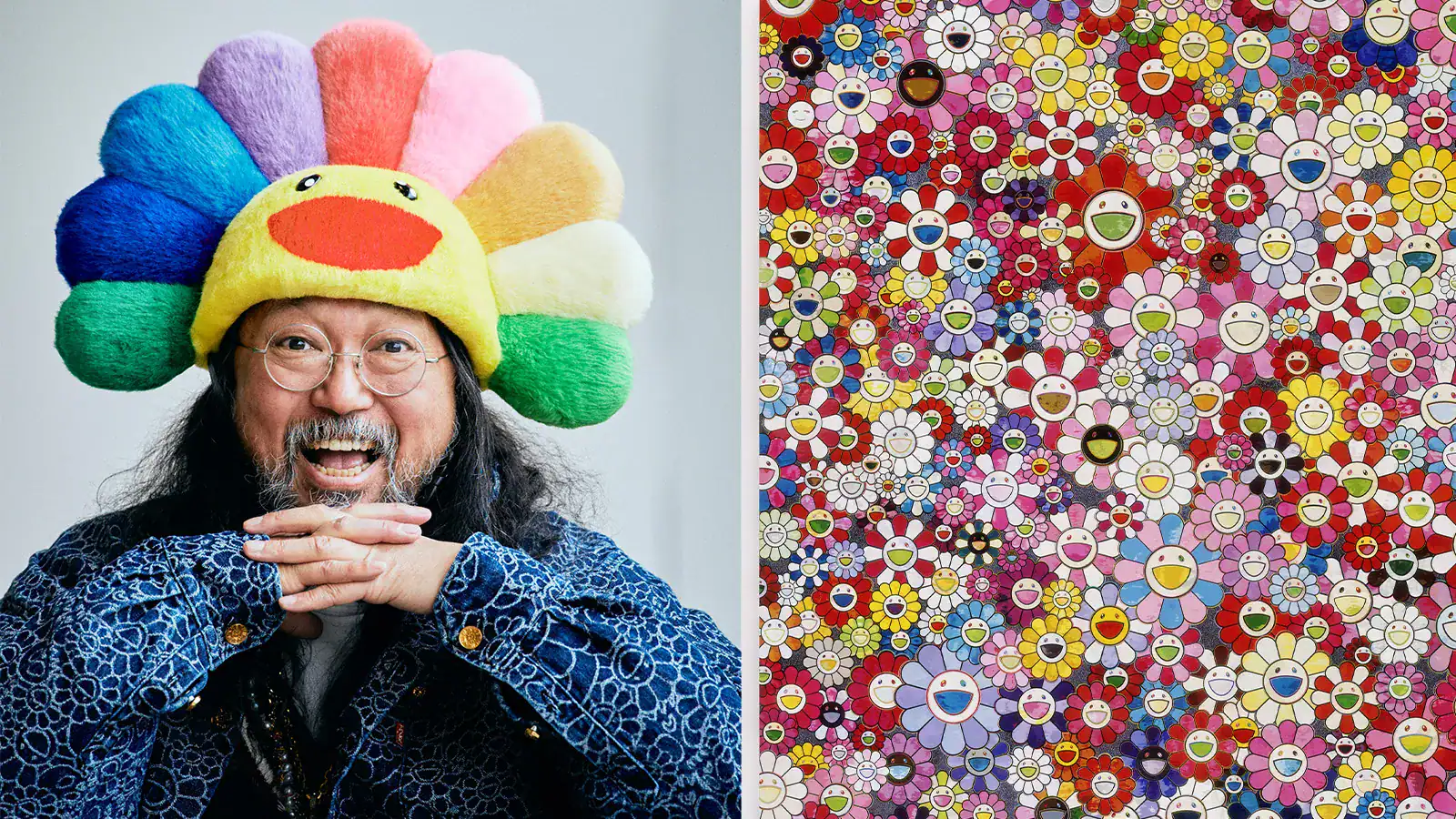
Understanding Madsaki’s market position requires understanding the broader Murakami ecosystem, and that ecosystem has a specific gravity that affects everything orbiting within it. Murakami has built something genuinely unusual: a commercial art infrastructure that produces objects across multiple price points while maintaining the institutional seriousness of a blue-chip artist. Kaikai Kiki releases, Superflat-affiliated objects, and Murakami’s own collaborative outputs function as a connected market with its own internal logic.
The Kaiyodo Takara x Takashi Murakami Superflat Museum at $27 is the logical entry point for collectors approaching this ecosystem from the bottom up. Kaiyodo is not a casual production partner. Their figure work sets a manufacturing standard that most Western toy collaborations cannot match, and the Superflat Museum release represents genuine Murakami-authorized output at an access price. For new collectors, this is how you start building institutional knowledge of what Murakami production quality actually means, which in turn informs how you evaluate Madsaki’s Kaikai Kiki-adjacent work.
Japanese Market Dynamics
The Japanese collector market treats Kaikai Kiki-affiliated artists differently than Western markets do. In Japan, the Superflat movement has genuine art-historical standing. It is taught, debated, and collected with the same seriousness that Western institutions apply to Pop Art. Madsaki benefits from this directly: his affiliation with Murakami gives him credibility with Japanese collectors who might otherwise be skeptical of street-adjacent aesthetics, while his New Jersey background and graffiti fluency gives him legitimacy with Western collectors who might be skeptical of J-pop-influenced visual language.
This dual credibility is not common. It is, arguably, the most valuable thing Madsaki has built beyond the work itself.
Collector Comparison: Madsaki Objects at a Glance
| Object | Price | Edition Type | Market Appeal | Collector Priority |
|---|---|---|---|---|
| Murakami x Madsaki Flower Skate Deck | $250 | Limited collaboration | Street, Japan, art | High: dual-artist value |
| Kung Fu Hustle II Print | $600 | Signed edition | Asia, cinema, art | High: cross-market reach |
| Studio 2020 Signed Poster | $400 | Signed limited | Paper works collectors | Medium-High: career doc |
| Kaiyodo Superflat Museum | $27 | Production figure | Murakami ecosystem | Entry: ecosystem context |
Grading, Condition, and Long-Term Value Considerations
Madsaki prints and posters are not PSA-gradeable objects in the traditional sense, but condition discipline applies as rigorously here as it does in any other collectibles category. For paper works, UV-protective framing is non-negotiable. Madsaki’s spray-paint-influenced aesthetic can make slight foxing or edge wear look intentional at a glance, which is actually a risk for sellers, not a benefit. Informed buyers will always distinguish between intentional aesthetic choices in the work and condition degradation in the object.
For skate decks, the wall-mount-versus-grind question answers itself at the collector level. Any Murakami-adjacent deck being used for skating is not a collectible, it is equipment. Keep it sealed, keep it flat, keep it out of humidity. The graphics on collaboration decks at this tier can show stress cracking along the nose and tail if stored improperly, which meaningfully affects resale value.
Signed works carry their own authentication considerations. Kaikai Kiki collaborations and Madsaki’s own signed editions have a reasonably clean provenance chain when purchased through legitimate channels. The secondary market for signed Madsaki work is still developing, which means now is the time to acquire with clean paperwork rather than later when documentation becomes contested.
Where Madsaki Sits in Five Years
Predicting secondary market trajectory is always partially speculation. But the indicators for Madsaki are structurally positive. He has institutional relationships that provide sustained visibility. His work is in genuine collections, not just flipping portfolios. The cross-cultural biography is increasingly relevant as the art market becomes more globally integrated. And the aesthetic vocabulary he has developed is specific enough to be identifiable but broad enough to sustain a long career without repetition fatigue.
The comparison point that gets raised most often is KAWS, specifically early KAWS before the Brian Donnelly brand overtook the Brian Donnelly artist in the public imagination. Madsaki is not KAWS. The practices are different. But the structural position, a street-credentialed artist with institutional art world backing producing objects across multiple price points, is genuinely analogous. Collectors who paid attention to that structure in 2005 did not regret it.
Building a Madsaki Collection: The Practical Framework
Start with the Murakami collaboration objects. They anchor any Madsaki collection with the strongest possible institutional context and give you a reference point for evaluating his solo work. The Flower Skate Deck at $250 is the obvious starting position. You can find it at Rare Inventory alongside the broader Kaikai Kiki-affiliated objects that provide essential context.
From there, move into the signed paper works. The Studio 2020 poster and the Kung Fu Hustle II print represent two different vectors of Madsaki’s practice: the one is more formally art-world oriented, the other more culturally specific in its source material. Both belong in a serious collection of his work.
Resist the impulse to over-diversify early. Madsaki’s market is still consolidating, and depth in a focused position is more strategically sound than breadth across every release. Five strong Madsaki objects in excellent condition with clean provenance are worth more, financially and intellectually, than fifteen pieces of varying quality and documentation.
The artists who get collected seriously over the long term are the ones who are asking real questions with their work. Madsaki is asking real questions. That is the foundation everything else sits on.
Frequently Asked Questions
Is Madsaki considered a street artist or a fine artist?
Both categories apply, and Madsaki operates deliberately in the overlap. His technical background is graffiti and street art. His institutional positioning, through Kaikai Kiki and Murakami, is firmly fine art. The work itself refuses to resolve the tension, which is part of its value proposition.
How important is the Murakami connection to Madsaki’s collectible value?
Significant but not determinative. The Murakami relationship provided early institutional visibility and access to serious collectors. But Madsaki’s secondary market has developed enough that his solo work now commands attention independent of that affiliation. The collaboration pieces carry both names’ market weight, which is additive.
Are Madsaki skate decks worth collecting compared to his prints?
Different objects serve different functions in a collection. The skate deck format is more accessible as an entry point and has strong visual presence as a display object. Signed prints and posters carry more traditional art-market credibility and tend to appreciate differently. Serious collectors should hold both formats rather than treating them as substitutes.
What should I know about buying Madsaki works on the secondary market?
Provenance documentation is essential. Signed works without clear chain of custody from original release are a risk. Condition assessment for paper works should account for UV exposure and humidity damage. For skate decks, check for graphic stress cracks along the edges. Buy from established platforms with authentication standards wherever possible.
How does the Japanese collector market affect Madsaki’s pricing?
The Japanese market applies significant premium to Kaikai Kiki-affiliated objects and to work with clear Superflat movement credentials. Madsaki’s dual American-Japanese identity and his Murakami affiliation make his work attractive to Japanese collectors who might not engage with purely Western street art. This cross-market demand provides a floor that purely domestic Western pricing does not.