Murakami Stepping on the Tail of a Rainbow: What Makes This Set Rare
Takashi Murakami’s “Stepping on the Tail of a Rainbow” isn’t just a print set. It’s a document of a specific cultural moment, a precisely engineered collectible, and one of the more misunderstood releases in the secondary market. Collectors who dismiss it as decorative merch are making an expensive mistake, because the secondary pricing on this box has held remarkably steady while comparable Murakami editions from the same era have fluctuated wildly. Understanding why requires a serious look at how the set was produced, what it contains, and where it sits in Murakami’s broader catalog strategy.
Edition Architecture: What You’re Actually Buying
The “Stepping on the Tail of a Rainbow” box set was designed as a self-contained collector object from inception. This is not a gallery print that got packaged after the fact. Murakami and his team at Kaikai Kiki structured the release around the box itself as a primary artifact, meaning the packaging, the sequencing, and the tactile experience of unboxing are all load-bearing elements of the collectible’s identity.
The print set draws on Murakami’s long engagement with the Japanese folklore tradition, specifically the 1943 wartime propaganda film “Tora no O wo Fumu Otokotachi” (The Men Who Tread on the Tiger’s Tail), which itself adapted the Noh play “Ataka.” Murakami has publicly addressed his complicated relationship with Japan’s wartime visual culture and how it threads through his practice. The “rainbow” framing shifts the source material away from its militarist origins into the Superflat vocabulary: saturated color fields, flattened perspective, characters suspended between innocence and dread. This is not a decorative choice. It’s a philosophical one, and it’s part of why serious Murakami collectors treat this set with institutional respect.
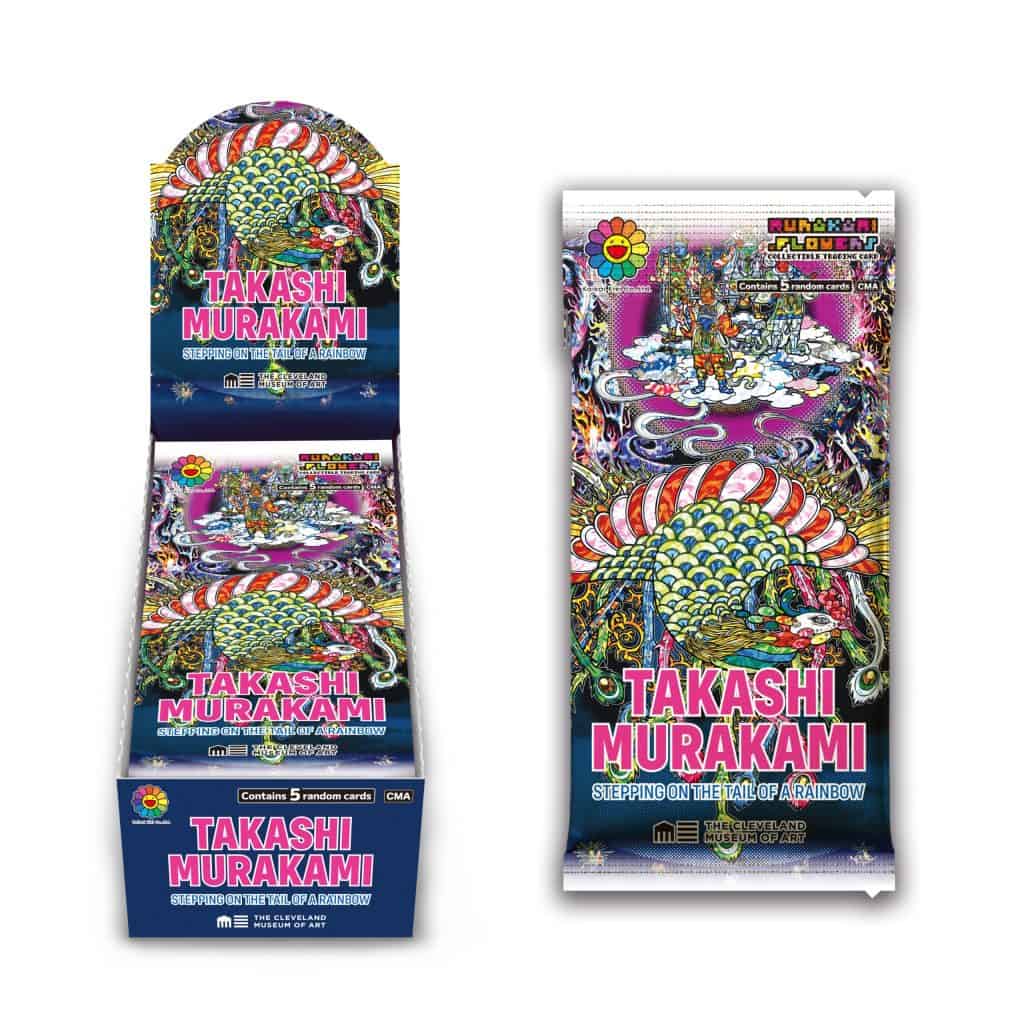
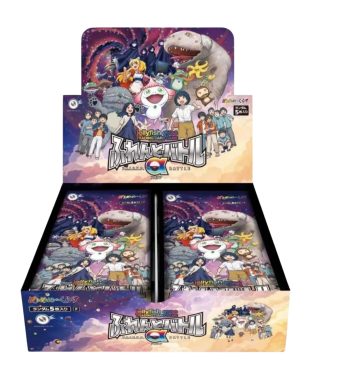
The box itself commands attention at retail. The Takashi Murakami Stepping on the Tail of a Rainbow Box is available at Rare Inventory for $290, which positions it as a premium but accessible entry point relative to Murakami’s gallery-tier works that routinely clear five figures at auction.
Rarity Mechanics: Edition Size, Pull Rate, and Market Scarcity
How Edition Structure Affects Value
Most collectors understand that lower edition numbers equal higher prices. What fewer collectors think about carefully is how distribution channels affect functional scarcity independent of the print run itself. Murakami releases through Kaikai Kiki tend to be geographically concentrated, with the heaviest initial allocation going to Japan, specifically to Murakami’s domestic audience via the Geisai network, gallery partners, and the Kaikai Kiki online shop. Western collectors who wanted the set at retail were, in many cases, paying import premiums from day one.
This matters for the secondary market because it means the American and European float, meaning the actual supply of units available to non-Japanese collectors, is significantly smaller than the total edition size suggests. When Japanese collectors hold, which they historically do on heritage Murakami pieces, the effective supply for the global secondary market tightens substantially.
Condition Grading and What PSA Means for Print Sets
PSA’s print grading criteria apply here in ways that box set collectors sometimes underestimate. The box itself is gradeable as a distinct object. Spine wear, corner compression, and surface scuffing on the exterior all factor into a box set’s condition grade before you even consider the prints inside. PSA 9 examples of premium Murakami print packaging are uncommon because the boxes were designed to be visually striking but not structurally robust. The materials prioritize aesthetics over archival durability.
For the prints themselves, the grading criteria follow standard fine art print assessment: consistent ink density, absence of foxing, clean margins, no handling creases. Murakami prints from Kaikai Kiki typically use high-quality paper stock, but humidity-sensitive and prone to micro-warping if stored without consistent climate control. Collectors in Tokyo deal with this constantly given seasonal humidity swings. An ungraded set sourced from a private Japanese collection should be examined under raking light before any purchase commitment.
Authentication: Spotting Legitimate Kaikai Kiki Production
Official Markers and Documentation
Authentic Kaikai Kiki editions carry specific production markers that become second nature to experienced collectors. The colophon information, meaning the edition statement, copyright line, and Kaikai Kiki Co. Ltd. imprint, follows a consistent formatting convention. Any deviation in font weight, spacing, or the precise rendering of the Kaikai Kiki logo is an immediate red flag.
This is not something you can assess from photographs, which is why physical inspection matters. Dealers who refuse to allow UV examination of signed Murakami works are giving you information about their inventory.
The box set format also has specific structural tells. The interior fitting, the way prints are cradled within the packaging, reflects Kaikai Kiki’s meticulous production standards. Counterfeit sets that surface occasionally in the gray market tend to show inconsistencies in the interior construction: ill-fitting compartments, slightly off-dimension prints, paper weights that don’t match the originals.
The Japanese Market Nuance
Japan’s collector culture treats Murakami differently than the Western market does, and understanding this gap is essential for anyone sourcing pieces internationally. In Japan, Murakami is simultaneously a fine art figure, a pop culture institution, and a design collaborator. This means his works circulate through channels that Western collectors don’t always monitor: estate sales, Mercari Japan listings, Yahoo Auctions Japan, specialty art resellers in Nakameguro and Daikanyama.
The Yahoo Auctions Japan pipeline is particularly relevant because it’s where Japanese collectors offload pieces during portfolio rebalancing, and the prices don’t always reflect Western secondary market awareness. Arbitrage opportunities exist here, but they come with authentication risk because the auction format doesn’t provide the same verification infrastructure as established dealers. If you’re sourcing from Japan directly, either work with a trusted proxy or factor the cost of post-purchase authentication into your acquisition budget.
Comparative Market Positioning
| Item | Edition Type | Primary Market Price | Liquidity | Authentication Complexity |
|---|---|---|---|---|
| Stepping on the Tail of a Rainbow Box | Limited print set | $290 | Medium-High | Moderate |
| Billie Eilish x Murakami UNIQLO UT Tee | Mass collaboration | Retail | High | Low |
| Murakami Flower Print (Standard Gallery Ed.) | Gallery edition | $800-$2,500+ | Medium | High |
| Kaikai Kiki Artbook (Standard) | Trade publication | $60-$120 | Medium | Low |
Storage, Preservation, and Long-Term Care
Environmental Controls
The single most damaging thing a collector can do to a Murakami print set is store it in an uncontrolled environment. Humidity above 50% creates conditions for foxing and paper warping within months, not years. Temperature fluctuations accelerate ink degradation on the specific pigment profiles Kaikai Kiki uses, which tend toward vibrancy over archival stability. The visual impact of Murakami’s color work is inseparable from the freshness of those pigments. A faded Murakami is a fundamentally different object than a pristine one, and the market prices reflect this sharply.
The recommendation is consistent: climate-controlled storage between 65-70 degrees Fahrenheit, 40-50% relative humidity, away from UV light sources. If you’re displaying prints rather than vaulting them, UV-filtering glass or acrylic is non-negotiable. Museums use it. You should too.
Box Set Specific Considerations
The exterior box should be stored upright, not flat-stacked. Stacking applies compression to corners and spine over time, and corner softening is one of the first deductions in any grading assessment. If you’re storing multiple box sets, custom archival clamshell boxes provide the best protection and also make an excellent impression on anyone who buys from you later.
Original packaging, every tissue layer, every insert, every secondary sleeve, should be preserved intact. In the Japanese collector market particularly, completeness is treated as a binary condition. A set missing any original component is not a complete set, and pricing adjusts accordingly. Western collectors sometimes treat inner packaging as disposable. This is a costly habit to develop.
Investment Thesis and Realistic Outlook
The Murakami market is not a quick-flip market at this price tier. The Rainbow box set at $290 is a long-hold proposition for anyone thinking about it purely as an investment. The collectors who have done well with Kaikai Kiki editions are the ones who bought with genuine interest in the work, maintained condition rigorously, and sold into demand cycles created by major retrospectives or high-profile auction moments.
Murakami’s upcoming institutional exhibitions, his continued presence in major auction catalogs at Christie’s, Sotheby’s, and Phillips, and the ongoing Western discovery of his Superflat theoretical framework all support a constructive long-term view. The “Stepping on the Tail of a Rainbow” iconography, specifically because it engages with Japan’s wartime visual culture through a distinctly Murakami lens, has the kind of conceptual depth that sustains serious collector attention over decades rather than hype cycles.
The collectors who regret passing on Murakami editions from 2015 to 2020 are making the case for you. That argument doesn’t guarantee future performance, but it does establish a pattern worth taking seriously.
Is the Stepping on the Tail of a Rainbow box set a limited edition?
Yes. It is a limited Kaikai Kiki production with a constrained edition structure and geographically concentrated initial distribution, which contributes to genuine secondary market scarcity.
How do I verify an authentic Kaikai Kiki print set?
Examine the colophon for correct Kaikai Kiki formatting, inspect signatures under UV light, assess paper weight and interior construction quality, and cross-reference documentation with known authentic examples. Physical inspection is essential at this price tier.
Does the Billie Eilish collaboration affect the value of Murakami’s limited editions?
It creates new collectors who eventually pursue his limited works, which supports demand. It does not appear to dilute the auction performance of his core fine art editions based on historical data.
What condition grade should I target when buying this set?
Target PSA 8 or higher on the box exterior. For ungraded sets, look for clean corners, no surface scuffing, intact interior components, and prints showing no foxing or handling marks.
Where can I buy authenticated Murakami collectibles?
Established dealers with transparent provenance documentation are the safest option. Rare Inventory carries verified Murakami pieces with clear product documentation.