Takashi Murakami Mononoke Kyoto Cards: Collector Review
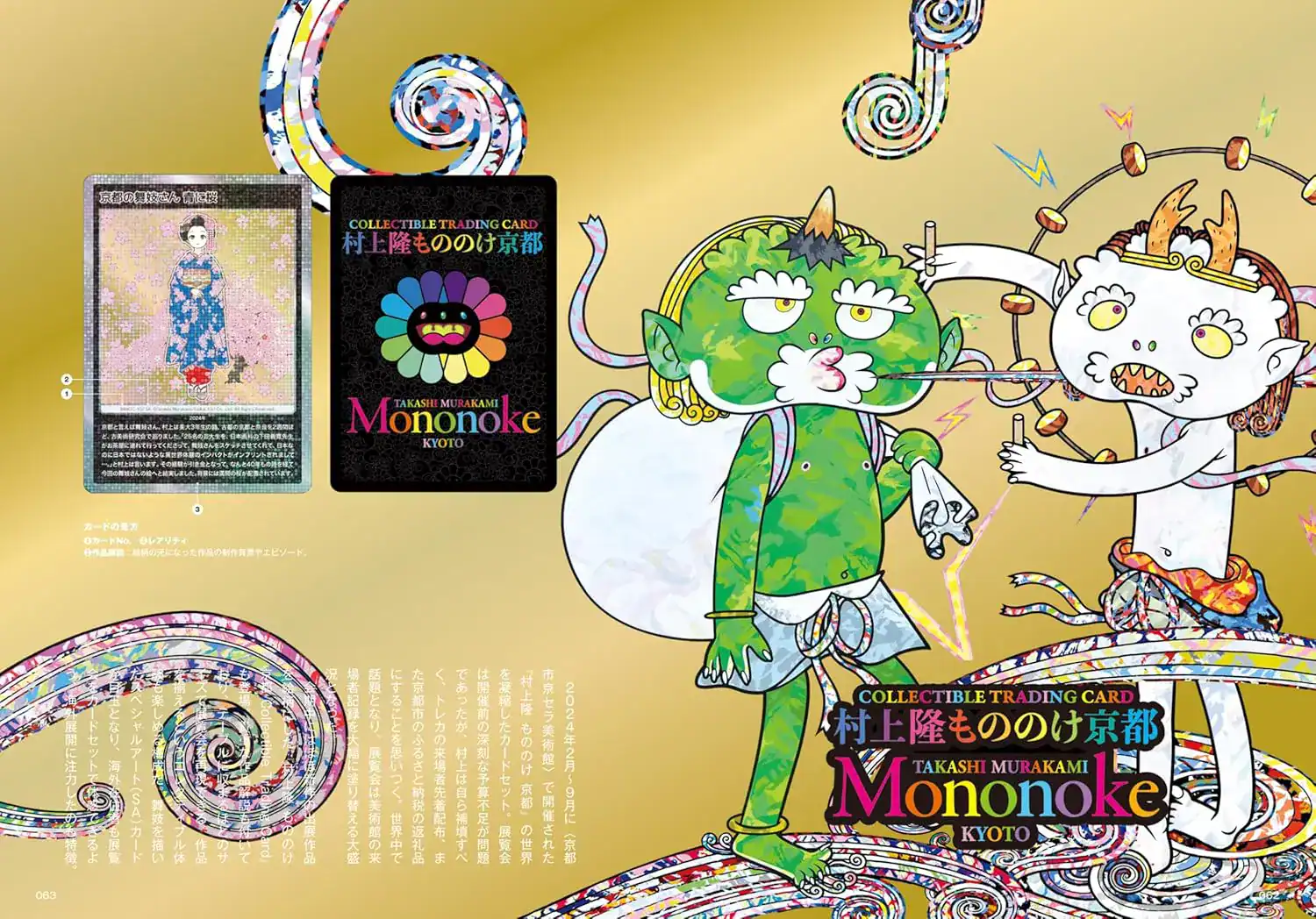
The Mononoke Kyoto trading card set is one of the most significant releases in Murakami’s collectibles catalog, and the market has already confirmed it. Launched in conjunction with the Mononoke Kyoto exhibition at Nijo Castle in 2024, these cards sit at an intersection that serious collectors understand immediately: museum-grade art, Japanese trading card culture, and the Murakami secondary market operating at full velocity. This is not a novelty product. This is a structured collectible with real pull mechanics, real grading upside, and real resale dynamics already playing out on platforms from Mercari Japan to StockX.
If you are trying to decide between editions, understand the grading potential of specific cards, or figure out where this release sits in the broader Murakami collecting hierarchy, this guide covers it all with the specificity the market demands.
The Exhibition Context: Why Nijo Castle Matters
Murakami’s relationship with Kyoto is not incidental. The Mononoke Kyoto exhibition, held at the historic Nijo Castle complex, represented his most ambitious Japanese museum presentation in years. The subject matter drew on classical Japanese iconography, Heian-period aesthetics, and Murakami’s signature ability to collapse centuries of cultural history into hyper-saturated visual language. Raijin, Fujin, Daruma, and the broader pantheon of Japanese folk spirits, all filtered through the Superflat lens.
That institutional backing matters for collectors. Cards tied to a specific, physically anchored cultural event carry a provenance that generic TCG releases simply do not. The Kyoto connection is baked into the product’s identity in a way that strengthens the long-term narrative for any piece that surfaces at auction. Compare this to the Takashi Murakami x MLB World Tour Tokyo Series Topps Trading Cards Box Set, another geographically anchored Murakami card release. Both derive value partly from their location-specific storytelling. The Mononoke Kyoto set, however, leans fully into fine art territory rather than sport crossover, which positions it differently for the PSA grading pipeline and auction house interest.
Japanese Edition vs. English Edition: Make the Right Call
This is the question every new buyer asks, and the answer is more nuanced than most people want to hear. Both the Japanese Edition box and the English Edition box are priced at $150, which means the decision is purely strategic, not financial at point of purchase.
Japanese Edition
The Japanese edition was the primary release format, sold through Japanese channels including the Nijo Castle exhibition gift shop and domestic art book retailers. Card text, packaging, and any supplementary inserts are in Japanese. For grading purposes, this matters. PSA and BGS graders in the Japanese market and Western auction houses both recognize the domestic edition as the canonical release. Scarcity for international buyers is structurally higher because distribution was concentrated in Japan. Japanese collectors on Mercari and Yahoo Auctions JP already treat these as premium pulls, and the domestic market’s familiarity with the release drives sustained secondary activity.
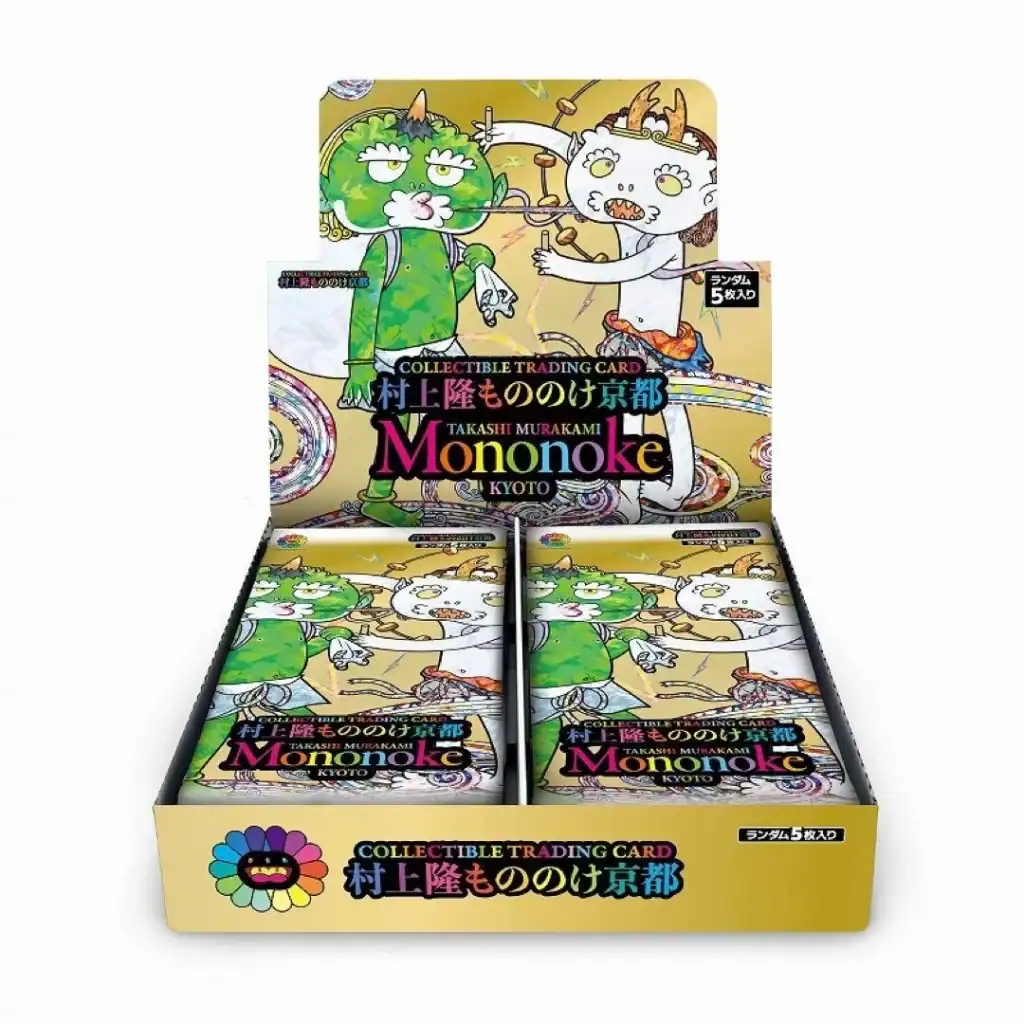
The cultural signaling of holding a Japanese edition is also real. If you are building a Murakami collection that reads as serious, Japanese origination is part of the vocabulary. Kaikai Kiki merchandise, Murakami’s DOB figures, his collaboration prints, all of the blue-chip Murakami material originates from Japanese production and distribution channels. This edition aligns with that lineage.
English Edition
The English edition serves international markets and carries its own collector logic. Western buyers who intend to sell domestically, pitch to American auction houses, or build collections for galleries outside Japan should not dismiss it. English edition packaging makes the product accessible to a wider grading and resale audience, and in some scenarios that accessibility translates to faster liquidity. PSA graders in the US are more familiar with English-text trading cards, which can marginally affect turnaround times, though it has no documented impact on grades themselves.
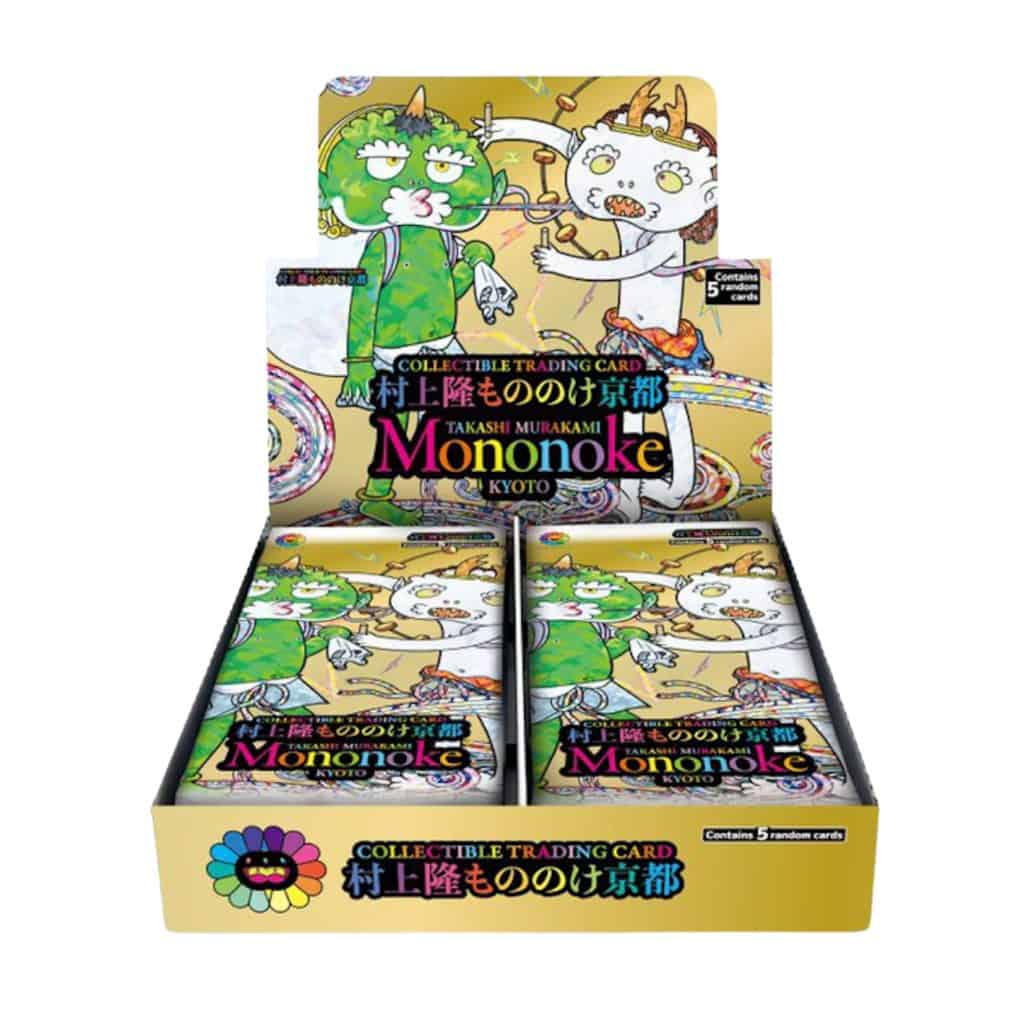
The honest reality: if you are buying one box to rip and build a personal set, get the Japanese edition for the prestige. If you are buying multiples to hold sealed and eventually grade standout pulls for resale, the English edition gives you more flexibility in Western markets.
| Factor | Japanese Edition | English Edition |
|---|---|---|
| Primary Market | Japan, serious global collectors | International, Western markets |
| Distribution Scarcity | Higher for international buyers | More accessible globally |
| Prestige Signal | Aligns with canonical Murakami releases | Broader accessibility |
| Secondary Market Activity | Active on Mercari JP, Yahoo Auctions JP | Active on StockX, eBay US |
| PSA Grading Pipeline | Strong in Japanese grading services | Strong in US-based PSA |
| Sealed Box Investment | Higher long-term narrative value | Better near-term Western liquidity |
Pull Rates, Card Tiers, and What You Are Actually Chasing
Art trading cards operate differently from sports cards in one critical respect: the visual hierarchy is often the rarity hierarchy. Murakami’s most iconic imagery commands the highest pull difficulty, and the Mononoke Kyoto set is structured accordingly. The Thunder God (Raijin) and Wind God (Fujin) cards represent the apex pulls in this set. These subjects are the visual anchor of the entire exhibition and appear across the highest-tier insert categories.
Understanding the Rarity Tiers
The set follows a tiered structure familiar to Japanese trading card collectors. Base cards form the foundation, standard pulls with consistent print runs. Above those sit parallel variants, typically foil treatments or color shifts on the same artwork. The genuine targets for graders and resellers are the short prints and signature variants, which surface at rates consistent with Japanese art card releases, roughly 1 in 4 to 1 in 8 boxes for mid-tier rares, and considerably lower for the top-tier pulls.
A single box gives you a reasonable sample of the base set with a realistic shot at hitting a mid-tier rare. Serious completionists or graders targeting PSA 10 populations on the top cards should plan for case-level purchasing. That is not pessimism, it is how Japanese trading card economics work, and the Mononoke Kyoto set was designed within those parameters.
PSA Grading Upside
The grading play here is legitimate. Murakami’s market has demonstrated consistent auction performance for graded pieces, from his fine art prints at Phillips and Christie’s down to graded merchandise at specialized auction houses. A PSA 10 Raijin or Fujin pull from this set has a clear value pathway: graded art card from a museum exhibition, by one of the most auction-validated artists of the 21st century, in a low-population slot on PSA’s registry.
Population reports for these cards are still relatively thin, which means early graders have a window to establish positions before the registry builds. That window closes as more collectors enter the grading pipeline. The time to act on grading standout pulls is now, not after PSA population numbers normalize.
Card condition straight out of the pack matters enormously. Japanese cards in this tier are typically well-produced with tight centering tolerances, but pack fresh does not guarantee PSA 10. Check corners and surfaces immediately on opening. Any card with chase potential goes into a penny sleeve and hard case before anything else touches it.
The Broader Murakami Trading Card Ecosystem
Placing the Mononoke Kyoto set in context requires acknowledging what Murakami has built in the trading card space over the past several years. His collaborations have run from fine art institutions to Major League Baseball, which tells you something about both his reach and the intentionality behind each card release.
The Murakami x MLB World Tour Tokyo Series Topps box, priced at $500, represents the high-end collaboration play: two established brands, Topps infrastructure, and Murakami aesthetics applied to professional baseball’s international expansion moment. That set appeals to a crossover collector who lives between sports cards and contemporary art. The Mononoke Kyoto set is a different proposition entirely. It is the pure art collector’s entry point, tethered to an exhibition rather than a sport, with imagery that references Japanese art history rather than athletic achievement.
Both have legitimate positions in a diversified Murakami collection. They are not competing for the same shelf space.
Extending the Collection: Adjacent Mononoke Kyoto Pieces
Serious collectors building around a theme understand that the cards are one node in a larger acquisition strategy. The Mononoke Kyoto exhibition generated a cluster of collectibles that function as a coherent collection when held together. The Mononoke Kyoto Thunder God Plush Toy at $19 is the obvious adjacent piece for anyone pulling Thunder God cards.
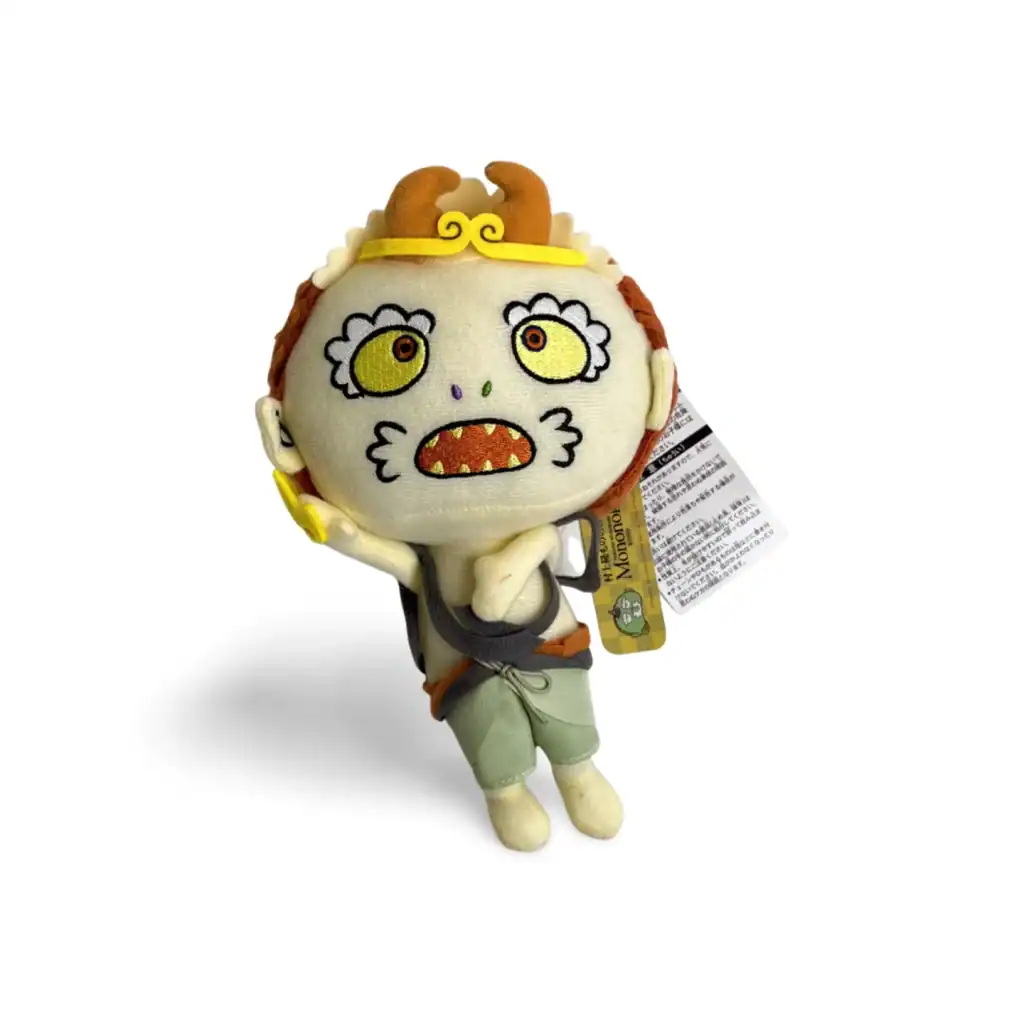

This is not a casual suggestion. Thematic coherence in a collection drives display value and narrative value at resale. A framed PSA 10 Thunder God card paired with the Thunder God plush creates a presentation that reads as curated, not assembled. Auction houses and serious private buyers respond to collections with internal logic. At $19, the plush is an almost zero-friction addition that pays dividends in presentation terms. Buy it alongside the cards.
| Item | Price | Collector Role | Grading Potential |
|---|---|---|---|
| Japanese Edition Card Box | $150 | Primary collecting vehicle, prestige edition | High (individual cards) |
| English Edition Card Box | $150 | Western market entry, liquidity flexibility | High (individual cards) |
| Thunder God Plush Toy | $19 | Thematic display companion, exhibition artifact | Low, display piece |
| MLB x Murakami Topps Box | $500 | Crossover play, sports card collector bridge | High (individual cards) |
Storage, Display, and Long-Term Care
Murakami cards are art objects. Treat them accordingly. The foil and specialty printing techniques used in Japanese art trading cards are sensitive to UV exposure, humidity fluctuation, and improper storage materials. PVC-free sleeves are mandatory. Top loaders for anything you are not immediately grading. For sealed boxes you are holding long-term, climate-controlled storage is not excessive caution, it is standard practice for anything at this price point and above.
Display cases with UV-filtering acrylic are worth the investment for any graded piece you intend to exhibit. The color saturation in Murakami’s work, particularly the reds and golds prominent throughout the Mononoke Kyoto imagery, is the first thing to fade under direct light exposure. A faded Murakami card is both aesthetically diminished and financially penalized at resale.
For sealed boxes, original outer packaging should be preserved intact. Any box with the factory seal broken loses sealed premium status regardless of the cards inside. If you are holding boxes as sealed investments, they stay sealed. If you are opening to pull and grade, open cleanly and preserve every insert, wrapper, and box component. Complete-in-box presentation matters at resale even for opened product.
The Verdict on Market Position
The Mononoke Kyoto trading card set is priced correctly at $150 per box given the scarcity dynamics, the institutional provenance, and the Murakami secondary market’s demonstrated willingness to pay premiums for graded art card material. This is not a speculative punt. It is a structured collectible from an artist whose work trades at Phillips, Christie’s, and Sotheby’s, packaged in a format that plugs directly into the PSA grading ecosystem.
The Japanese edition is the collector’s choice. The English edition is the pragmatist’s choice. Both are valid depending on your exit strategy. Neither is a mistake at $150. The only mistake is waiting while PSA population counts build and sealed box availability tightens.
You can find both the Japanese Edition and the English edition at Rare Inventory, alongside the full range of Mononoke Kyoto collectibles and the Murakami x Topps MLB set for collectors building across multiple Murakami card categories.
What is the difference between the Japanese and English editions of the Mononoke Kyoto card box?
Both contain the same card set artwork but differ in text language, packaging, and primary distribution channels. The Japanese edition was the canonical release sold through Kyoto exhibition channels and Japanese retail, making it the prestige choice for serious collectors. The English edition was produced for international markets and offers better liquidity in Western resale platforms like eBay and StockX.
Are Mononoke Kyoto cards worth grading with PSA?
Yes, for standout pulls. The PSA population on top-tier cards from this set is still building, which means early submissions can establish low-population positions on the registry. A PSA 10 on a Thunder God or Wind God pull has a documented value pathway given Murakami’s auction market performance. Grade immediately after pulling any potential 10, do not hold raw cards in a drawer hoping they stay pristine.
How does this set compare to the Murakami x MLB Topps release?
Different collector profiles entirely. The Topps set bridges sports card collectors and art collectors and carries a higher entry price at $500. The Mononoke Kyoto set is a pure fine art trading card release with no crossover sport positioning, which appeals more strongly to Murakami fine art collectors and Japanese contemporary art specialists. Both belong in a diversified Murakami collection but serve different strategic purposes.
Should I buy the Thunder God Plush even if I am primarily a card collector?
Yes. At $19 it is a negligible spend that adds significant display and narrative coherence to any collection built around the Mononoke Kyoto theme. It is an exhibition artifact in its own right and functions as a display companion to graded Thunder God cards. Thematic completeness drives collection value at resale and at private sale.
Is buying a sealed box better than buying individual cards on the secondary market?
Sealed boxes carry premium status and offer the pull experience, which matters for content creators and collectors who value the process. Individual cards from the secondary market allow targeted acquisition of specific pulls without the variance of box opening. If you are PSA grading specific cards, buying proven gem mint examples from reputable sellers is sometimes more efficient than chasing pulls. If you are building sealed box holdings, buy sealed and keep them sealed.