G-SHOCK vs Standard Casio: The Collector’s Case for Collaboration Watches
The collaboration watch market has exploded over the past decade, and Casio sits at the center of two distinct collector universes. First, you have G-SHOCK, the rugged, culturally loaded platform that attracts streetwear collectors, musicians, and serious horologists alike. Then you have standard Casio lines, including Baby-G and the vintage-adjacent digital series, which pull their own weight with pop culture tie-ins and anime crossovers. The question serious collectors ask is simple: which platform actually delivers better long-term value, stronger resale, and more meaningful collector credibility? This guide breaks it down, model by model, market by market.
Understanding the Two Platforms
G-SHOCK: Built for Culture and Durability
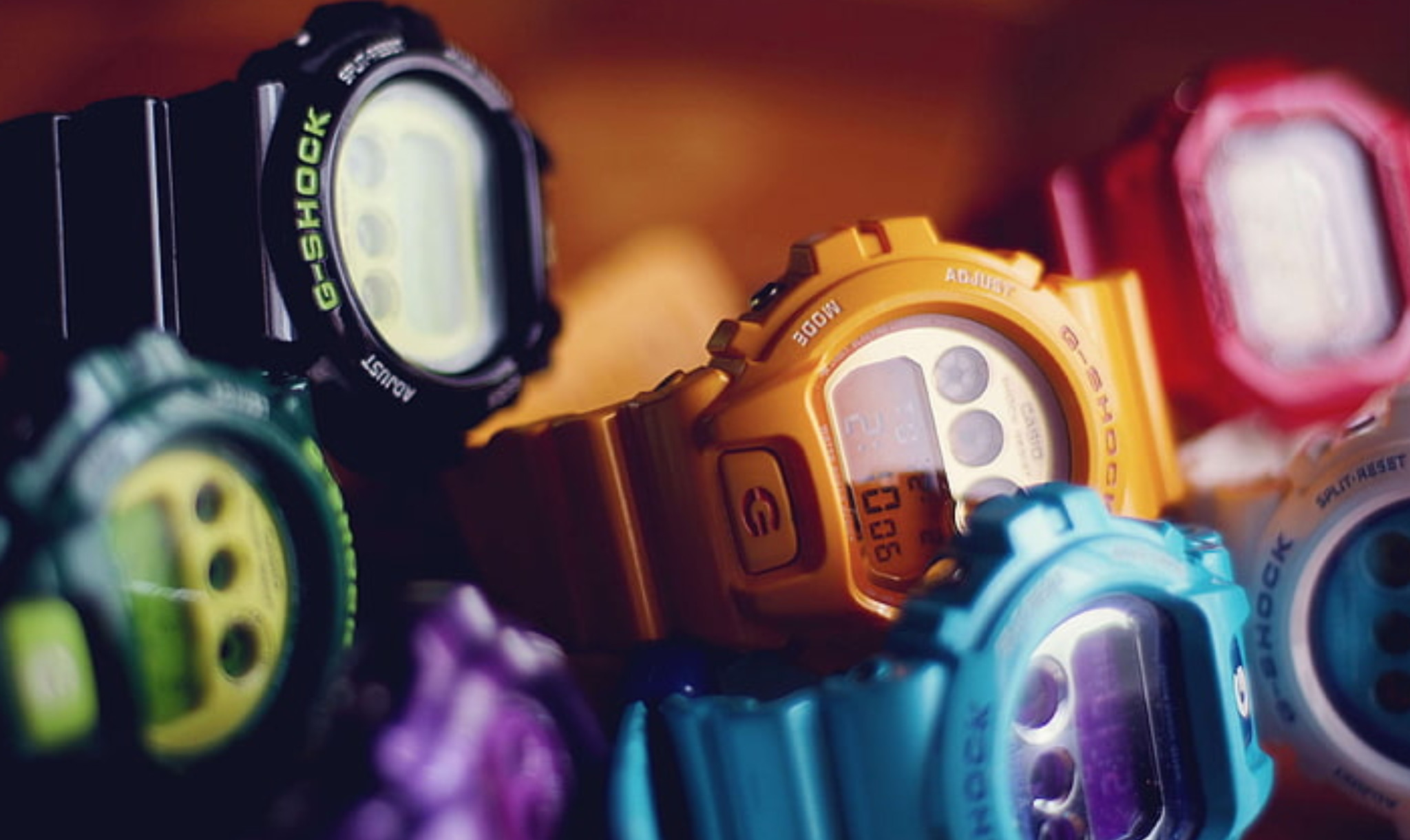
G-SHOCK launched in 1983 with one obsessive goal: build a watch that could survive a 10-meter drop. However, what nobody predicted was that the DW-5000C would evolve into one of the most collaboration-friendly canvases in watch history. Today, the G-SHOCK platform hosts partnerships with artists, streetwear brands, entertainment properties, and luxury houses. That range is unmatched.
Once you know which side you are on, browse the Casio artist collaborations ranked by collectors and the best G-Shock collabs of 2026.
For collectors, the G-SHOCK collaboration market has real teeth. First, the base hardware is genuinely respected. Shock resistance, water resistance to 200 meters, and solar or battery variants give every collab piece a functional foundation. Additionally, G-SHOCK’s tiered release structure creates genuine scarcity. Japanese domestic market releases, labeled JR or JF in the model code, often carry pull rates and allocation numbers that rival sneaker drops. The secondary market reflects that reality.
Explore the full collection
Figures, art toys & limited editions — shipped across Europe from France.
Standard Casio Lines: Underrated or Overlooked?
Standard Casio, meaning the Baby-G, Vintage, and A-Series lines, carries less collector cachet by default. However, that perception is shifting fast. Baby-G collaboration pieces, particularly those tied to major IP like Pokémon, have shown strong appreciation in the Japanese domestic market. Meanwhile, the analog-digital hybrid models have attracted a different type of collector: one focused on nostalgia, lifestyle crossover, and accessible price points.
The honest truth is that standard Casio collabs live or die by the IP attached to them. A generic fashion-brand collaboration on a Baby-G will flatline. In contrast, a Pokémon collaboration targeting the Japanese market creates genuine demand across multiple collector categories simultaneously. That intersection of watch collectors and franchise collectors is where the real price action happens.
G-SHOCK Collaborations: The Collector Hierarchy
Artist and Streetwear Collaborations
The A$AP Ferg x G-SHOCK GA-110FRG-7A represents exactly what collector-grade G-SHOCK looks like. A$AP Ferg brings Harlem credibility and Mob-era cultural weight to a GA-110 base, which is already one of the more polarizing G-SHOCK shapes. The oversized case works in its favor here. Additionally, the color execution and co-branding placement make this immediately identifiable as a collab piece, not a simple recolor. That visual distinction is critical for resale positioning.


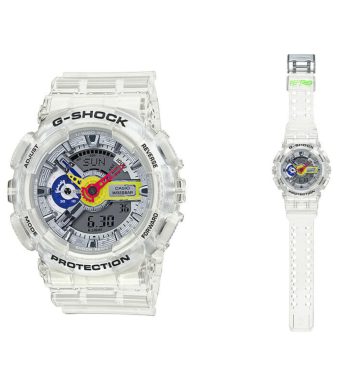
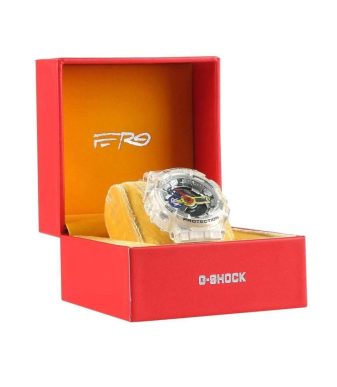

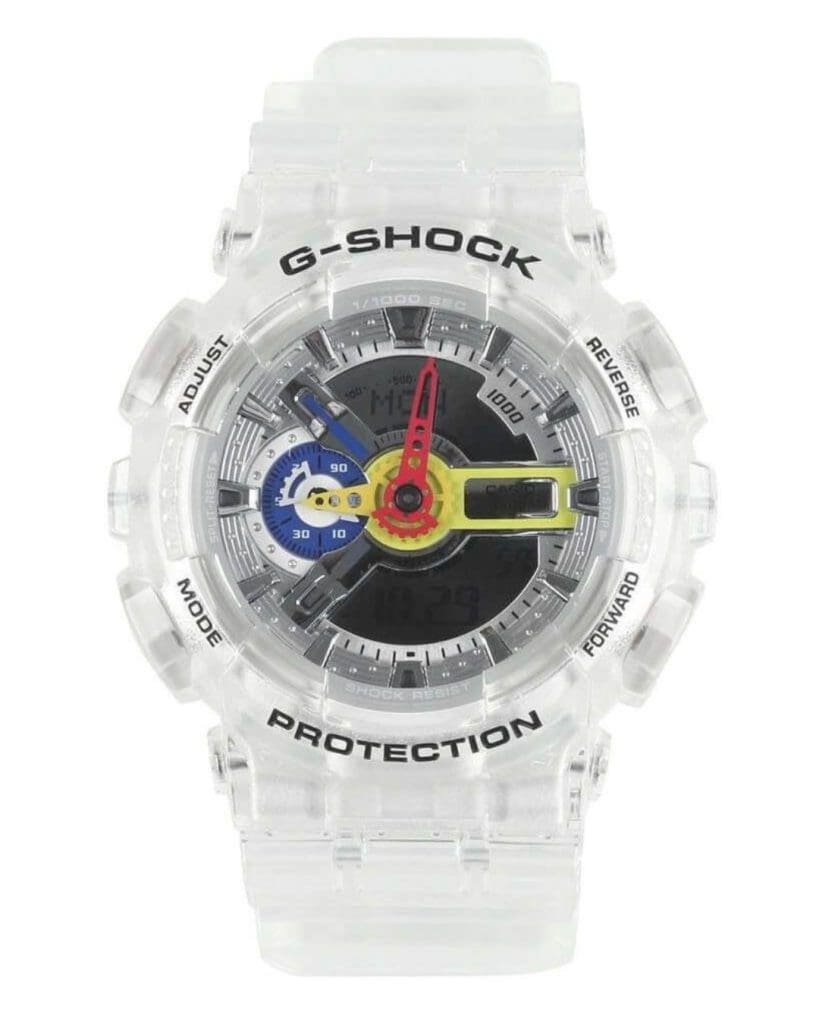
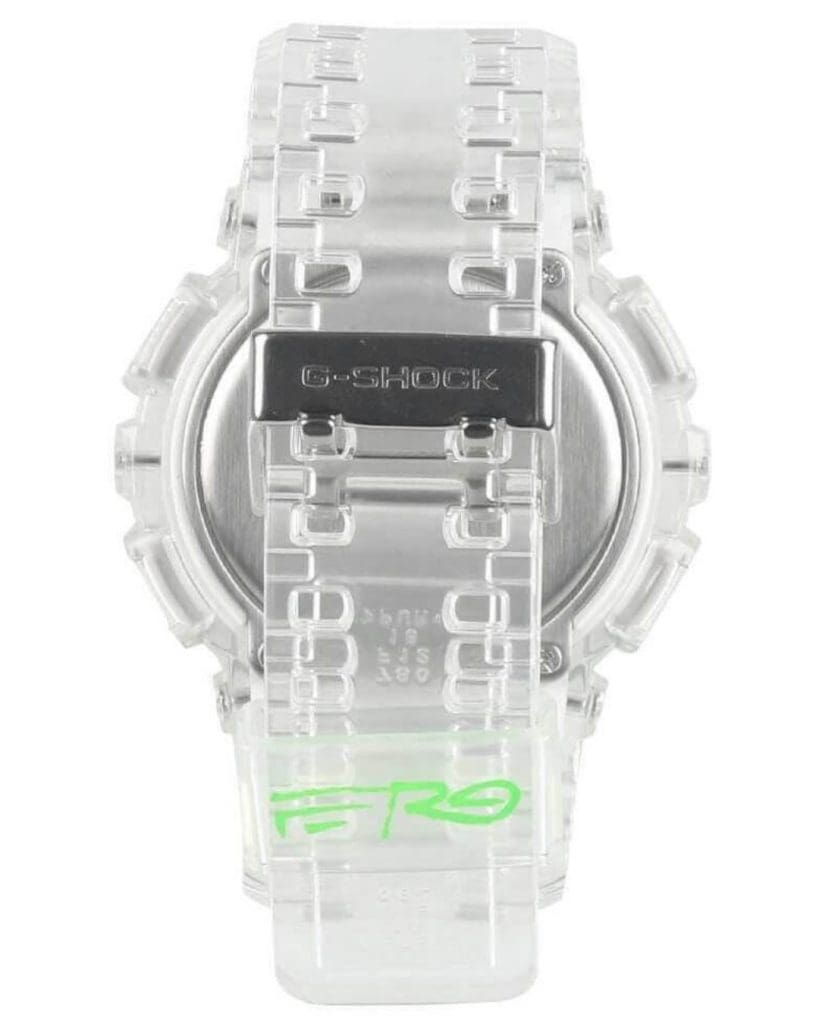
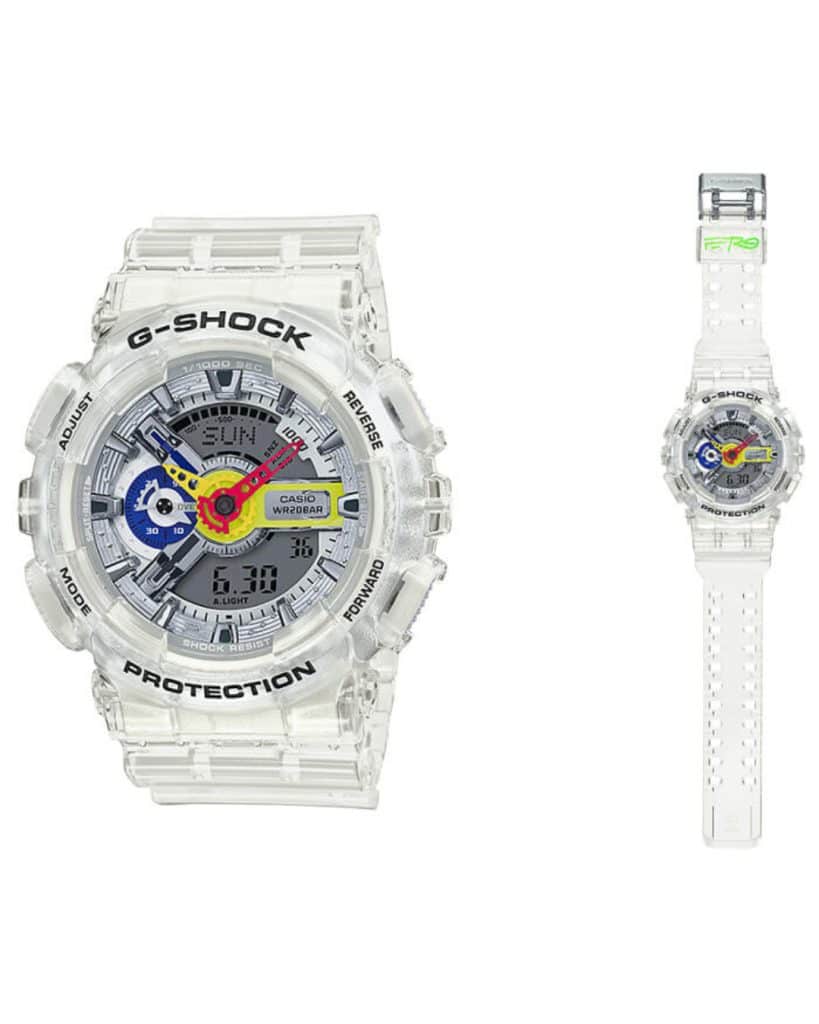
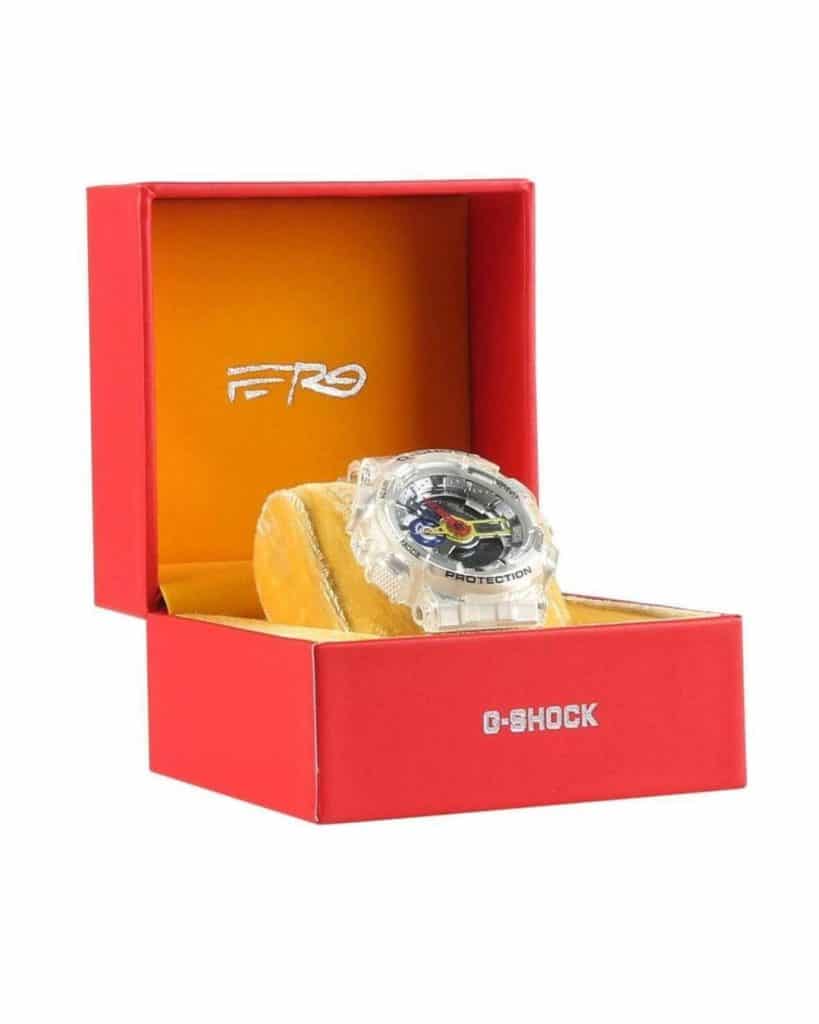

Artist collaborations on the G-SHOCK platform consistently outperform brand-only collaborations in secondary market performance. The reason is simple: personal narrative sells. When A$AP Ferg is attached to a piece, you are buying access to a cultural moment, not just a watch. That intangible premium holds up better over time than a fashion logo placement.
Explore the full collection
Figures, art toys & limited editions — shipped across Europe from France.
Entertainment IP on G-SHOCK
The Casio x G-SHOCK Stranger Things DW-5600STT-1JR is a case study in cross-audience demand. First, the DW-5600 is the most iconic G-SHOCK silhouette in existence, the direct descendant of that original 1983 drop. Putting Stranger Things on it creates a piece that speaks to watch collectors, Netflix-era pop culture collectors, and 80s nostalgia enthusiasts simultaneously. That triple-audience effect drives both initial sell-through and long-term secondary demand.


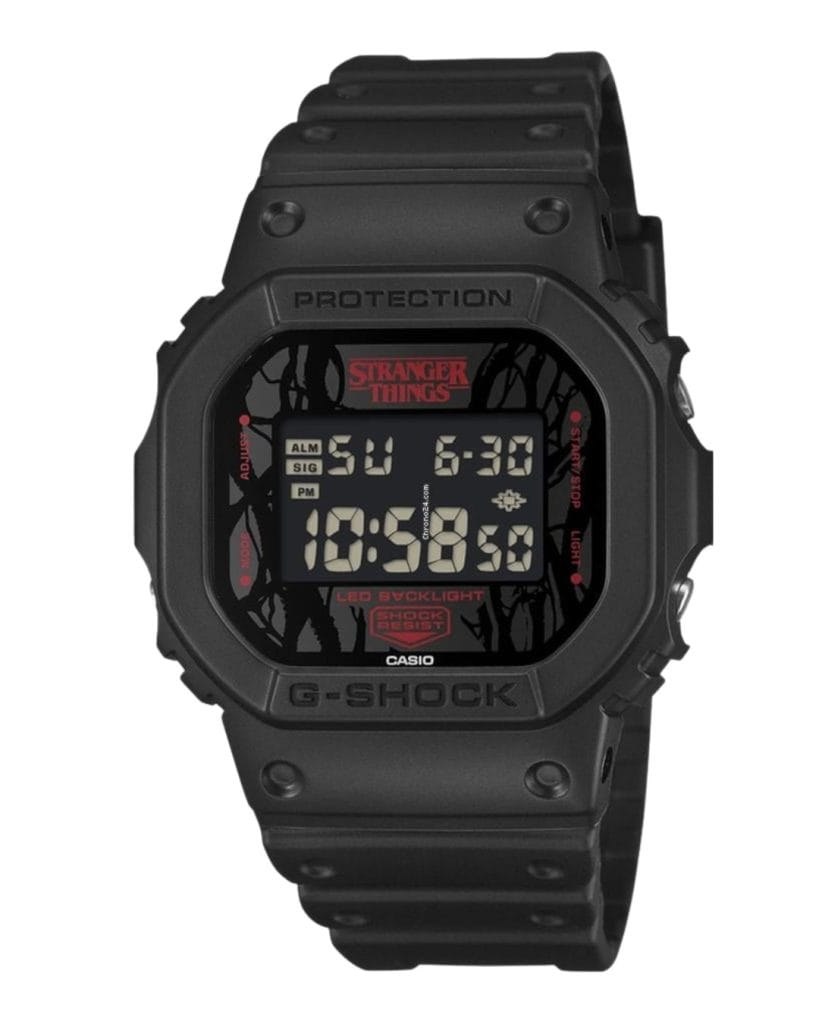
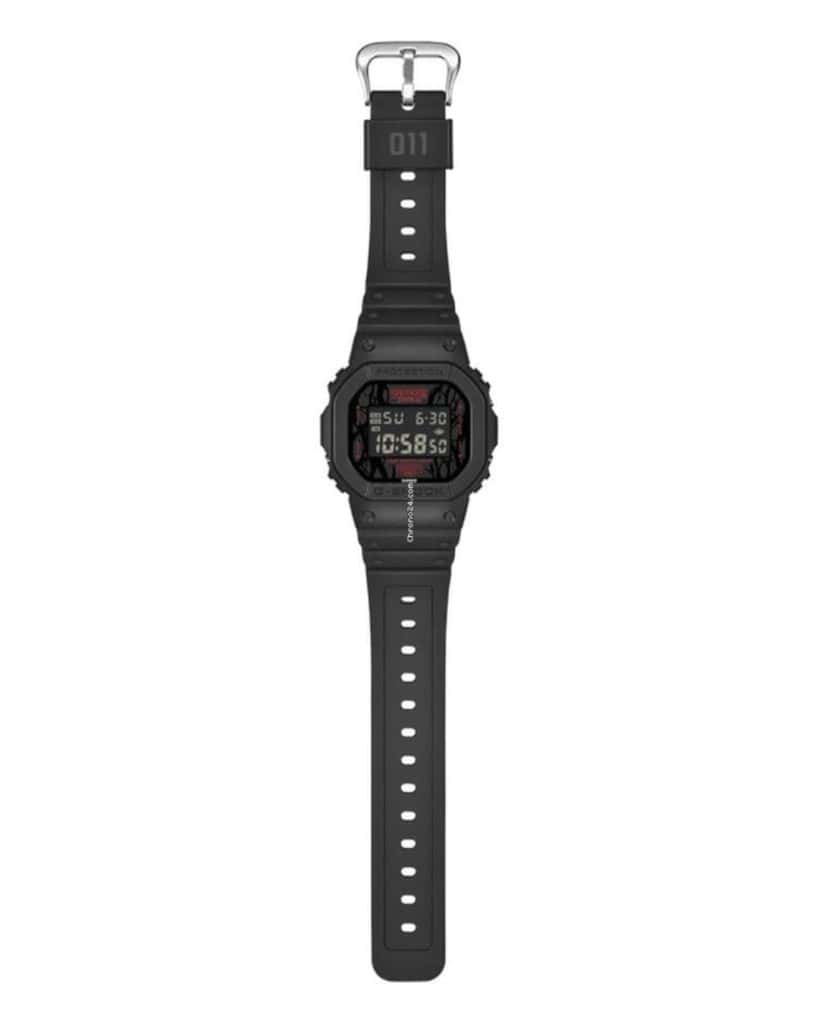
Casio G-Shock x Stranger Things DW-5600STT-1JR Watch
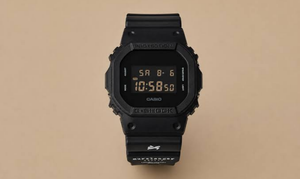
The CASIO x G-SHOCK “Stranger Things” DW-5600STT-1JR reimagines the iconic square through the dark lens of the Upside Down. Built on the classic DW-5600 platform, this limited collaboration features a blacked-out design paired with a distinctive inverted display inspired by the series’ alternate dimension.
The JR suffix tells you this is a Japanese domestic market release. For Western collectors, that means tighter allocation and a harder acquisition path, both of which support premium pricing. Additionally, the 80s aesthetic of Stranger Things aligns naturally with the retro DNA of the DW-5600, making this collaboration feel earned rather than forced. That creative coherence matters to serious collectors.
The Joshua Vides Angle
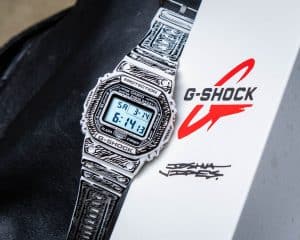
The Casio x G-SHOCK DW-5600JV-7JR by Joshua Vides sits in a specific collector niche: the art-world crossover. Vides built his reputation on high-contrast black-and-white illustration applied to three-dimensional objects, and the DW-5600 is a perfect canvas. However, what makes this piece particularly interesting is that it targets collectors who follow Vides as an artist, not collectors who primarily follow G-SHOCK. That outside-in audience dynamic often produces stronger appreciation curves.


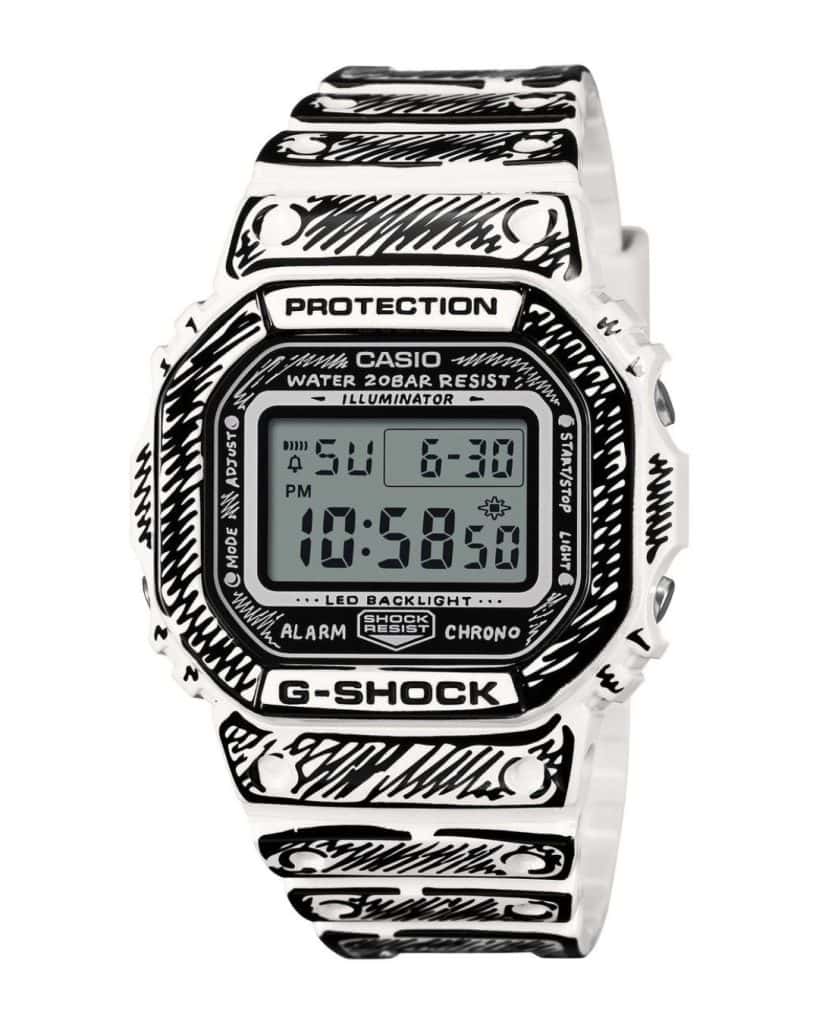
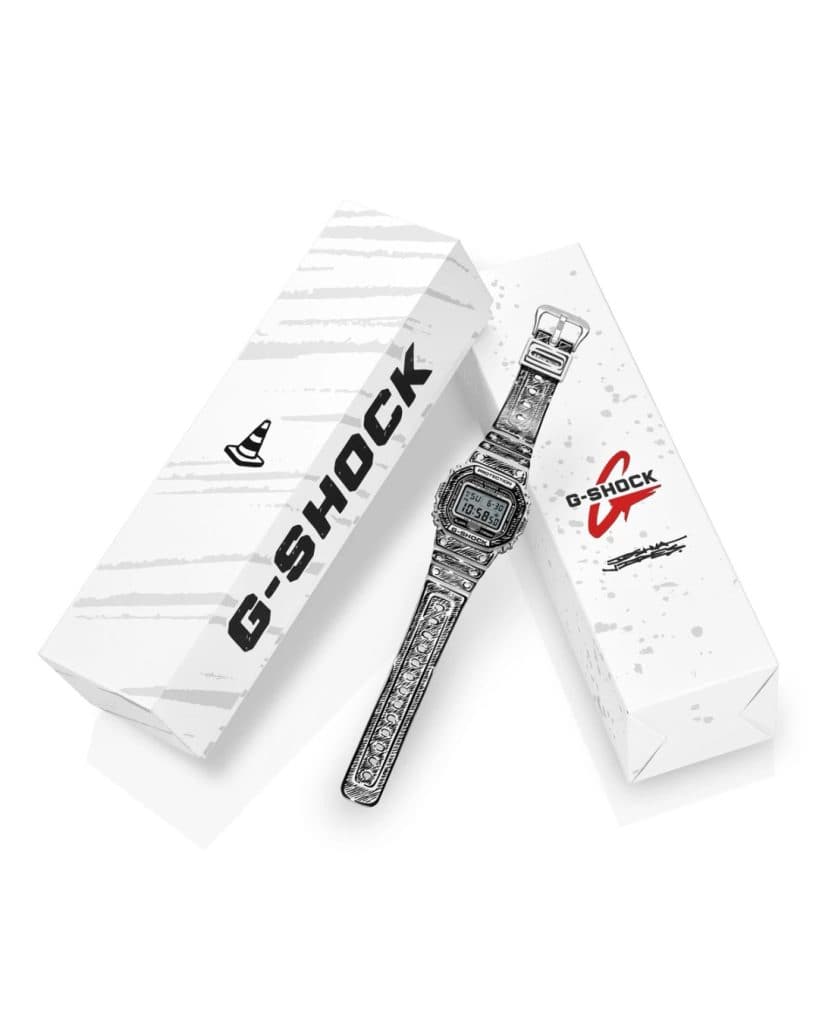
Casio G-Shock x Joshua Vides DW-5600JV-7JR Watch
The DW-5600JV-7JR “Joshua Vides” reimagines the classic G-SHOCK square through a raw, hand-drawn lens. Covered in bold black sketch lines over a white base, the entire watch, from case to strap, feels like it was illustrated directly onto the surface, creating a striking, almost surreal 2D effect.
Vides pieces hold value because his collector base treats them as art objects that happen to tell time, not watches that happen to have art on them. That framing distinction changes everything about how secondary market buyers approach pricing.
Standard Casio Collaborations: When Baby-G Wins
The Pokémon Baby-G Case Study
The Casio Baby-G BA-110PKC-4AJR Pikachu Collaboration in Pink is the strongest argument for standard Casio collaboration investing. First, Pokémon is the highest-grossing media franchise on the planet. Pikachu specifically commands global recognition that transcends age, geography, and collector category. Additionally, the BA-110 base model is underpriced relative to G-SHOCK, which means the collaboration premium represents a larger percentage gain at resale.
The pink colorway targets the Japanese domestic market directly, where Baby-G has always maintained a stronger cultural position than in Western markets. Japanese collectors treat franchise collaborations with enormous seriousness. As a result, JR-coded Baby-G drops in desirable colors often disappear from domestic shelves within hours and trade at significant premiums immediately after release.
Beyond that, the Pokémon collaboration targets female collectors, a demographic that is severely underserved by the broader watch collaboration market. That scarcity of supply directed at this audience creates persistent demand that general watch releases cannot satisfy.
Head-to-Head Comparison: G-SHOCK Collab vs Standard Casio Collab
| Factor | G-SHOCK Collaboration | Standard Casio Collaboration |
|---|---|---|
| Base Collector Credibility | Very High | Moderate |
| Resale Ceiling | High (artist/streetwear tier) | High (with major IP only) |
| Japanese Market Strength | Strong across all tiers | Strong for franchise IP |
| Western Market Demand | Strong | Variable |
| Entry Price Point | $150-$500+ | $80-$200 |
| Functional Quality | Best in class | Good, not exceptional |
| Audience Crossover | Watch + streetwear | Watch + franchise/pop culture |
Resale Performance by Collaboration Type
| Collaboration Type | Platform | Typical Secondary Premium | Time to Peak Value |
|---|---|---|---|
| Artist/Streetwear | G-SHOCK | 50-200% over retail | Immediate to 6 months |
| Entertainment IP (major) | G-SHOCK | 30-120% over retail | 1-3 years |
| Franchise IP (major) | Baby-G / Standard | 40-150% over retail | 6 months to 2 years |
| Fashion Brand | Either | 0-30% over retail | Inconsistent |
What the Japanese Market Tells You About Collecting Casio Collabs
JR Codes and Domestic Allocation
Japanese domestic releases carry the JR or JF suffix and represent the most collector-relevant tier of Casio collaboration output. Casio maintains separate product lines for the Japanese market, and allocation quantities are frequently smaller than global releases. For collectors outside Japan, acquiring JR-coded pieces requires either domestic forwarding services or secondary market purchase, both of which add cost and confirm genuine scarcity.
First, understand that Japanese retailers treat G-SHOCK and Baby-G collaboration releases with the same seriousness as sneaker drops. Lottery systems, in-store queuing, and immediate secondary market listing are all standard practice. Additionally, Japanese collectors grade condition rigorously. A piece sold as new-in-box with all original packaging intact commands significantly more than a loose watch, even if the watch itself is pristine.
Explore the full collection
Figures, art toys & limited editions — shipped across Europe from France.
Grading and Condition Standards
PSA does not currently grade watches at the mainstream level the way it grades trading cards. However, the watch collector community has developed its own condition standards. For Casio collaborations specifically, the hierarchy runs: sealed factory packaging, full box and papers unworn, worn with box and papers, and watch only. That first tier commands the highest premiums, often 20-40% above even unworn-but-opened examples.
For G-SHOCK collaborations, the resin band is the most critical condition factor. Resin degrades over time, particularly with UV exposure, and a yellowed or cracked band destroys secondary market value regardless of case condition. Smart collectors store G-SHOCK collaborations away from direct sunlight and at stable temperatures. That basic care discipline separates serious collectors from casual buyers.
Rare Inventory Recommends
For collectors building a serious Casio collaboration position, prioritize JR-coded Japanese domestic releases tied to globally recognized IP or credible artists. The Stranger Things DW-5600STT-1JR and the Pikachu Baby-G BA-110PKC-4AJR represent the two strongest cross-category plays currently available. Both target underserved collector audiences and carry IP recognition that transcends the watch category entirely. Additionally, the A$AP Ferg GA-110FRG-7A remains the strongest pure streetwear-collector argument in the current G-SHOCK collaboration roster.
Where to Buy
Rare Inventory, based in France, specializes in sourcing authenticated collaboration watches and ships across Europe to collectors who want genuine pieces without the secondary market guesswork. For curated G-SHOCK and Casio collaboration inventory, Rare Inventory maintains verified stock across the pieces discussed in this guide. Shipping across Europe means collectors across the continent can access Japanese domestic releases and limited artist collaborations through a single trusted source.
Frequently asked questions
Which is better for long-term value: G-SHOCK collabs or standard Casio collabs?
G-SHOCK collaborations carry stronger baseline collector credibility and higher resale ceilings. However, standard Casio pieces tied to major franchise IP, particularly Pokémon on Baby-G, can outperform mid-tier G-SHOCK collabs when the IP alignment is strong and the release is JR-coded for the Japanese domestic market.
Why do Japanese domestic release codes matter so much?
JR and JF suffix models represent Casio’s domestic Japan allocation, which is frequently smaller than global production runs. Additionally, Japanese retail culture treats these drops with extreme seriousness, driving immediate secondary market activity and establishing price floors that global releases rarely achieve.
How should I store G-SHOCK collaboration watches to preserve value?
Keep pieces sealed or in original packaging whenever possible. For unworn pieces, store away from UV light at stable room temperature. The resin band is the most vulnerable component. Additionally, retain all original box inserts, warranty cards, and hang tags because condition-grading collectors penalize missing packaging heavily at resale.
For the full map of what is actually worth chasing, our guide to every limited CASIO x artist collaboration worth owning ranks the collabs one by one.
Do artist collaborations hold value better than entertainment IP collaborations on G-SHOCK?
Artist collaborations tend to peak faster and hold value more consistently because they target a dual audience of watch collectors and art collectors simultaneously. Entertainment IP pieces can exceed artist-collab peaks when the franchise hits a cultural moment, for example a new season release or anniversary. However, IP value is more volatile and dependent on the property’s continued cultural relevance.
The Shop
Available Now at Rare Inventory
Pieces related to this article, in stock and ready to ship.


100% Authentic Shipped from France Free Shipping Over €200