Sabo, Logia Style: What The Departure Line Does Differently From Battle Record
You open the box. The figure sits in a nest of plastic tray, and you notice something immediately: wrapped around Sabo’s arm, curling upward into the air, a translucent orange flame frozen mid-surge. Nothing in the packaging hinted at how dramatic this would look on a shelf. That single moment, that first unboxing impression, explains everything you need to know about why Banpresto runs two completely different philosophies for the same character.
The Sabo figure One Piece collector market splits cleanly into two camps: The Departure Logia version, which ships with translucent flame effect parts that dramatize his Mera Mera no Mi power, and the Battle Record Collection version, which delivers a refined sculpt and focused character detail at a comparable price point. Both figures retail under €36. The right choice depends entirely on your shelf context, your photography habits, and how much of Sabo’s story you want the figure to tell on its own.
Two Sabos, Two Philosophies
First, understand what Sabo actually represents in One Piece lore. After Sabo eats the Mera Mera no Mi, a Logia-type Devil Fruit, he uses it effectively almost immediately after consuming it. He enhances the destructive power of his dragon claw strikes with flame, and he inherits Fire Fist from Ace, turning his fist into fire and launching it as a column at his target. That narrative weight matters for collectors. A figure either carries that weight visually or it does not.
Banpresto answers this challenge with two distinct strategies. The Departure LOGIA focuses specifically on characters who wield Logia-type Devil Fruit powers, highlighting their supernatural abilities through striking effects and dynamic poses. Battle Record Collection, however, takes the opposite direction. Battle Record figures are non-articulated display pieces designed to recreate the energy and drama of iconic One Piece battle scenes through sculpt and pose alone, without supplemental effect parts.
Neither approach is wrong. In fact, they serve different collectors with different shelves.

Explore the full collection
Figures, art toys & limited editions — shipped across Europe from France.
The Departure Logia: What The Translucent Flame Parts Actually Do
The Effect Parts, Explained Simply
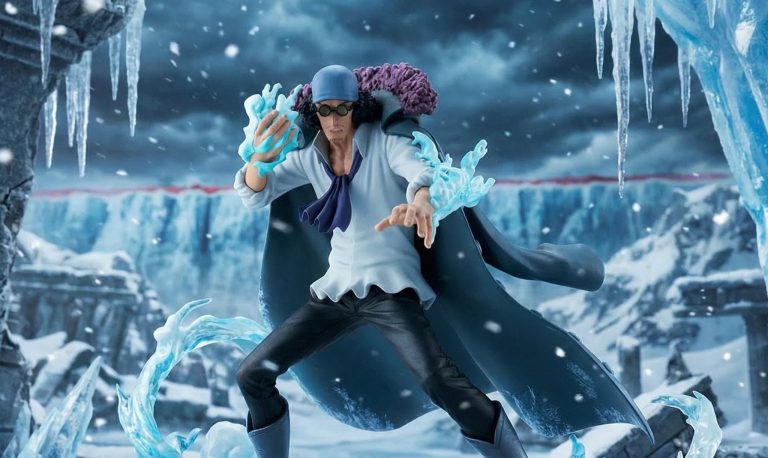
If you are new to the hobby, “effect parts” simply means separately moulded pieces, usually cast in translucent coloured plastic, that attach to the figure to simulate fire, ice, water, electricity, or impact. Think of them as the figure’s special move, sculpted in three dimensions. The Departure LOGIA focuses on characters with elemental powers, highlighting their supernatural abilities through striking effects, and carefully sculpts everything from roaring flames to swirling smoke to bring their power to life.
For the Sabo The Departure Logia Figure (€34), Banpresto moulds the flame parts in amber-to-orange translucent PVC. Light passes through the plastic and creates a subtle glow effect, especially under warm LED shelf lighting. The figure stands approximately 17 cm tall, so the flame elements push the visual footprint well beyond that base height.



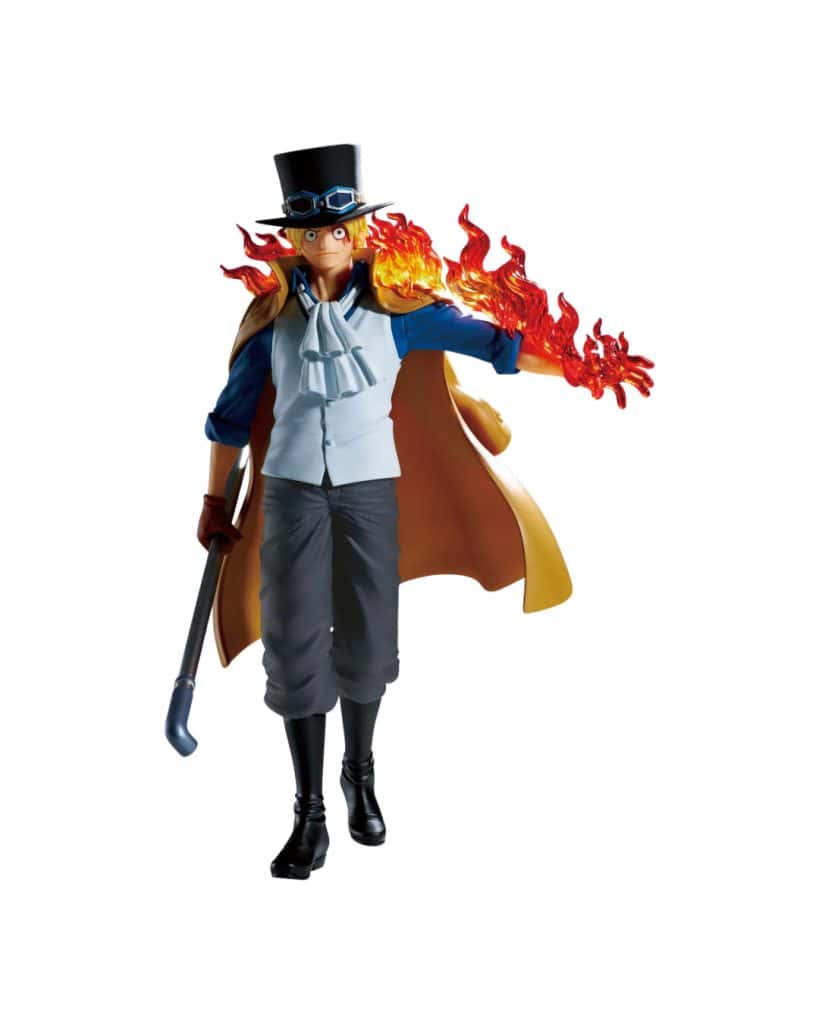
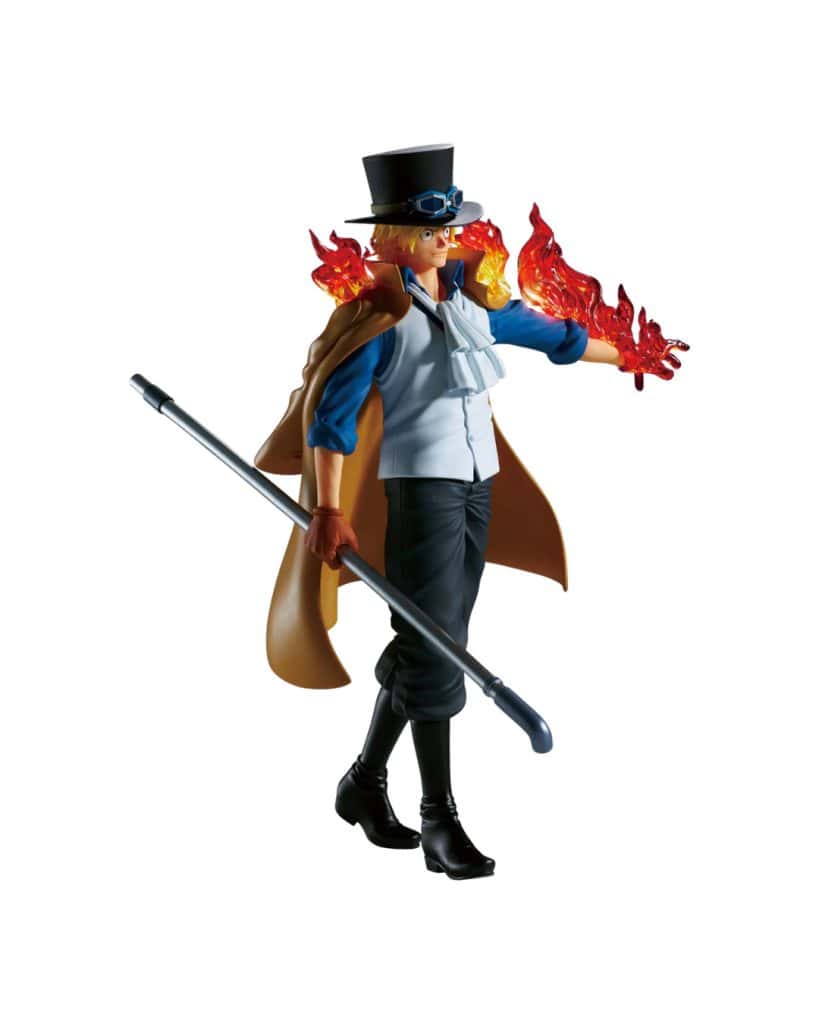
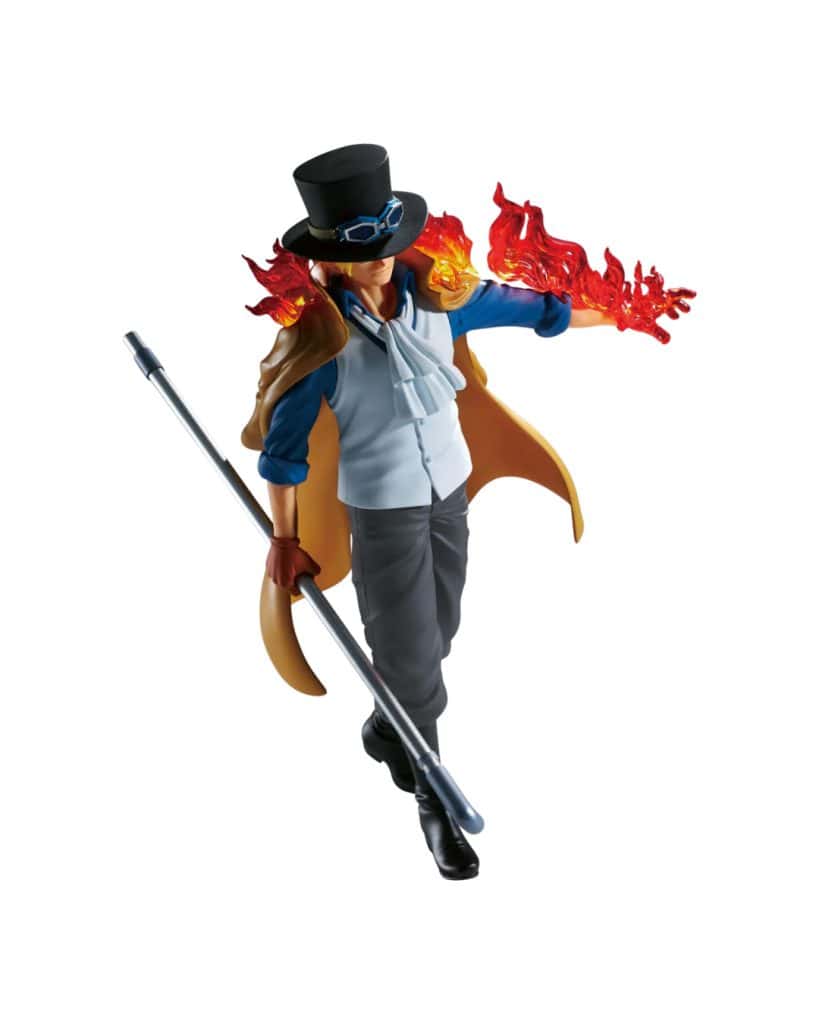
Sabo The Departure Logia Figure One Piece | Banpresto
The Chief of Staff of the Revolutionary Army unleashes the power of the Mera Mera no Mi. This The Departure Logia figure by Banpresto captures Sabo in a dynamic pose, Fire Fist blazing in tribute to his fallen brother Ace, and the fierce revolutionary spirit of a man who carries the flame of freedom for the entire world.
Why Effect Parts Change Photography
Photographing effect parts requires a different approach than shooting a plain sculpt. First, position your light source behind or to the side of the figure at roughly 45 degrees. This backlights the translucent plastic and ignites it visually. Second, shoot in a slightly darker environment so the flame PVC reads as luminous rather than simply orange-coloured. Even a basic smartphone camera with a warm-toned LED behind the figure produces dramatic results.
Additionally, effect parts create natural negative space in the frame. The gaps between flame tendrils give your photograph visual breathing room. For instance, shooting from a low angle looking upward at Sabo’s flame arm makes him look genuinely enormous on screen, far beyond his 17 cm physical reality. This is the kind of detail that makes The Departure line a collector favourite for social content.
Beyond photography, effect parts affect daily display. Meanwhile, they gather dust in the fine crevices of the translucent plastic more quickly than solid painted surfaces. A soft natural-bristle brush, the kind sold for makeup or watercolour painting, removes dust without scratching the plastic. Therefore, keep the figure away from direct sunlight, because UV exposure yellows translucent PVC over time, shifting your amber flame toward an unappealing brown.
Battle Record Collection: When The Sculpt Stands Alone
What Battle Record Actually Delivers
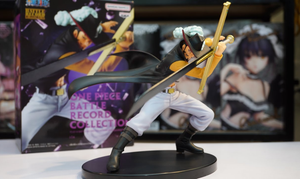
The Battle Record Collection series focuses on dramatic, action-oriented character poses with premium sculpted detailing, featuring expressive faces, textured costumes, weapons, and flowing garments. The Sabo Battle Record Collection Figure (€35) stands at approximately 12 cm. It is smaller than The Departure version, but that reduced height concentrates the sculptural detail into a tighter, punchier package.
Without effect parts competing for attention, every square centimetre of paint work carries more weight. Battle Record Collection figures capture unique character styles and dynamic poses, with detailed sculpts and paint work that make them compelling for collectors. For Sabo specifically, this means his signature top hat, his Revolutionary Army coat, and his pipe all receive the full focus of the viewer’s eye. As a result, nothing distracts from the core sculpt.
The Case For Battle Record On A Crowded Shelf
Most collectors underestimate shelf density. When you line up six or seven figures, the one with sweeping flame parts at 17 cm dominates the row and makes neighbours look diminished. The Battle Record Sabo at 12 cm, on the other hand, integrates into a mixed-character display without overwhelming its surroundings. Similarly, if you display alongside the Banpresto Grandista Sabo Figure (€45), which runs considerably taller, the Battle Record piece provides visual contrast in scale rather than competing in drama.


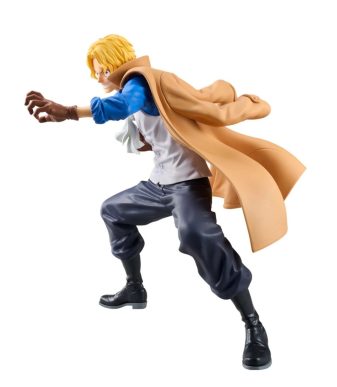
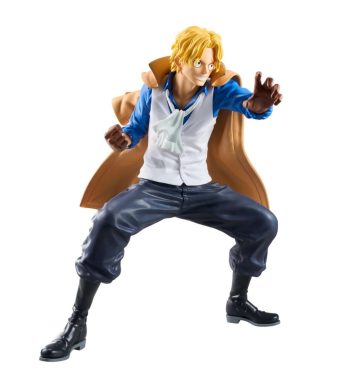


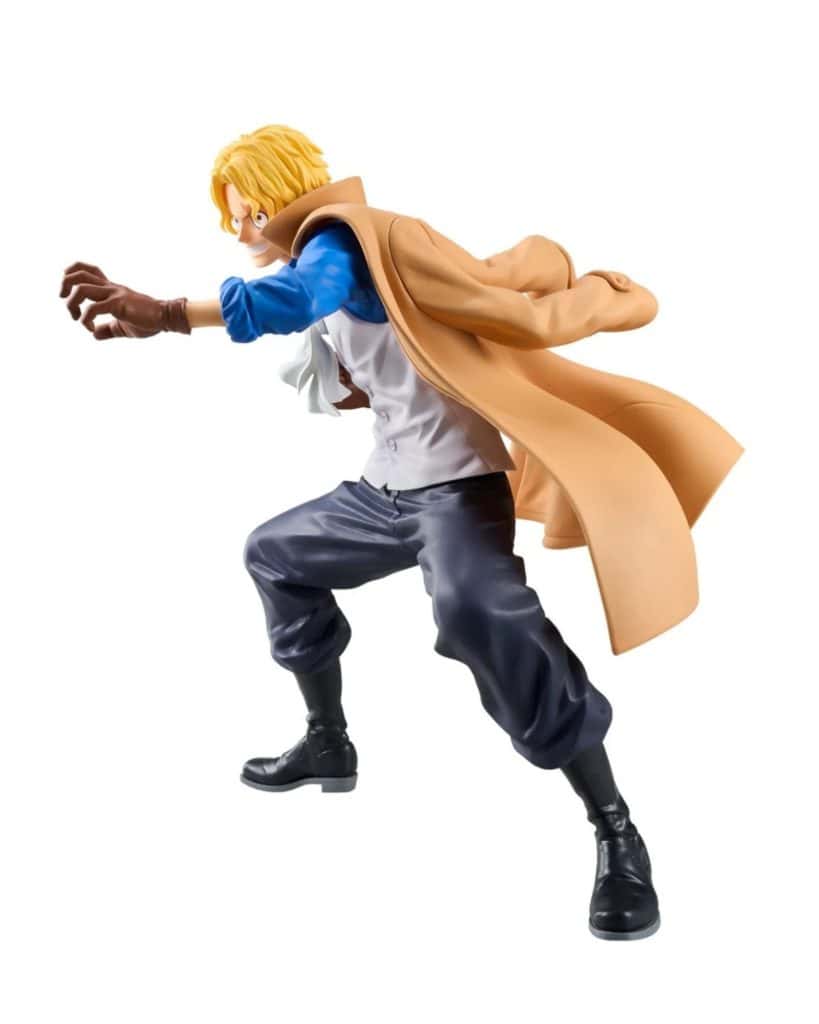

Sabo Grandista Figure – One Piece | Banpresto
The Grandista Sabo Figure One Piece brings one of the most beloved characters from the One Piece universe to life in premium collectible form. Featuring Sabo, the Chief of Staff of the Revolutionary Army, this figure captures his confident presence, signature outfit, and determined expression with impressive sculpting and anime-accurate detail.
Furthermore, the price difference between the two versions is essentially €1. So budget is not the deciding factor here. The decision is purely about display intent.
Head-to-Head: Sabo Figure One Piece Comparison
| Feature | The Departure Logia (€34) | Battle Record Collection (€35) |
|---|---|---|
| Height | ~17 cm | ~12 cm |
| Effect Parts | Yes, translucent flame PVC | No |
| Visual Footprint | Large, dynamic | Compact, focused |
| Photography Potential | Very high with backlight | Strong for flat-lay and close-up |
| Best Shelf Use | Feature piece or solo display | Group display or mixed-line shelf |
| Dust Management | Higher maintenance on flame parts | Lower maintenance |
| Series Line | The Departure LOGIA | Battle Record Collection |
Explore the full collection
Figures, art toys & limited editions — shipped across Europe from France.
Which Version For Which Shelf
Choose The Departure Logia If:
- You want a single Sabo figure that tells his full elemental story at a glance
- You photograph your collection and post it online regularly
- You have a dedicated One Piece display with space for a 17 cm feature piece
- You already own the Grandista Sabo and want a mid-tier flame variant alongside it
- You light your shelf and want the translucent PVC to react to that light
Choose Battle Record Collection If:
- You display alongside other characters and need size harmony
- You prefer sculpt purity without supplemental parts
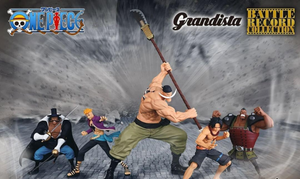
- You collect the Battle Record line for other characters, such as the Banpresto One Piece Battle Record Collection Boa Hancock figure style releases, and want series cohesion
- You keep your collection in a smaller cabinet and want compact footprints
- You value low-maintenance display over maximum visual drama
Can You Justify Buying Both?
Absolutely. At €34 and €35 respectively, the combined outlay of €69 sits below the price of most mid-tier scale figures from Good Smile Company or Kotobukiya. Many serious collectors buy both to display the Battle Record version as an everyday piece and photograph the Departure version for content shoots. This is also a smart strategy because Banpresto prize figures, distributed through Japanese arcade crane machines and then cleared into global markets, do not run endless production cycles. Therefore, when the batch sells through, retail restocks are rare.
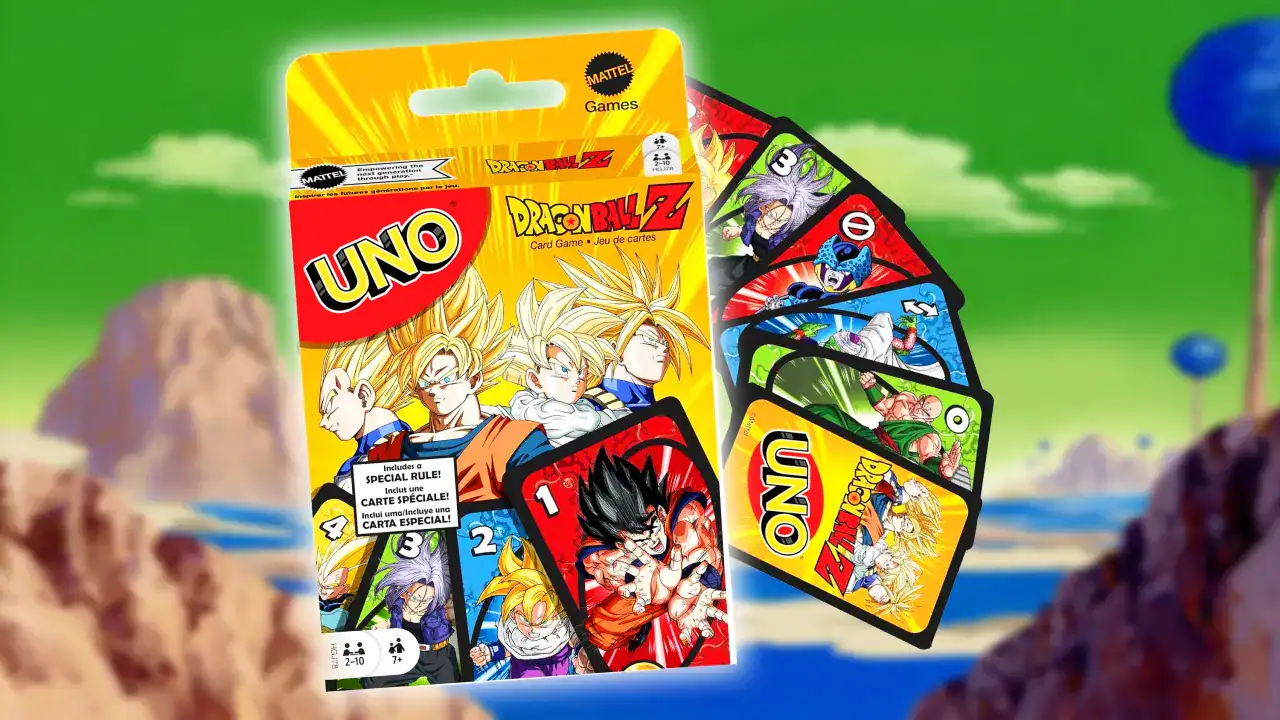
The Departure concept extends well beyond One Piece. For example, Banpresto applies the same Departure framework to Dragon Ball Z with the Metal Cooler Solid Edge Works figure (€35), using different effect aesthetics for a different power set. The design language stays consistent across franchises, which means collectors who enjoy one Departure figure quickly understand why the line works.
Rare Inventory Recommends
First-time buyer? Start with the Sabo The Departure Logia Figure (€34). The effect parts deliver an immediate “wow” moment that no photograph fully captures. If you already own a Departure piece and want to expand your Sabo display, additionally consider the Battle Record Collection version (€35) as a compact companion. For the definitive Sabo statement piece, the Grandista Sabo Figure (€45) anchors any shelf at premium scale.
Where to Buy
Rare Inventory, based in France, stocks all three Sabo figures and ships across Europe. Every piece on the site comes authenticated and new in box, sourced directly through licensed distribution channels. In fact, you can visit rareinventory.com to browse the current One Piece figure selection and confirm live stock before placing your order.

Frequently asked questions
How do I spot a fake or bootleg Banpresto anime figure?
Check the box first. Every authentic Banpresto figure carries a Bandai Namco warning label on the packaging. Bootleg boxes, however, typically use slightly blurred artwork, incorrect font weights, and missing Japanese text on the rear panel. On the figure itself, authentic Banpresto paint work shows clean line separation between colour zones. Bootlegs bleed colour across edges and often use a shinier, cheaper-looking plastic than the official matte-finish PVC. The seam lines where two mould halves meet also run more roughly on fakes. When in doubt, buy from authorised retailers with verifiable stock sourcing, not from anonymous private sellers with no provenance.
Where can I find authentic anime figures?
Authorised online retailers who source directly from Japanese distribution are your safest option. Physical specialist stores in major cities carry authentic stock, but selection varies widely. For collectors outside Japan, curated online stores that list official licensing clearly, like Rare Inventory, provide authenticated figures with shipping across Europe. Additionally, manufacturer websites for brands like Good Smile Company sometimes sell direct, though geographic restrictions apply.
Is collecting anime figures a serious hobby?
Yes, and it operates across a wide spectrum. At the entry level, Banpresto prize figures like both Sabo versions here sit at accessible price points and require no specialist knowledge to enjoy. At the top end, 1/4 and 1/6 scale pieces from premium manufacturers reach several hundred euros and appreciate in value. The hobby connects directly to animation history, character design, and Japanese manufacturing craft. Most importantly, no gatekeeping applies: you can collect one figure that means something to you, or you can build a room-scale archive. Both approaches are valid.
The Shop
Available Now at Rare Inventory
Pieces related to this article, in stock and ready to ship.


100% Authentic Shipped from France Free Shipping Over €200