One Piece Card Game: Why Collectors Are Choosing the Original Japanese Version
The One Piece Card Game has grown faster than almost any other TCG launched in the last decade. Since its Japanese release in July 2022, it has gone from regional novelty to one of the most actively traded card games in the world. But inside that market, there is a clear divide: collectors who chase international prints, and collectors who go straight to the Japanese source.
This guide explains why serious collectors consistently choose Japanese One Piece cards, what makes those releases different, and how to build a collection that holds value over time.
Japanese vs. International One Piece Cards: What’s Actually Different
The One Piece Card Game is published by Bandai. The Japanese version is the original print run. Every other language, English, French, German, Spanish, Portuguese, is a localized version produced afterward.
That sequence matters more than most buyers realize.
Print quality: Japanese cards are printed at Bandai’s domestic facilities under the same quality standards used for the Japanese market, where collector culture around cards is extremely demanding. International print runs are produced at higher volumes with wider tolerances. The difference shows in centering, color saturation, and finish consistency. Side by side, the gap is visible.
Release timing: Japanese sets release months before their international equivalents. OP-01 launched in Japan in July 2022. The English version followed in December 2022. That gap creates a window where Japanese cards are the only versions in existence, concentrating early market activity entirely in the Japanese print.
Card pool: Not every card in a Japanese set appears identically in international versions. Alternate art treatments, promotional cards, and certain rare variants have appeared exclusively or primarily in Japanese releases. Collectors who only track international sets miss portions of the card pool.
Market benchmark: When pricing services and auction platforms establish reference values for One Piece cards, they typically use Japanese card data as the baseline. Japanese cards set the ceiling. International cards are priced in relation to them.
The Card Types That Drive the Japanese One Piece Market
Understanding the One Piece Card Game collector market means understanding its rarity tiers. Not all rare cards are equivalent, and the highest-value segments have specific names and structures.
Secret Rares (SEC): The top rarity tier in most One Piece sets. Secret Rares appear at extremely low pull rates and typically feature full-art treatments or unique design elements not seen on lower rarity versions of the same character. These are the cards that drive box prices and define set value.
Manga Rares (MR): Cards illustrated in the style of the original Eiichiro Oda manga, black and white with high contrast linework. Manga Rares are among the most distinctive cards in the game and appeal both to TCG collectors and to One Piece manga fans who may not otherwise engage with the card game. Their visual distinctiveness makes them immediately recognizable and consistently desirable.
Alternate Art (AA) Cards: Alternate art versions of existing cards, featuring different illustration treatments, often by guest artists or in special visual styles. AA cards typically have lower pull rates than their standard counterparts and command significant premiums on the secondary market.
Leader Cards: The Leader card is the central card in any One Piece deck. Certain Leader cards, particularly from early sets or in foil treatments, have become significant collector targets independent of gameplay relevance.
Parallel Rares: Foil or texture-treated versions of standard cards that appear at lower rates than the base version. In the Japanese market, parallel rares from early sets have appreciated significantly as those sets have gone out of print.
Rare Inventory
Explore the full collection
Figures, art toys & limited editions — shipped across Europe from France.
One Piece Card Game Sets: What to Know Before You Buy
The One Piece Card Game has released consistently since 2022. The early sets carry the highest secondary market premiums because they are out of print and supply is fixed.
OP-01 Romance Dawn: The launch set. Introduced the core characters including Monkey D. Luffy, Roronoa Zoro, and Nami. OP-01 boxes have appreciated steadily since the set went out of print. Secret Rares from this set, particularly the Luffy SEC, are benchmark pieces for the game.
OP-02 Paramount War: Focused on the Marineford arc, featuring characters including Portgas D. Ace and Whitebeard. The emotional weight of the arc makes this set particularly desirable for fans who read the manga. Ace-related cards from OP-02 consistently trade at strong premiums.
OP-03 Pillars of Strength: Introduced the Beast Pirates and Wano arc characters. Kaido and Yamato cards from this set are active secondary market items.
OP-04 Kingdoms of Intrigue: Focused on Alabasta and Dressrosa. Introduced Robin, Doflamingo, and related characters in high rarity treatments.
OP-05 through OP-09: Continued expansion through major arcs, introducing Gear 5 Luffy treatments that became some of the highest-demand cards in the game.
Extra Booster Sets (EB-01 Memorial Collection): The EB series operates separately from the main numbered sets. EB-01 Memorial Collection was produced as a celebration of the One Piece franchise, featuring iconic moments and characters illustrated in formats not available in the main sets. It is a collector-oriented set rather than a competitive one, which means its value is driven entirely by collector demand rather than gameplay utility. That demand has proven durable.
ST Starter Decks: Pre-constructed decks focused on specific characters. Certain starter deck exclusive cards, particularly early prints, have become collectible in their own right.
PSA Grading and Japanese One Piece Cards
Professional grading has become a significant factor in the Japanese One Piece card market. PSA (Professional Sports Authenticator) grades cards on a 1-10 scale based on condition, centering, surface quality, and corners.
For Japanese One Piece cards specifically, PSA grading matters for two reasons.


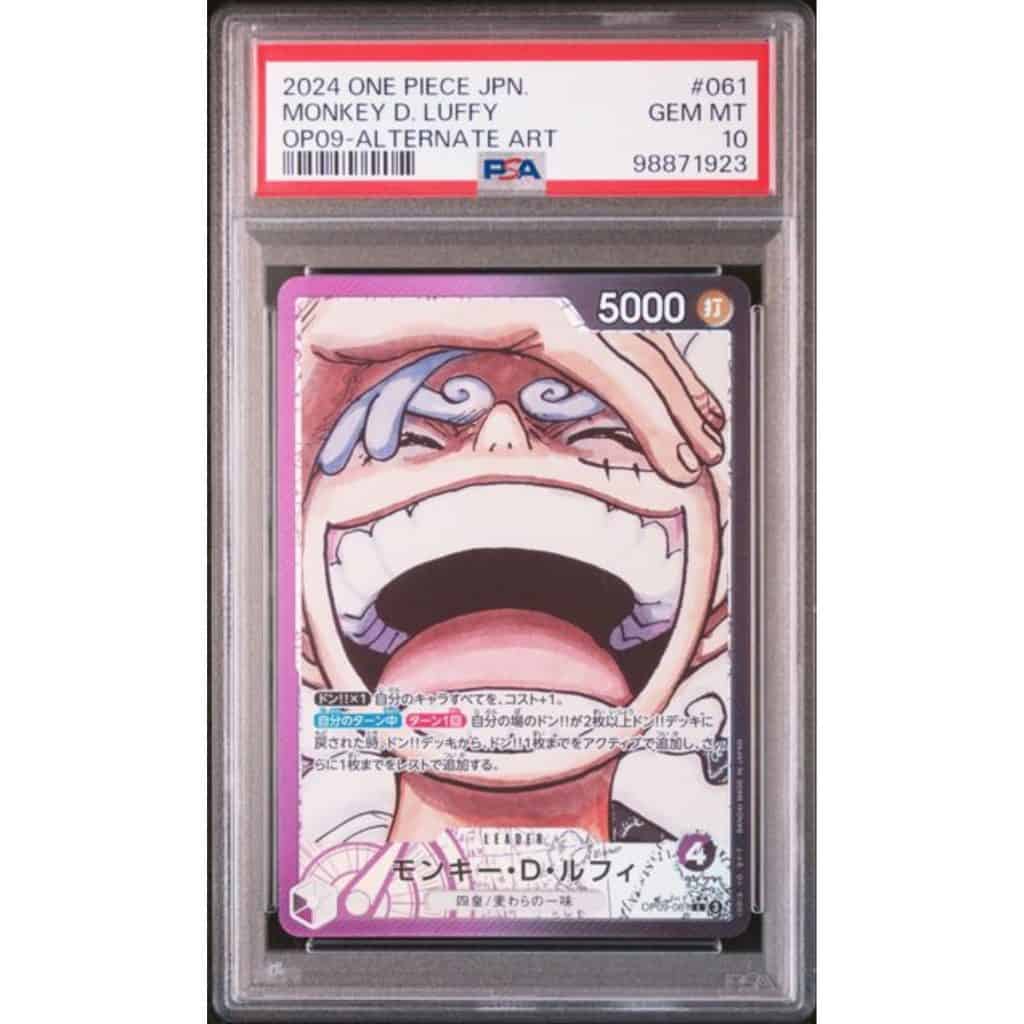
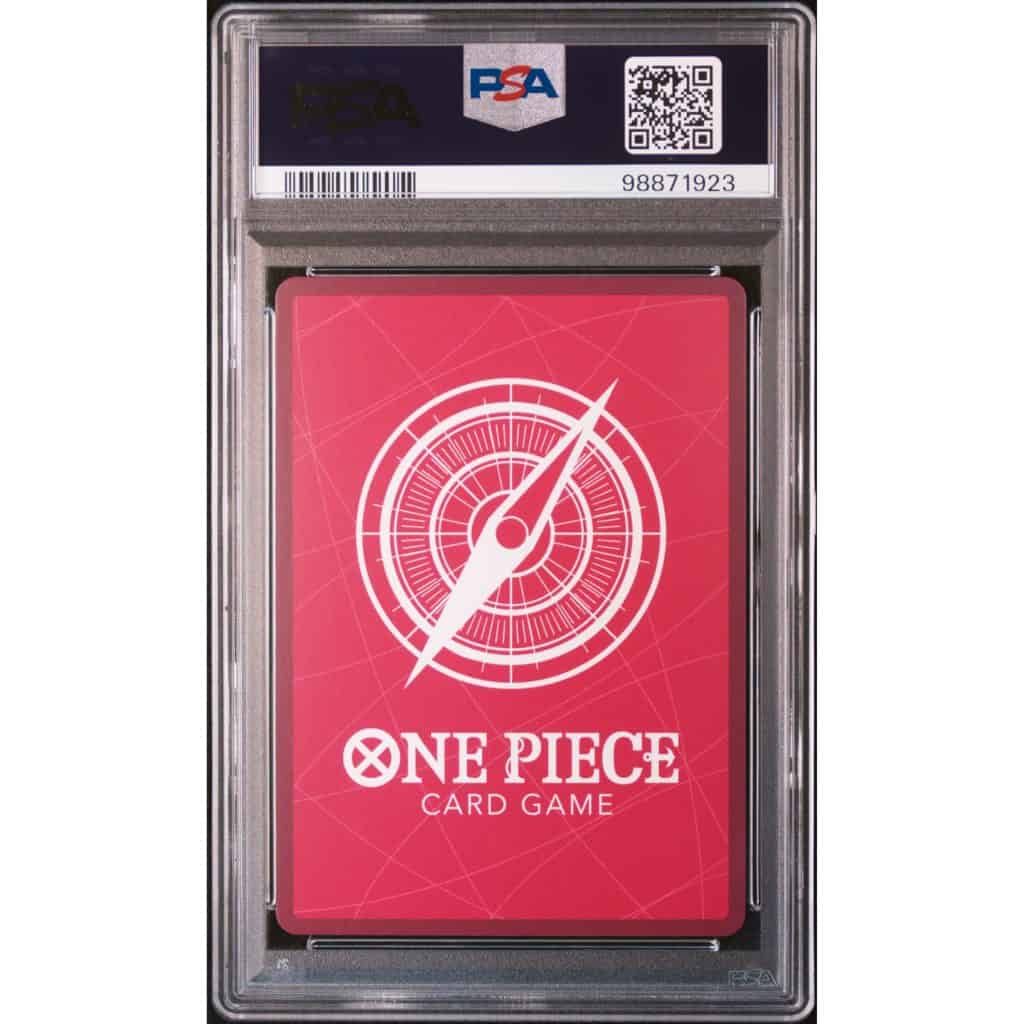
2024 One Piece Japanese OP09 – Emperors in the New World #061 Monkey D. Luffy (Alternate Art) – PSA 10
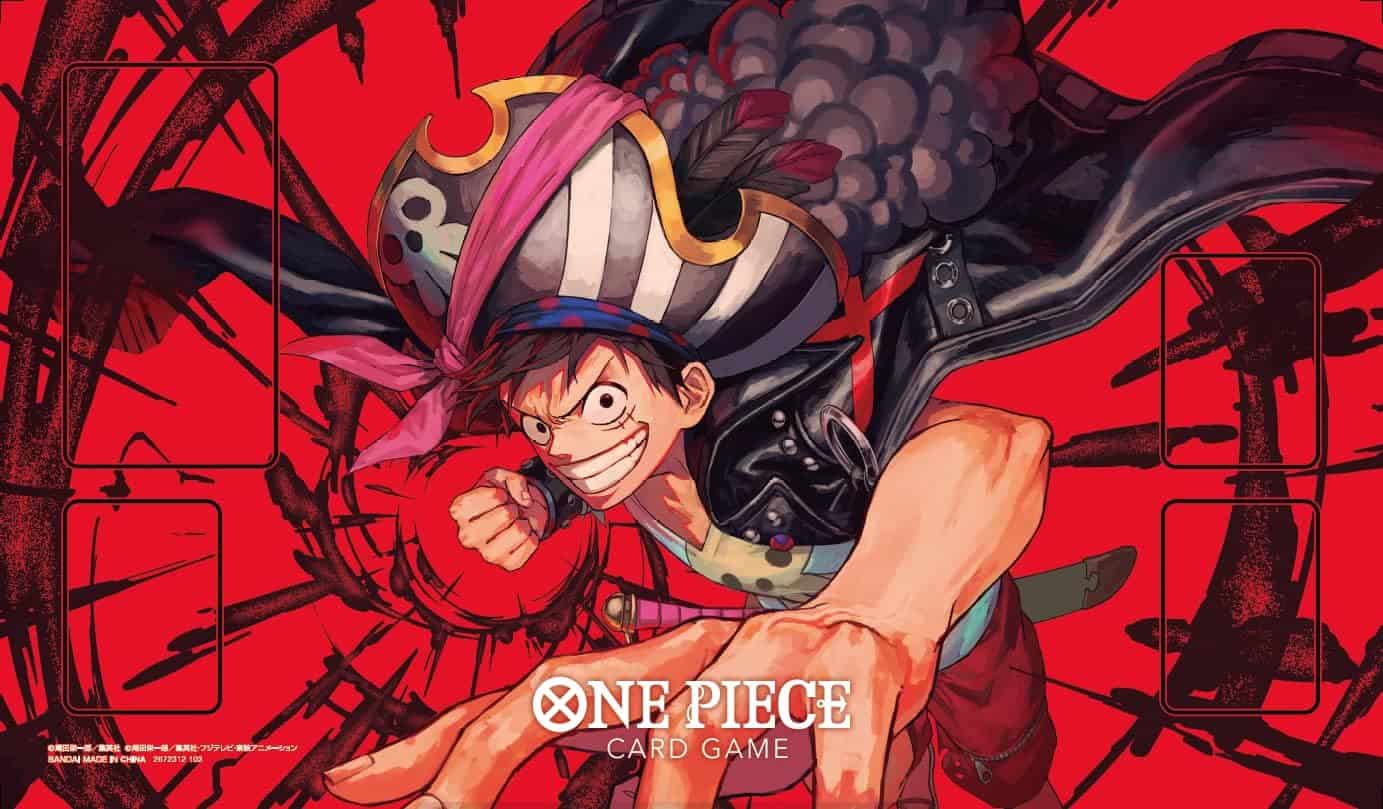
The Monkey D. Luffy #061 Alternate Art card from the 2024 Japanese One Piece Card Game OP09: Emperors in the New World set shows a bold and detailed illustration of the series’ main character. This alternate art version gives Luffy a new look, making it a popular choice for collectors and One Piece fans.
First, authentication. The Japanese market attracts counterfeits of high-value cards. A PSA-graded card has been physically inspected and authenticated by a third party, which removes authentication risk from the transaction.
Second, value documentation. A PSA 10 (Gem Mint) Japanese Secret Rare from OP-01 trades in a completely different bracket from an ungraded copy of the same card. The grade creates a documented condition standard that supports higher prices and easier resale.
For collectors building a long-term portfolio of Japanese One Piece cards, grading key pieces from early sets is a standard practice rather than an optional one.
Why Supply Tightness Makes Japanese One Piece Cards a Collector’s Market
The Japanese One Piece Card Game print runs are not infinite. Bandai produces each set for a defined window. When a set sells out at distributor level, it does not come back. The secondary market takes over entirely.
This is different from how the international versions work. English and European sets have received reprints and extended production windows in response to demand. Japanese sets have not followed the same pattern. That asymmetry means that Japanese card supply from early sets is genuinely fixed, while international supply remains more elastic.
Fixed supply plus growing global demand is the structural condition that drives appreciation. Collectors who understood this early, buying sealed Japanese boxes from OP-01 and OP-02 when they were at retail, have seen those positions appreciate significantly.
For buyers entering now, the opportunity is in sets that are recently out of print or approaching end of print run, before secondary market prices fully reflect the supply constraint.
How to Buy Japanese One Piece Cards in Europe
The Japanese One Piece Card Game is not widely stocked by European retailers. Most shops carry the European or English editions. Accessing Japanese product in Europe requires either direct import from Japan or sourcing from specialists who maintain Japanese supply chains.
Rare Inventory operates from France and sources directly from Japan. Our One Piece catalog includes sealed booster boxes, booster packs, and specific high-demand sets including the EB-01 Memorial Collection. Every product we list is authentic and sourced through verified channels.
For European collectors, buying through Rare Inventory means no customs uncertainty (we ship from within the EU), guaranteed authenticity, and access to Japanese product that is not available through standard European retail.
We focus on collectors who value rarity, design, and long-term appreciation. That means we do not stock mass-market filler. What we carry is what serious collectors are actually looking for.
Explore our Japanese One Piece Card Game catalog on Rare Inventory.
Building a Japanese One Piece Collection: Where to Start
For collectors new to the Japanese One Piece market, a practical entry sequence:
Start with a sealed booster box from a current or recently released set to understand pull rates and card quality firsthand. This also gives you sealed product that can appreciate if you choose not to open it.
Identify one or two characters or arcs that matter to you and focus on acquiring high-rarity Japanese cards featuring those characters. Collector focus produces better results than trying to acquire everything.
Consider PSA grading for any Secret Rare or Manga Rare you acquire from early sets. The grading cost is justified for cards with genuine secondary market value.
Track Japanese set release dates independently of international release schedules. The Japanese calendar is the calendar that matters for this market.
Rare Inventory updates its Japanese One Piece stock regularly. Follow us for new arrivals and restocks on high-demand sets.
The Shop
Available Now at Rare Inventory
Pieces related to this article, in stock and ready to ship.

In Stock
2024 One Piece Japanese OP09 – Emperors in the New World #061 Monkey D. Luffy (Alternate Art) – PSA 10
€400
Shop Now →

100% Authentic Shipped from France Free Shipping Over €200