Wasted Youth: How a Tokyo Streetwear Brand Ended Up on a G-Shock
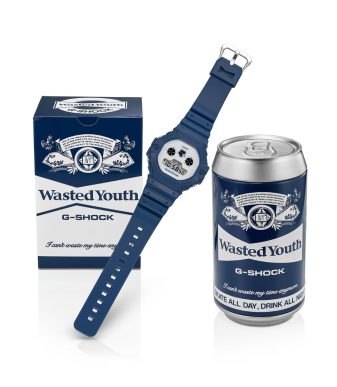
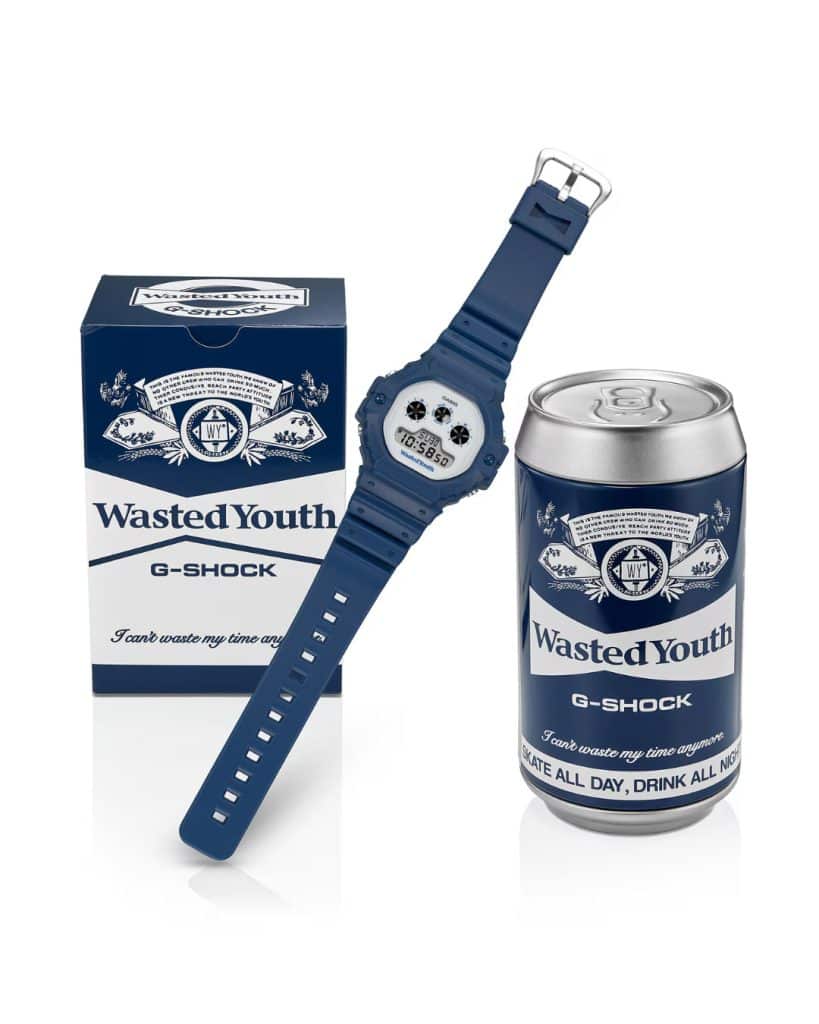
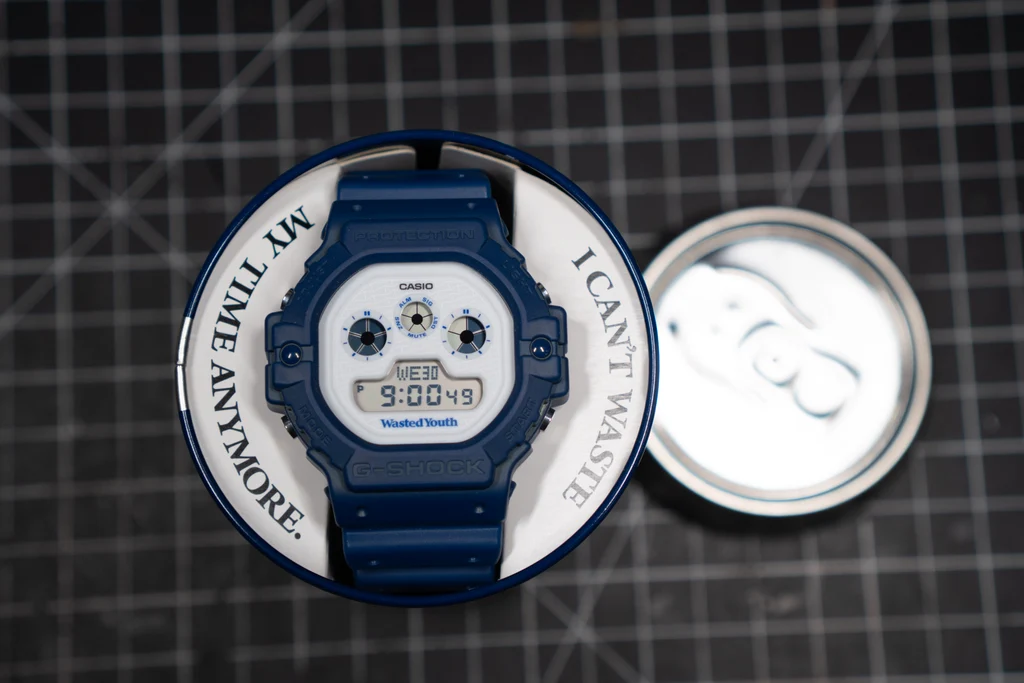
There is a specific kind of G-Shock that stops being a watch. It still tells the time, it still survives a drop onto concrete, but the reason people hunt for it years after release has nothing to do with horology. The DW-5900WY-2JR is one of those. It is the first collaboration between Casio’s G-Shock and Wasted Youth, the Tokyo brand and skate team run by the graphic designer Verdy, and it arrived in December 2022 packaged in a box shaped like a beer can.
To understand why a navy digital watch with a glowing cream face became a collector’s item, you have to understand the logo on the dial, the man who drew it, and the very specific case Casio chose to put it on.

Explore the full collection
Figures, art toys & limited editions, shipped across Europe from France.
Who is Verdy?
Verdy is a Japanese graphic designer, born in 1987, who works under a single name. The story goes that the alias comes from the Verdy Kawasaki football shirt he wore constantly during his years in Osaka. He studied design there, co-founded a design collective in 2008, and moved to Tokyo in 2012, which is where his career changed shape.
What makes Verdy unusual is that he is not a fashion designer who learned graphics. He is a graphic artist who built brands out of drawings. His visual language is small, repeatable and instantly legible: a smiley face, a tulip, a serif wordmark, a bowtie-shaped monogram. That legibility is exactly what makes his work translate onto a watch dial, a sneaker, a hoodie or a coffee cup without losing anything.
By the time G-Shock came calling, Verdy had already worked with Nike SB, Uniqlo, Human Made and a long list of others, and had been publicly endorsed by the older generation of Ura-Harajuku figures including NIGO and Jun Takahashi of Undercover. That endorsement matters in Tokyo. It is the difference between a designer with an audience and a designer with a lineage.
What Wasted Youth actually is
Wasted Youth is not a clothing line with a skate team attached for credibility. Verdy founded the brand in 2016 together with the skate team, and the two have always been one project.
The name comes from his own biography. After design school he spent years in Tokyo scraping by and searching for an original voice, the sort of stretch most people would write off as time lost. Verdy’s position is the opposite: none of that was wasted. The message he attaches to the project is that the time you pour into a culture and into your own life is never a waste, whatever it looks like from outside.
The logo carries the same double meaning. It is a rework of the wordmark used by the hardcore punk band Gang Green, which in turn borrowed from the vintage Budweiser script. That gives you the full triangle of references in one graphic: American punk, cheap beer, and the skate culture that lived on both. One of the brand’s recurring images is a tulip growing out of a crushed beer can, which is the same idea drawn instead of written.
Two other things define how Wasted Youth reaches people. First, distribution is deliberately narrow: pop-ups, physical stores, collaborations, almost never conventional wholesale. Second, Verdy’s brands function through drops and events rather than seasons. That combination is why the queues form, and why so much of the output ends up on the secondary market.
Explore the full collection
Figures, art toys & limited editions, shipped across Europe from France.
Why the DW-5900 was the right case
Casio could have put the Wasted Youth logo on almost anything. The DW-5900 was the correct choice, and not by accident.
The 5900 first launched in 1992, with the distinctive triple-graph display that would later define the far better known DW-6900. The line went quiet for years and was revived in 2018. Its original moment coincided with skateboarding pushing into mainstream visibility, and the model has carried that association ever since: chunky, digital, cheap enough to actually skate in, more at home in a video part than in a display case.
For a brand built on a skate team and punk references, the 5900 is a shorter route to the point than any metal or premium G-Shock would have been. The watch already meant the right thing before anyone touched it.


Wasted Youth x G-Shock DW-5900WY-2JR Watch (Japan Limited Edition)
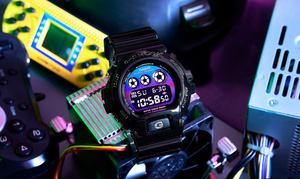
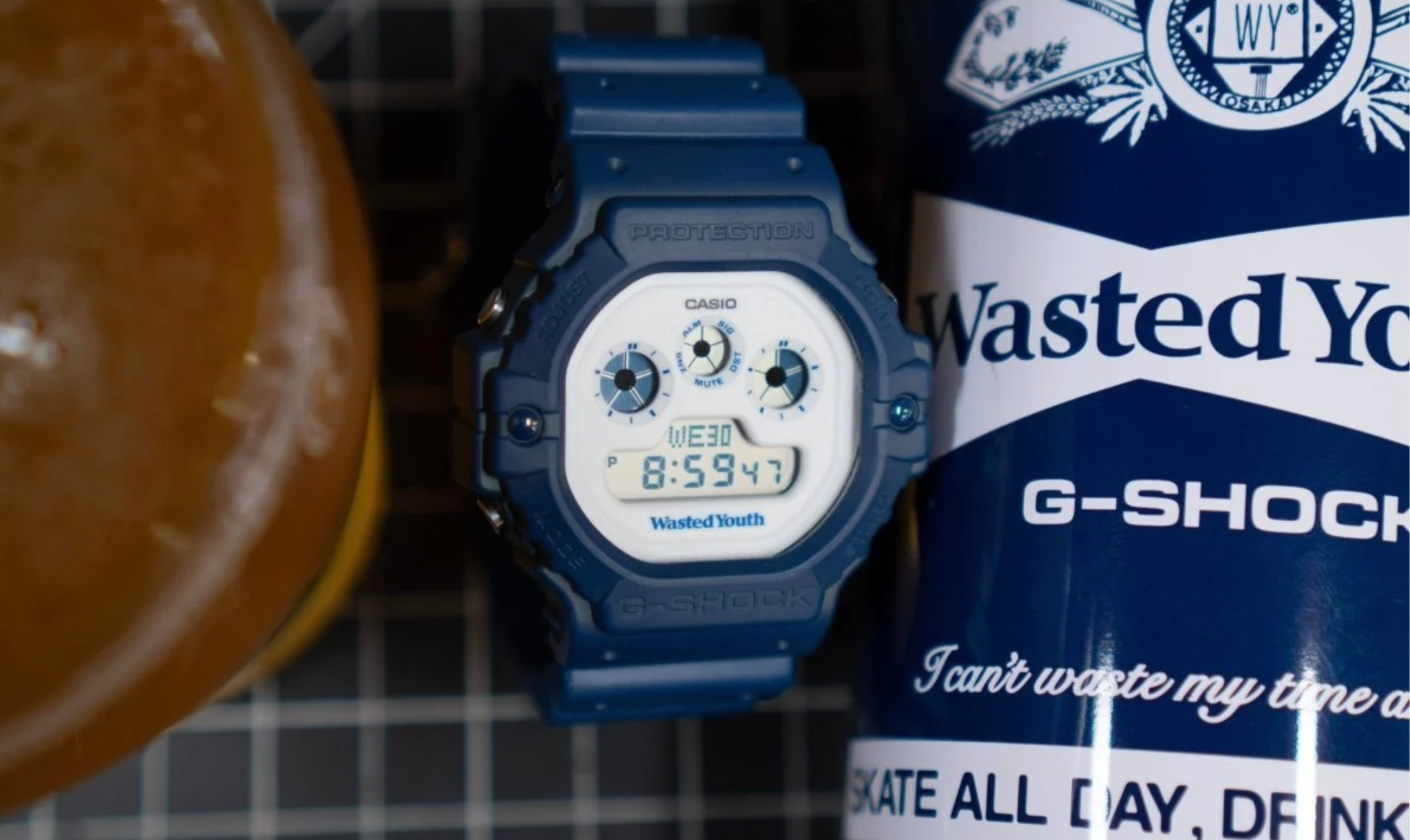
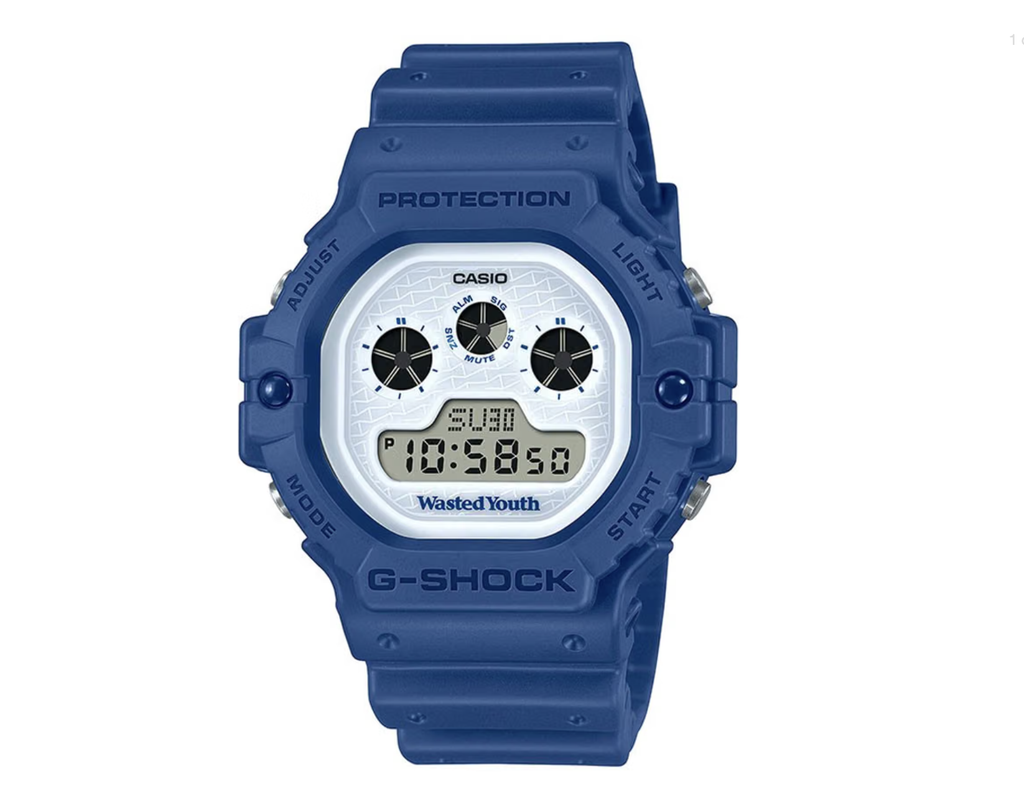
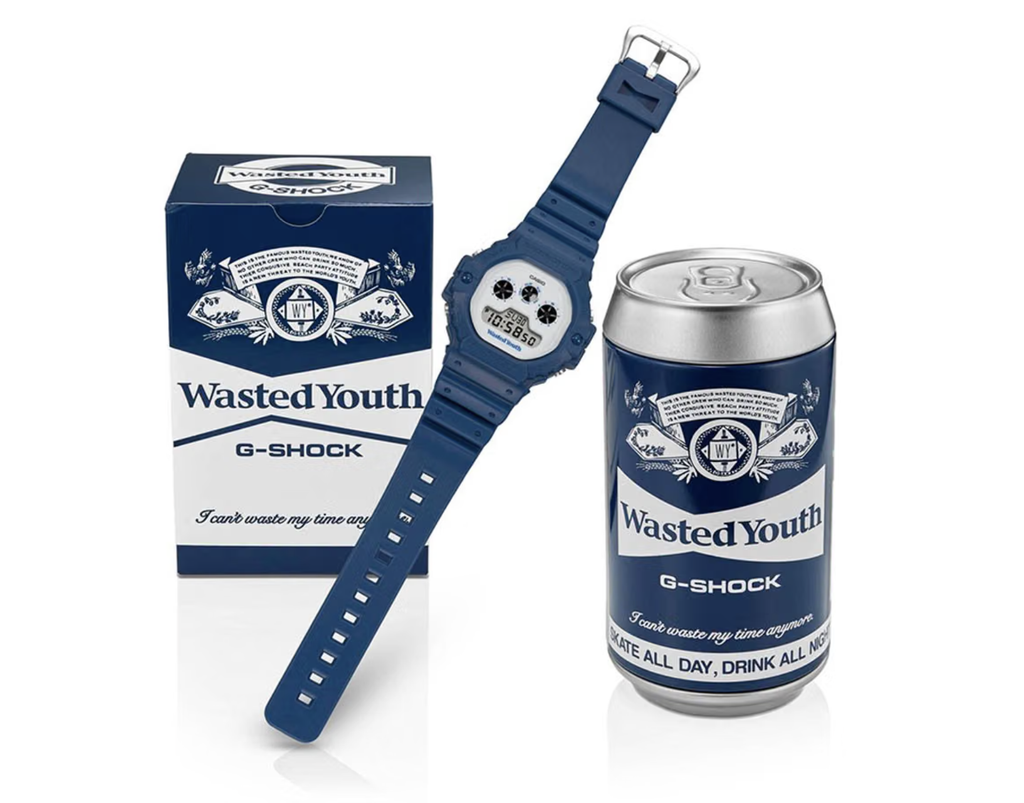
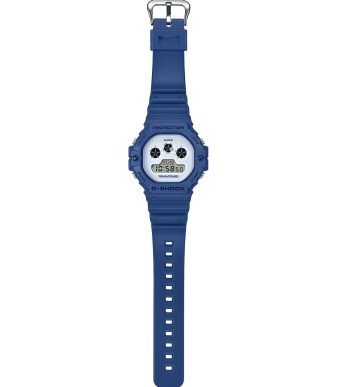
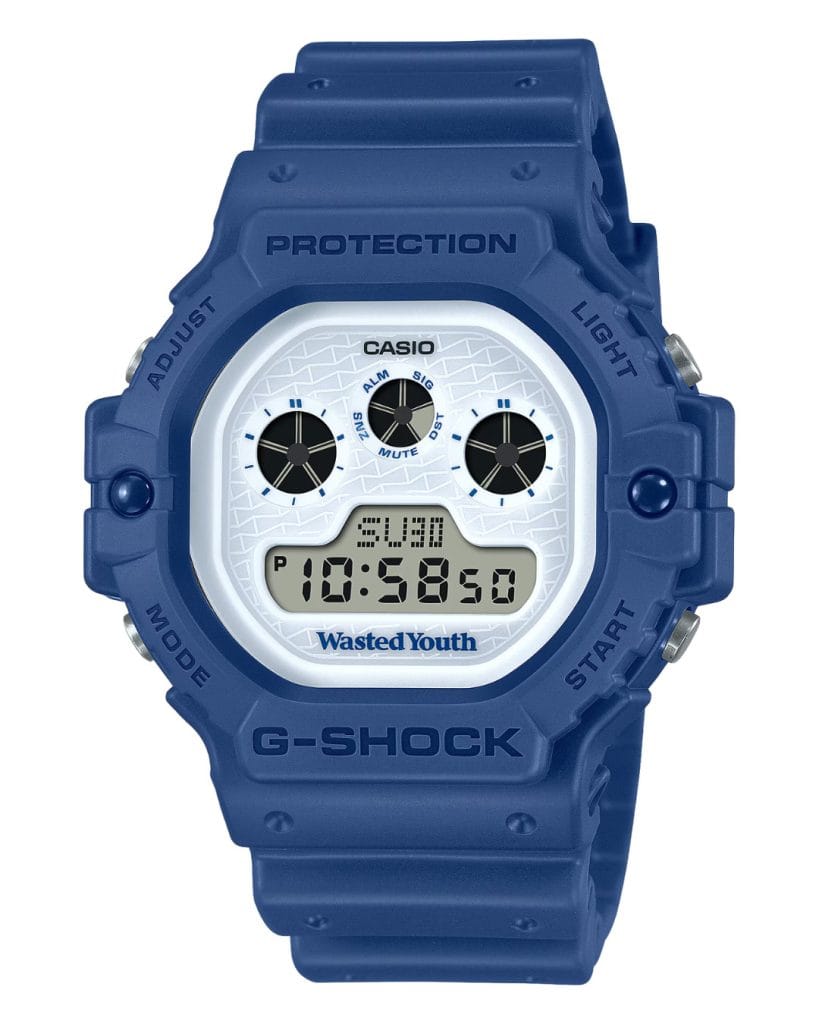
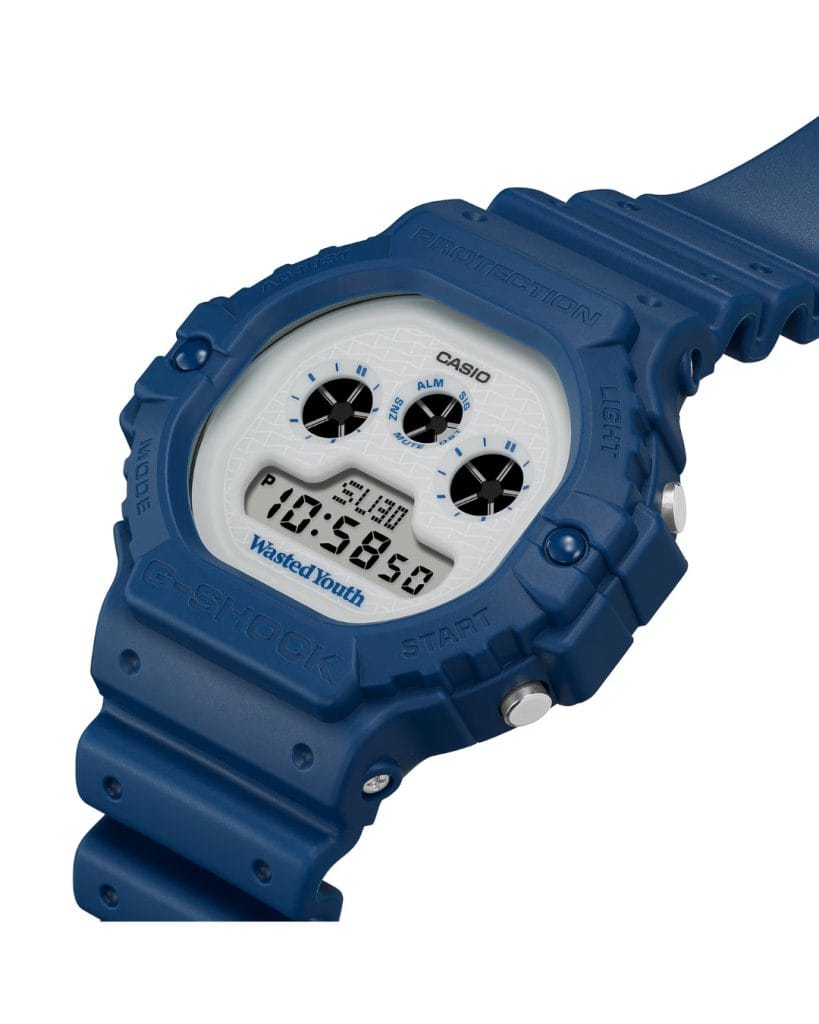
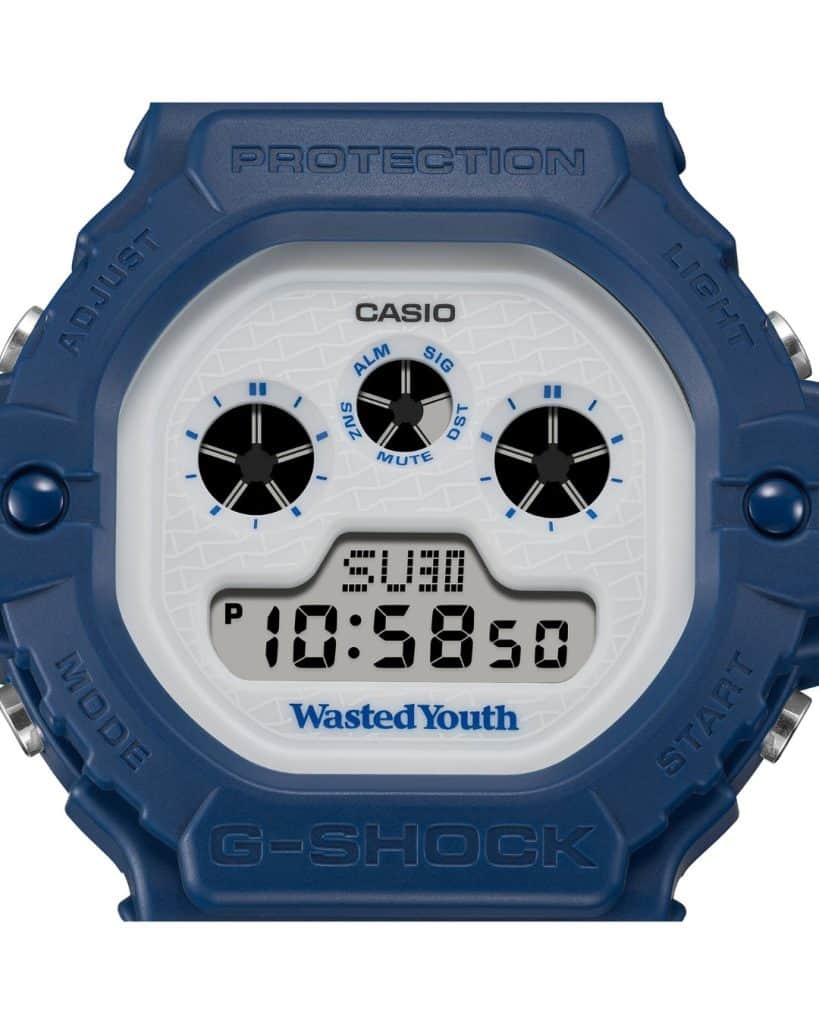
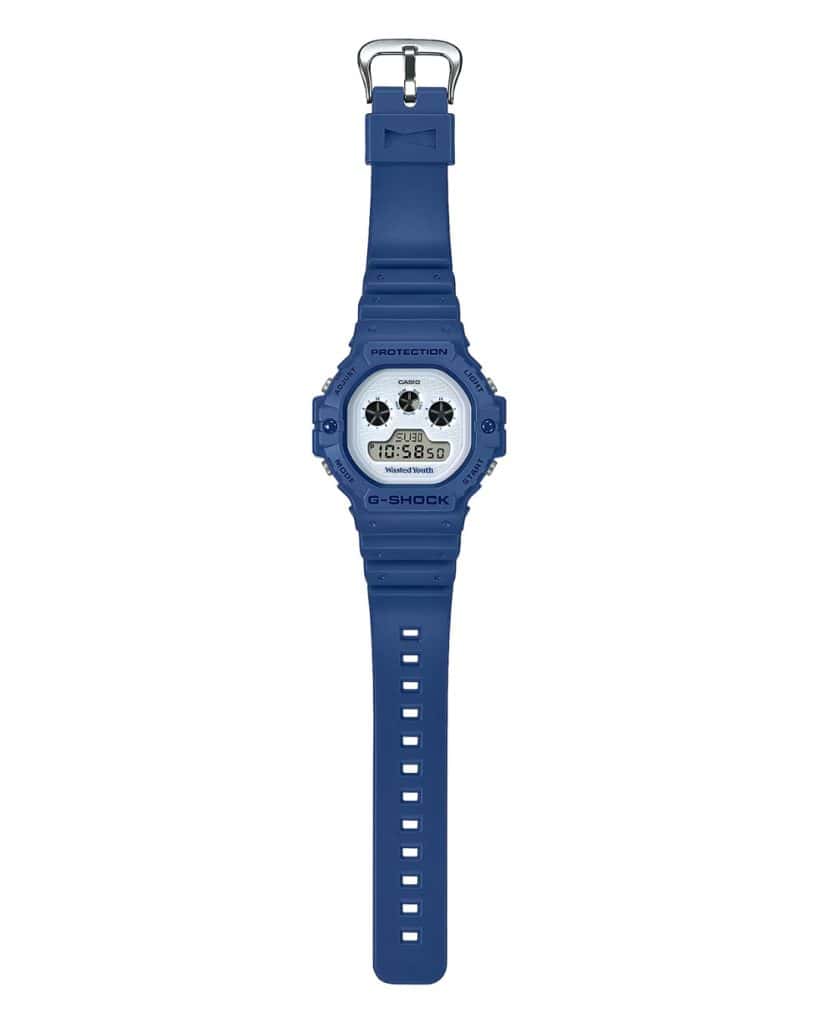
The Wasted Youth x G-Shock DW-5900WY-2JR Watch is a Japan-exclusive collaboration that blends Verdy’s iconic streetwear vision with the rugged DNA of G-Shock. Built on the classic DW-5900 silhouette, it features a deep navy case and a glow-in-the-dark dial covered in the signature Wasted Youth monogram.
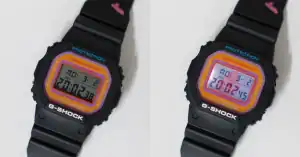
The EL backlight reveals a hidden “W.Y.” logo, adding an interactive detail that elevates its collectible appeal.
The design details, one by one
The collaboration is restrained by collab standards, which is part of why it aged well. Everything on it is doing a job.
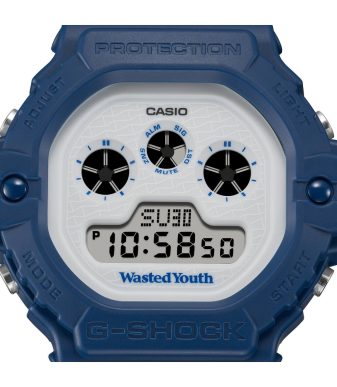
The colourway. Navy blue resin case and strap, with a splashed white face. Two colours, no gradient, no camo, no distress texture. The contrast reads clearly from across a room, which is what a logo watch needs.
The glow. The face is patterned with the Wasted Youth bowtie monogram, and the whole thing glows in the dark. This is the feature that photographs best and the one owners mention first.
The hidden backlight graphic. Press the light button and the letters W.Y. appear on the LCD. It is the single most collab-specific detail on the watch, and it is invisible until you activate it. A private joke between the watch and the person wearing it.
The strap keeper. The bowtie motif is cut out of the band keeper, so the logo appears as a negative space rather than a print. A print wears off. A cutout does not.
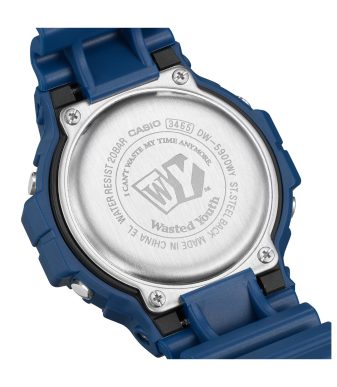
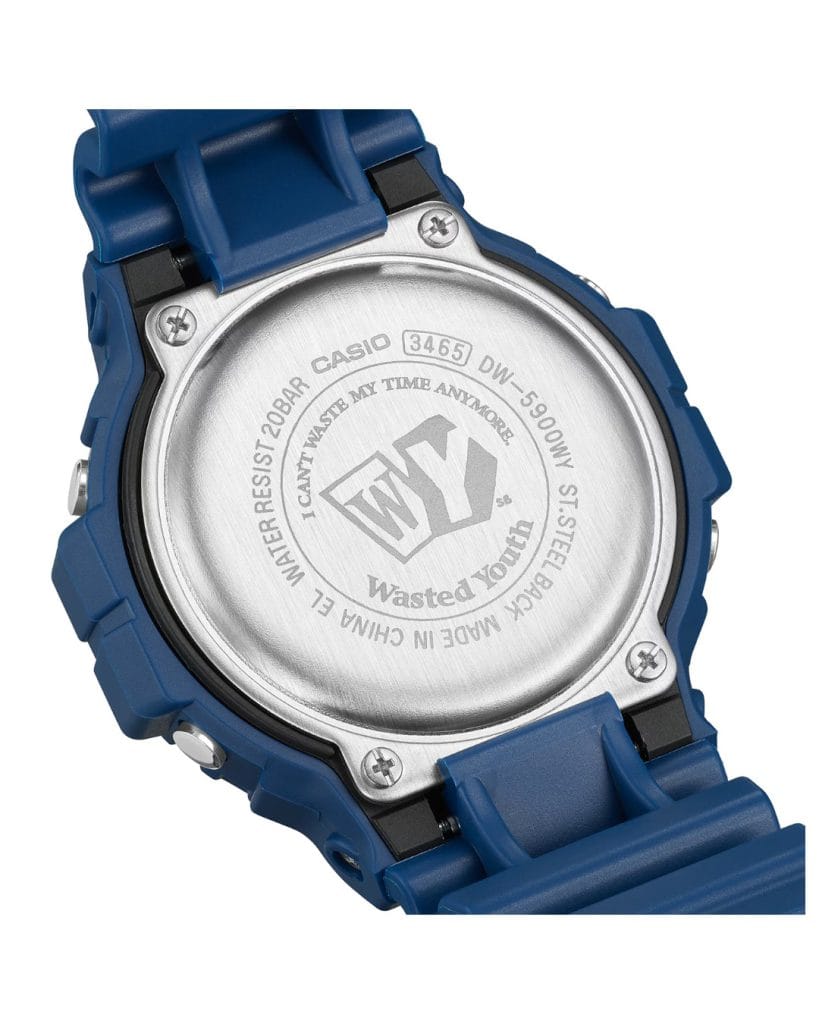
The caseback. The stainless steel back is engraved with the W.Y. logo and the tagline about not being able to waste time anymore, which is the brand’s whole thesis compressed into one line on a part nobody sees.
The packaging. The watch shipped in a case designed to look like a beer can, a direct callback to Wasted Youth’s earlier Budweiser collaboration and to the crushed-can tulip graphic. For collectors this is not a detail, it is half the value: a DW-5900WY-2JR without its can is a materially different object from one with it.
Specifications
| Model | DW-5900WY-2JR (Japan) / DW-5900WY-2 (international) |
| Case | 51.4 x 46.8 x 15.5 mm |
| Weight | Approx. 60 g |
| Display | Digital, triple graph |
| Water resistance | 200 m |
| Battery | CR2025, approx. 5 years |
| Functions | World time (29 zones, 48 cities), 1/100s stopwatch, countdown timer, 5 daily alarms, hourly signal, EL backlight with afterglow, auto calendar |
| Release | Japan, December 2022 |
| Japanese retail | 15,400 yen including tax |
| US retail | 130 USD |
Nothing in that list is exotic. The DW-5900 platform is one of the most dependable and least expensive things Casio makes, and the collaboration did not add a single complication. That is the point. You are buying a graphic object with a five-year battery in it.
To see where the Wasted Youth watch sits next to other releases, our ranked Casio collab watches list compares the artist, entertainment and gaming editions side by side, with authentication notes for each.
Explore the full collection
Figures, art toys & limited editions, shipped across Europe from France.
Why it sold out, in plain terms
There is a temptation to explain every sellout with bots, and bots are real. But the mechanics here are simpler and more structural.
Verdy’s brands operate on scarcity by design. Releases happen through pop-ups and limited channels, quantities are never announced in advance, and the audience is global while the release is usually Japan-first. Add a price point low enough that buying two is trivial for a reseller, and demand concentrates into a very short window.
The result is the pattern collectors know well: an initial retail moment measured in minutes, a resale spike in the following weeks, then a slower market in which condition and completeness, especially the beer can packaging, do more to determine price than the watch itself.
JR versus the international model
The JR suffix marks the Japanese domestic version. Mechanically the DW-5900WY-2JR and the DW-5900WY-2 are the same watch. The differences are in the box: Japanese-market manual, Japanese warranty documentation, and the packaging as sold in Japan.
For most wearers this is irrelevant. For collectors it is not. JR references generally carry a small premium among buyers who want the domestic release specifically, and mixing a JR watch with international packaging is the sort of thing that turns up in resale disputes. If you are paying a collector price, confirm which version you are actually receiving.
What to check before you buy
A few things worth confirming on any secondary-market example:
The can. Ask for a photo of the packaging, not just the watch. Its absence should be reflected in the price.
The glow. Request a dark photo. The lume face is the collaboration’s signature and it is the fastest way to confirm you are looking at the real reference rather than a repainted standard 5900.
The backlight. A short video of the light button showing the W.Y. letters on the LCD settles the question completely. This is very difficult to fake convincingly.
The keeper. The bowtie cutout on the band keeper is a physical feature. Keepers are also the part most often lost or swapped on any G-Shock, so check it is present and that it is the collab version.
The resin. Navy resin from 2022 that has lived in a drawer is fine. Resin that has lived on a car dashboard is not. Look for chalky surfaces and stiffness at the strap holes.
The battery. A CR2025 lasts around five years, which puts an untouched 2022 example right at the edge. A dead battery is not a fault, it is a 10 euro service, but it should not be sold as a defect either.
Storage, if you are not going to wear it
Resin ages badly under UV and heat. Keep it out of direct sunlight and away from anything that gets warm. Keep the can, keep the tag, keep the manual. If you are storing it long-term, storing it with a dead battery removed avoids any risk of leakage, though on a CR2025 that risk is small.
And if you do wear it, wear it. This is a 200 metre skate watch built on a case Casio has been refining since 1992. The collectible part is the graphic. The watch part was always meant to take a beating.
The Shop
Available Now at Rare Inventory
Pieces related to this article, in stock and ready to ship.


100% Authentic Shipped from France Free Shipping Over €200