Who Is KAWS? The Story Behind the Companion and His Success
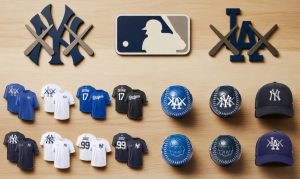
Back in 1999, a Brooklyn-based animator slipped a limited run of 500 vinyl figures into Japanese streetwear boutiques, and the secondary market moved them in hours. That first Companion, a Disney-esque creature in monotone coloring, sold out almost instantly, and the figure became a recurring presence in KAWS’ entire body of work. Nobody called it “collectible art” yet. Most buyers simply thought it was a very cool toy. Twenty-five years later, KAWS commands auction prices in the millions, holds a residency with UNIQLO, and launched an MLB collaboration with the Yankees and Dodgers in July 2026. The collector mistakes, however, remain the same ones people made in 1999.
Mistake #1: Not Knowing Who KAWS Actually Is Before You Buy
Too many buyers walk into their first KAWS purchase with zero context. They see the X eyes, they like the shape, and they spend serious money without understanding the market they just entered.

Brian Donnelly, born November 4, 1974, uses KAWS as his professional name, and his work centers on a recurring cast of figurative characters and motifs, some dating back to the 1990s. He coined the name during his high school years, and the name itself carries no literal meaning; he chose it purely for aesthetic reasons because he liked how the letters looked together as a tag.
After graduating high school, he attended the School of Visual Arts in New York City, studying fine arts with a focus on illustration. Although he had been interested in graffiti in high school, it was only when he lived in New York that he developed his signature style. Upon completing his degree in 1996, KAWS was hired by Jumbo Pictures as an animator and worked on productions including 101 Dalmatians, Daria, and Doug.
Moving to New York City in the 1990s, KAWS pursued illegal graffiti. An animator by day and graffiti artist by night, he started subvertising billboards, bus shelters, and phone booths, using a skeleton key gifted to him by friend and fellow graffiti artist Barry McGee. That dual identity, corporate animation by day and street subversion by night, feeds directly into the tension that makes Companion figures so resonant. Context matters for valuation. Collectors who understand the origin story also understand why early editions command the premiums they do.

Explore the full collection
Figures, art toys & limited editions — shipped across Europe from France.
The Companion: More Than a Mickey Mouse Riff
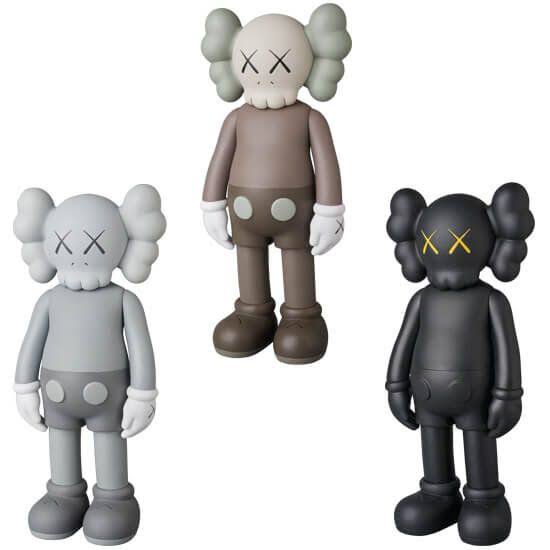
When most people think of KAWS, they conjure visions of Companion: a melancholic Mickey Mouse figure often depicted with cross-glove hands covering his face or in similarly thoughtful positions. Like most of the artist’s characters, Companion has a morbid yet playful look. The familiarity of Mickey Mouse tropes, including white gloves, boots, and large brass-buttoned shorts, sits alongside contrasting skull-and-crossbones and X eyes. These figures convey themes of loneliness, vulnerability, and friendship. While playful and approachable, they also suggest melancholy and alienation beneath the glossy surfaces of consumer society. Buy without knowing this, and you are simply acquiring plastic. Know it, and you understand why the market prices these figures the way it does.
Mistake #2: Ignoring the Japan Connection
Western collectors consistently underestimate how deeply Japanese toy culture shaped KAWS’ market. This ignorance costs them money on release day and on resale.
In 1999, KAWS released his first limited-edition Companion vinyl figure in collaboration with the Japanese toy company Bounty Hunter, marking a key moment in his move toward collectible objects and design-oriented editions. Since that first vinyl toy with Bounty Hunter, he has collaborated with other Japanese companies, including Nigo for A Bathing Ape and Medicom Toy. Since the beginning of their partnership in 2001, Nigo and KAWS collaborated on packaging for the Kimpsons exhibit and three seasons of A Bathing Ape.
KAWS and Medicom Toy ran OriginalFake, a brand and retail store in Aoyama, from 2006 to May 2013. That Aoyama chapter produced some of the most sought-after editions in the entire KAWS catalogue. Japanese collectors tracked these drops the way sneakerheads track Nike collaborations. If you want to understand secondary market pricing, you need to understand Japanese toy culture first. Edition sizes, colourway exclusivity, and regional retail partnerships all drive premiums that confuse buyers who only follow the Western narrative.
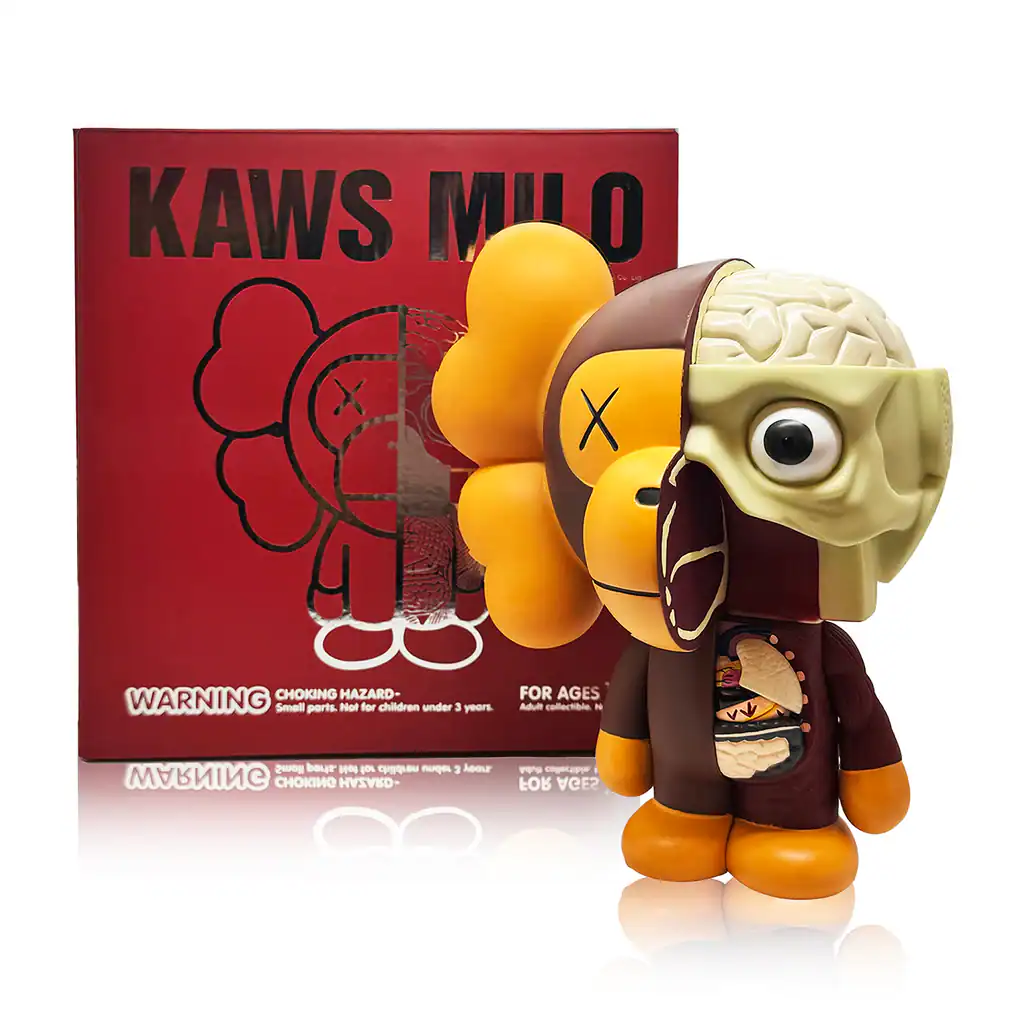
Collectors who want a specific example of Japan-era scarcity should look at the KAWS Dissected Milo 2011 Vinyl Figure Brown, a limited edition of just 500 pieces, or its counterpart, the KAWS Dissected Milo 2011 Vinyl Figure in White. Both represent exactly the kind of Japan-rooted, tightly capped edition that serious collectors covet.


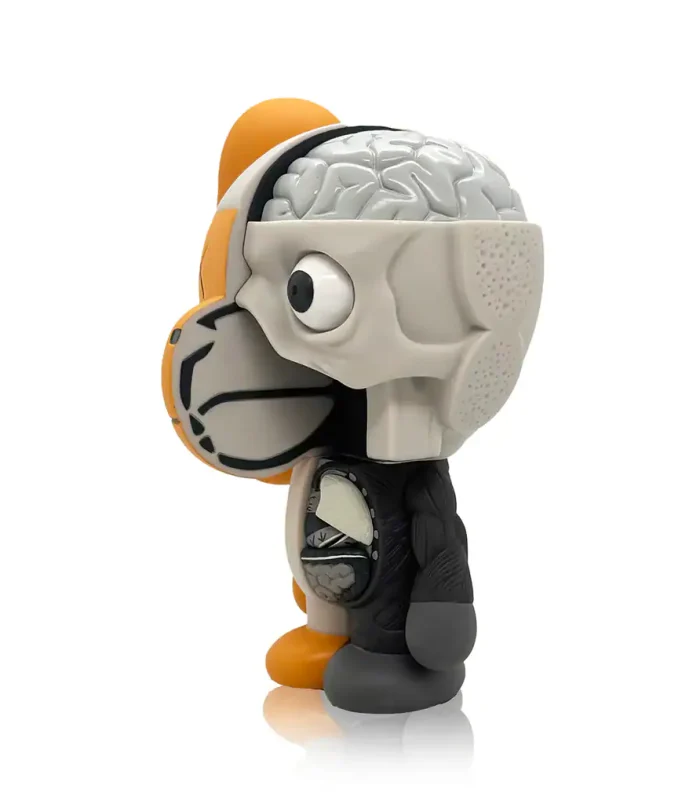
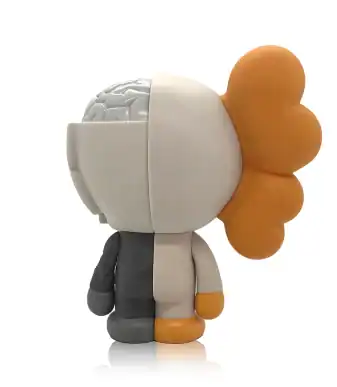

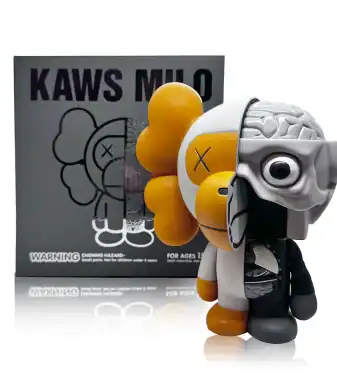


KAWS x BAPE Dissected Milo 2011 Vinyl Figure (White) | Limited Edition 500
Official KAWS Dissected Milo vinyl figure released in 2011. One of the most iconic KAWS companion pieces ever produced, the Dissected Milo exposes the internal anatomy of the beloved character through KAWS’ signature dissection aesthetic. Painted cast vinyl with exceptional detail and finish.
Mistake #3: Buying a Fake and Not Knowing It
This is the most expensive mistake, and more collectors make it than will admit. KAWS ranks as the most counterfeited living designer-toy artist on the planet. With a $14.7 (about €13)M auction record at Sotheby’s Hong Kong in 2019, and limited editions routinely appreciating 5x to 20x retail, the bootleg ecosystem has scaled in lockstep.
Authentication Checklist: What to Inspect First
Legitimacy checks begin with the KAWS box. An authentic one has a hologram label that changes color as you move the box. Beyond that, examine the figure itself with the same scrutiny. Check the facial details, particularly the lines that form the face. Fake figures often have inaccurately sized lines. Authentic figures show perfectly attached body parts and paint, without any glue stains. Fakes have glue stains and poorly fit plastic pieces.
For example, a four-foot KAWS Dissected Companion has 10 dots for the ribs. Many fakes only have nine. That single-dot difference has caught countless counterfeits. Additionally, authentic KAWS packaging uses high-density coated cardstock with foil-stamped typography, built to a specific weight tolerance. Counterfeit boxes feel noticeably lighter, often 15 to 25% under the documented weight for that release.
Always be skeptical of any product marked “factory error.” KAWS spends a great deal of time perfecting every limited-edition design. Smudged, deformed, or misaligned details are highly unlikely on an authentic KAWS piece, making “factory error” and “sample” simply more appealing terms for “unauthorized copy.”
| Authentication Point | Authentic | Fake |
|---|---|---|
| Box hologram label | Color-shifting hologram present | Missing or static sticker |
| X-eye symmetry | Perfectly symmetrical, deeply set | Uneven, thin, or misaligned |
| Paint finish | Clean edges, no bleed or overspray | Smudged, uneven application |
| Sole inscription | Clear, correctly spelled, correct font weight | Wrong thickness, misspellings |
| Plastic density | Solid, weighted vinyl | Hollow, noticeably lighter |
| Rib dots (Dissected Companion) | 10 dots | Often only 9 |
Mistake #4: Treating All Editions as Equal
Not all KAWS figures appreciate the same way, and collectors who lump them together miss the real valuation logic entirely.
The Companion has taken on a variety of colors, sizes, and poses, reaching different price points from the considerably affordable vinyl toys to the record-breaking large-scale Seated Companion, which sold at auction for over $400,000 (about €356,660) in 2017. Furthermore, in 2019, THE KAWS ALBUM sold at auction for a record $14.8 million (about €13.2 million). The work reimagines the Beatles’ famous 1967 Sgt. Pepper’s Lonely Hearts Club Band album cover but replaces the figures with Simpsons characters bearing the artist’s signature X eyes.

The secondary market rewards scarcity and provenance above all else. First, edition size matters enormously: a run of 500 outperforms a run of 5,000 every time, all else equal. Second, collaboration partner matters: Medicom Toy and BAPE-era figures carry stronger collector premiums than mass retail drops. Third, condition and completeness matter: listings missing the original box, hangtag, or NFC chip cause authentic figures to lose 40 to 60% of value, and many “lost packaging” listings are simply unboxed bootlegs.
Explore the full collection
Figures, art toys & limited editions — shipped across Europe from France.
KAWS Collaboration Tier Comparison
| Collaboration Type | Edition Size | Secondary Market Demand | Collector Tier |
|---|---|---|---|
| Medicom Toy / OriginalFake era | Typically 500-1,000 | Very High | Investment grade |
| BAPE / Nigo collaborations | Typically 500-1,000 | High | Blue chip collector |
| MoMA Design Store releases | Open but crashed site | Moderate-High | Entry to mid-level |
| UNIQLO capsule apparel | Mass retail | Low on resale | Lifestyle / entry |
| Gallery-exclusive prints | Varies, 50-300 | Very High | Fine art collector |
Mistake #5: Underestimating KAWS’ Institutional Trajectory
Many collectors still think of KAWS as a toy brand with gallery ambitions. That era ended years ago, and collectors who missed the shift left serious money on the table.
By the late 2010s, KAWS became a major force in the global contemporary art market, with large paintings and sculptures achieving multi-million-dollar prices at auction and demand for limited-edition toys, prints, and merchandise far exceeding supply. In 2016, KAWS entered into an ongoing relationship with clothing store UNIQLO to produce a line of affordable T-shirts and accessories. That relationship has since deepened: UNIQLO appointed KAWS as artist in residence in 2025, and a new capsule dropped in May 2026. These moves normalize the brand for tens of millions of new consumers, which feeds upstream demand for serious collector editions.
Beyond fashion, KAWS’ first major West Coast museum show arrived in San Francisco in 2025. After years in the industry, KAWS gained approval from peers in the street art world and, more recently, prestige from the museum and gallery worlds. His work now appears in the collections of the High Museum of Art in Atlanta, the Modern Art Museum of Fort Worth, and the Rosenblum Collection in Paris. The museum legitimacy cycle historically drives secondary market prices for limited editions upward, not downward. Collectors who sold before the institutional recognition peaked paid for that impatience.
Rare Inventory Editor’s Pick
For collectors entering the KAWS market in 2026, the KAWS Dissected Milo 2011 Brown Limited Edition 500 represents the strongest convergence of scarcity, era significance, and secondary market demand available right now. A 500-piece cap from the OriginalFake era with full packaging is the definition of blue chip collector vinyl. Start there, authenticate carefully, and build outward.
Explore the full collection
Figures, art toys & limited editions — shipped across Europe from France.
Where to Buy
Rare Inventory is a Paris-based specialist in premium collectibles and ships across Europe, offering authenticated KAWS figures alongside a curated selection of art toys, prints, and Japanese collectibles. Every piece goes through a sourcing process designed to protect buyers from the bootleg market that plagues this category. Browse the current selection at Rare Inventory for verified KAWS editions, signed prints, and rare vinyl from the eras that matter most to serious collectors.
Frequently asked questions
Why is KAWS so expensive?
KAWS figures carry high prices because of strict edition limits, institutional validation, and a decade of proven secondary market appreciation. Limited editions routinely appreciate 5x to 20x retail on the collector market. By the late 2010s, large KAWS paintings and sculptures achieved multi-million-dollar prices at auction, and demand for limited-edition toys, prints, and merchandise far exceeded supply. Museum acquisitions, major auction records, and long-term brand collaborations with partners like UNIQLO and Nike sustain demand at every price tier.
How do you tell if a KAWS figure is real?
Start with the box. Authentic KAWS packaging includes a hologram label that changes color as you move the box. Then examine the figure: check the facial details, particularly the lines that form the face, as fake figures often have inaccurately sized lines. Beyond that, authentic KAWS toys do not feel hollow, and the density shows in the weight of the plastic. If the seller markets the piece as a “factory error” or “sample,” treat that as an immediate red flag, not a bargain.
Does KAWS have an official website?
KAWS operates through his studio and his primary platforms include kawsone.com, his official online store, where he releases limited drops directly to collectors. He also ran OriginalFake, a brand and store in Aoyama operated with Medicom Toy, from 2006 to May 2013, and that archive remains a key reference for authenticating period figures. Always verify releases through official channels before purchasing on the secondary market.
What do KAWS figures mean?
KAWS figures, with their crossed-out eyes and slumped or embracing poses, convey themes of loneliness, vulnerability, friendship, and the emotional undercurrents of mass culture. While playful and approachable, they also suggest melancholy and alienation beneath the glossy surfaces of consumer society. The artist himself has described Companion as “more real in dealing with human circumstances,” saying the figure is “approachable.” That emotional accessibility across different audiences, fine art collectors, streetwear enthusiasts, and casual fans alike, sits at the core of why KAWS figures sustain cultural relevance and collector demand simultaneously.
The Shop
Available Now at Rare Inventory
Pieces related to this article, in stock and ready to ship.


100% Authentic Shipped from France Free Shipping Over €200