Takashi Murakami x Mononoke Kyoto Trading Card Box Japanese Edition: Full Set Breakdown & Value
Not every trading card box deserves shelf space. The Takashi Murakami x Mononoke Kyoto Trading Card Box (Japanese Edition) does. It ties directly to one of the most significant museum exhibitions of Murakami’s career, features artwork produced specifically for that moment, and exists in a format that the broader collector market consistently undervalues. This guide covers exactly what the box contains, why the Japanese edition matters more than the English version, and what makes this piece worth owning right now.
The Exhibition Behind the Cards
The Takashi Murakami Mononoke Kyoto exhibition opened on February 3, 2024 at the Kyoto City KYOCERA Museum of Art. It was Murakami’s first large-scale museum solo exhibition in Japan in eight years, and the first outside of Tokyo. The exhibition marked the 90th anniversary of the Kyoto City Museum of Art and brought together Murakami’s own modern interpretations of works by Edo period masters including Ogata Korin and Soga Shohaku.
To commemorate this exhibition, Takashi Murakami Mononoke Kyoto Collectible Trading Cards were created. That origin matters. These cards did not come from a brand licensing deal or a merchandise agreement. They came directly from the Kaikai Kiki ecosystem as a physical document of a specific exhibition at a specific moment in Murakami’s career. Consequently, they carry the weight of that institutional context in a way that most artist merchandise never achieves.
What Is Inside the Box
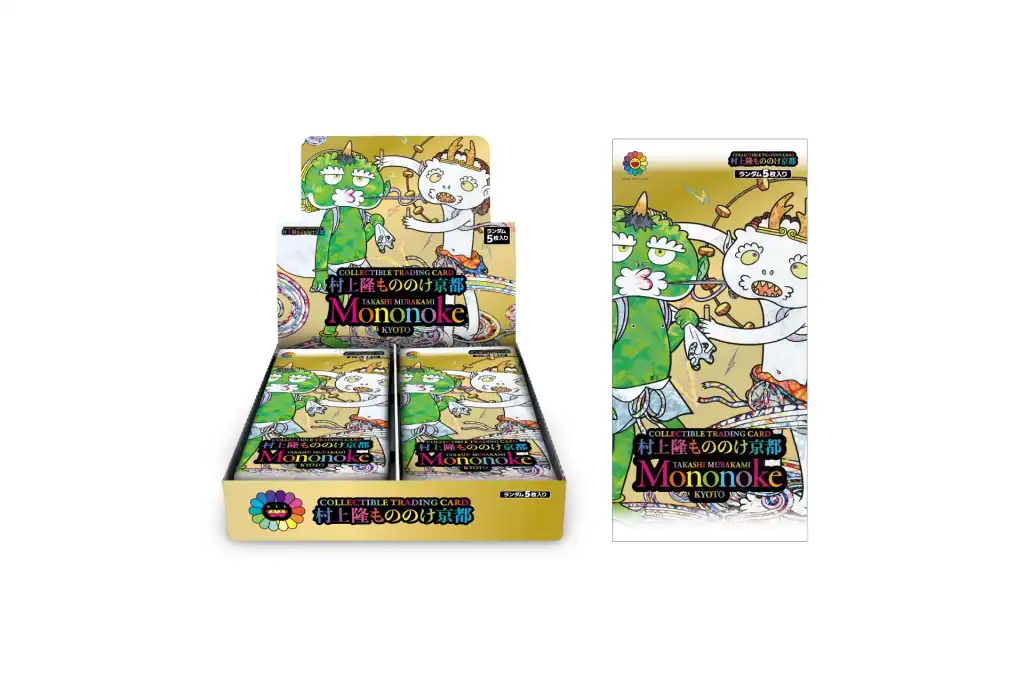
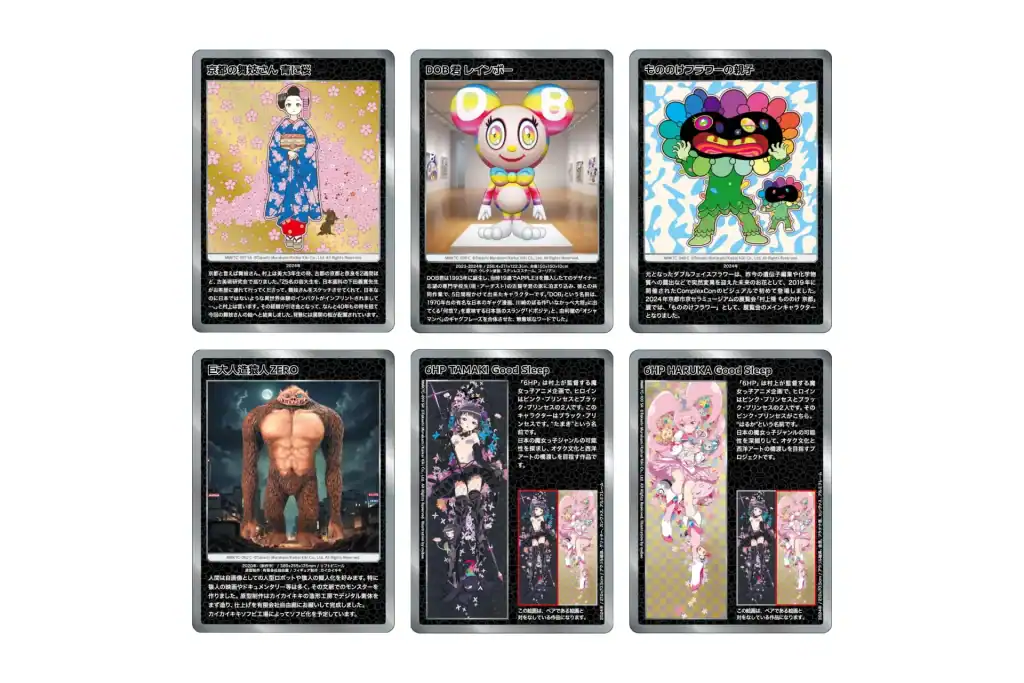
The Takashi Murakami Mononoke Kyoto Trading Card Box features 12 packs of cards containing 5 cards each, making for a total of 60 collectible trading cards. ebay
The cards feature the colorful artwork of the Japanese artist, and his Mononoke Kyoto works are known for being his own modern interpretations of works by artists from the Edo period. That reinterpretation is the conceptual core of the entire box. Murakami takes the visual language of Japanese classical art and runs it through his Superflat lens, producing cards that read simultaneously as historical reference and contemporary art object. ebay
The retail price for the Japanese box was set at 6,600 JPY (approximately $44 USD (about €39)) per box. That price point relative to secondary market values makes the sealed box one of the most compelling entry points in Murakami’s physical collectible catalog.
Japanese Edition vs. English Edition: Why It Matters
The Mononoke Kyoto Trading Card Box exists in both Japanese and English editions. For collectors, the distinction is meaningful, not cosmetic.
The Japanese edition is the original release. The English edition is a licensed adaptation that came later. In the collectible market, first editions and original language releases consistently carry premiums over adaptations. Additionally, the Japanese edition uses Blue Core 280 GSM card stock, producing a tactile premium that collectors who handle both versions notice immediately.
Furthermore, the Japanese edition’s connection to the original Kaikai Kiki production chain is direct and verifiable. The English edition passes through additional licensing layers. For collectors who care about provenance, that chain of custody matters at resale.
The Artwork: Mononoke Meets Superflat
Murakami’s Mononoke Kyoto body of work occupies a specific and unusual position in his catalog. His career operates across two main registers: the ultra-contemporary Superflat world of smiling flowers, Companion figures, and pop-color canvases, and a quieter body of work that engages directly with Japanese art history.
The Mononoke Kyoto series sits firmly in the second register. The word “mononoke” refers to spirits and supernatural entities from Japanese folklore, the same tradition that underpins works by Ogata Korin and the other Edo masters Murakami references in the exhibition. His interpretation does not simply quote those sources. It runs them through his own visual system, producing imagery that carries genuine art historical weight while remaining immediately recognizable as Murakami.
Each card in this box functions as a compressed version of that conversation. The format is small enough to hold in a hand and dense enough to reward close looking.
Who Contributed to the Set
The Mononoke Kyoto trading cards feature artwork from multiple artists within the Kaikai Kiki circle, including Aya Takano, Chiho Aoshima, Emi Kuraya, Kasing Lung, MADSAKI, Mr., Ob, Otani Workshop, Shoko Nakazawa, Tomoyumi, and Yuji Toma, alongside Takashi Murakami himself.
That roster transforms the box from a single-artist product into a document of the Kaikai Kiki collective at a specific moment. Collectors who follow any of those names individually have multiple pull targets within the same box. Moreover, collaborative art objects that capture a creative community in motion tend to appreciate differently than solo artist releases. The collective context adds a layer of historical density that standard single-artist boxes lack.
Collector Value: What Drives It and What Sustains It
Three factors position the Mononoke Kyoto Japanese Edition above comparable art trading card releases in terms of long-term collector value.
First, the exhibition anchor. This was Murakami’s first large-scale solo exhibition in Japan in eight years. That specificity gives the cards a hard institutional reference point. They do not document a general period of Murakami’s career. They document a dateable, verifiable, singular moment.
Second, the Kaikai Kiki production context. The cards were produced directly by Murakami’s own company and distributed through his official channels. That provenance chain requires no forensic work to establish. Buyers who need to verify authenticity find the documentation straightforward.
Third, Murakami’s sustained market performance. His prints and multiples market has grown consistently, with documented long-term average returns that outperform most comparable contemporary art segments. Physical objects tied to major exhibition moments sit at the top of that performance curve.
Why the Sealed Box Matters
A sealed Mononoke Kyoto box is a fundamentally different object from an opened one. The sealed format preserves the complete experience of the product as Murakami and Kaikai Kiki designed it, including the unboxing sequence, the pack structure, and the possibility space of pulls not yet realized.
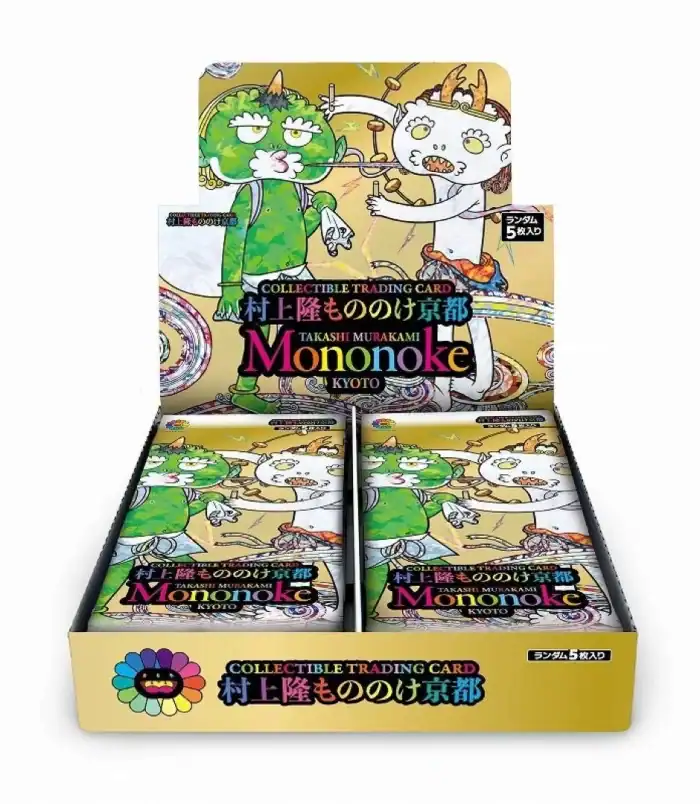

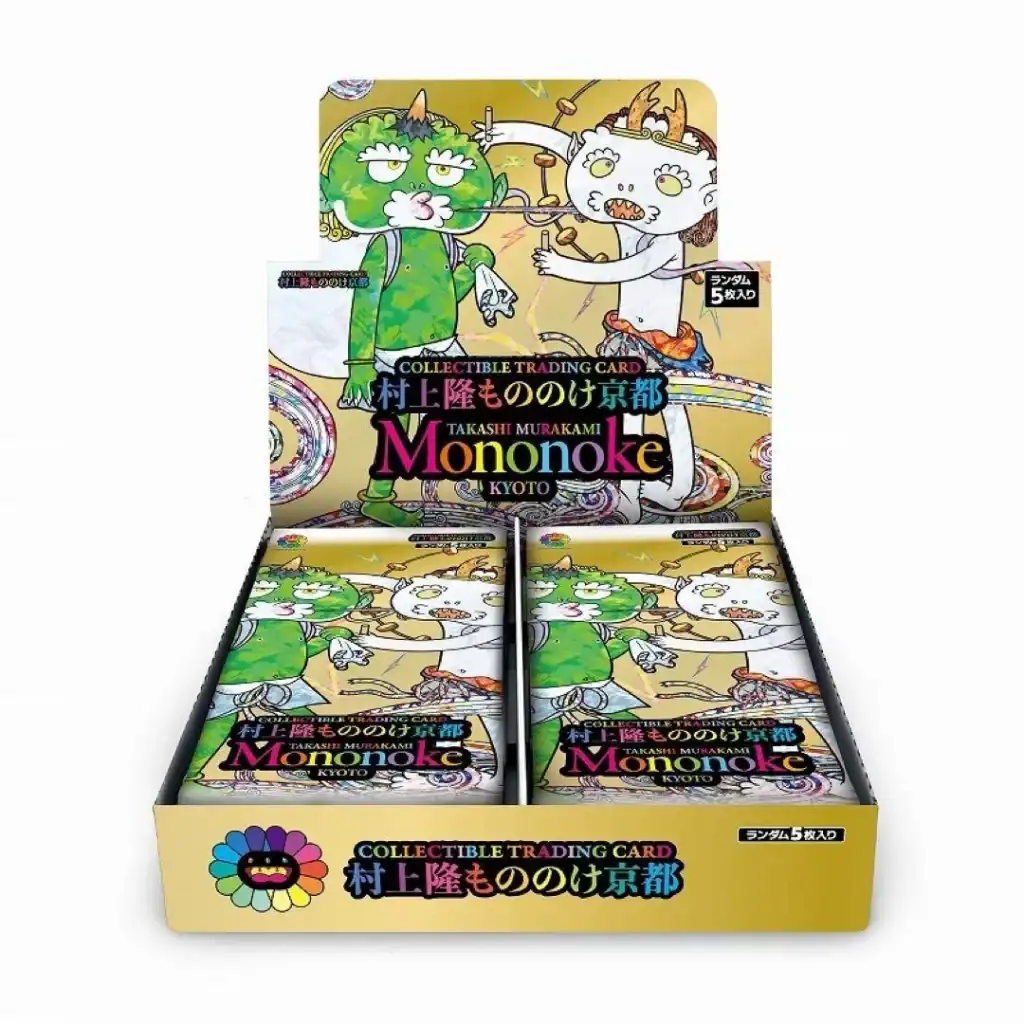
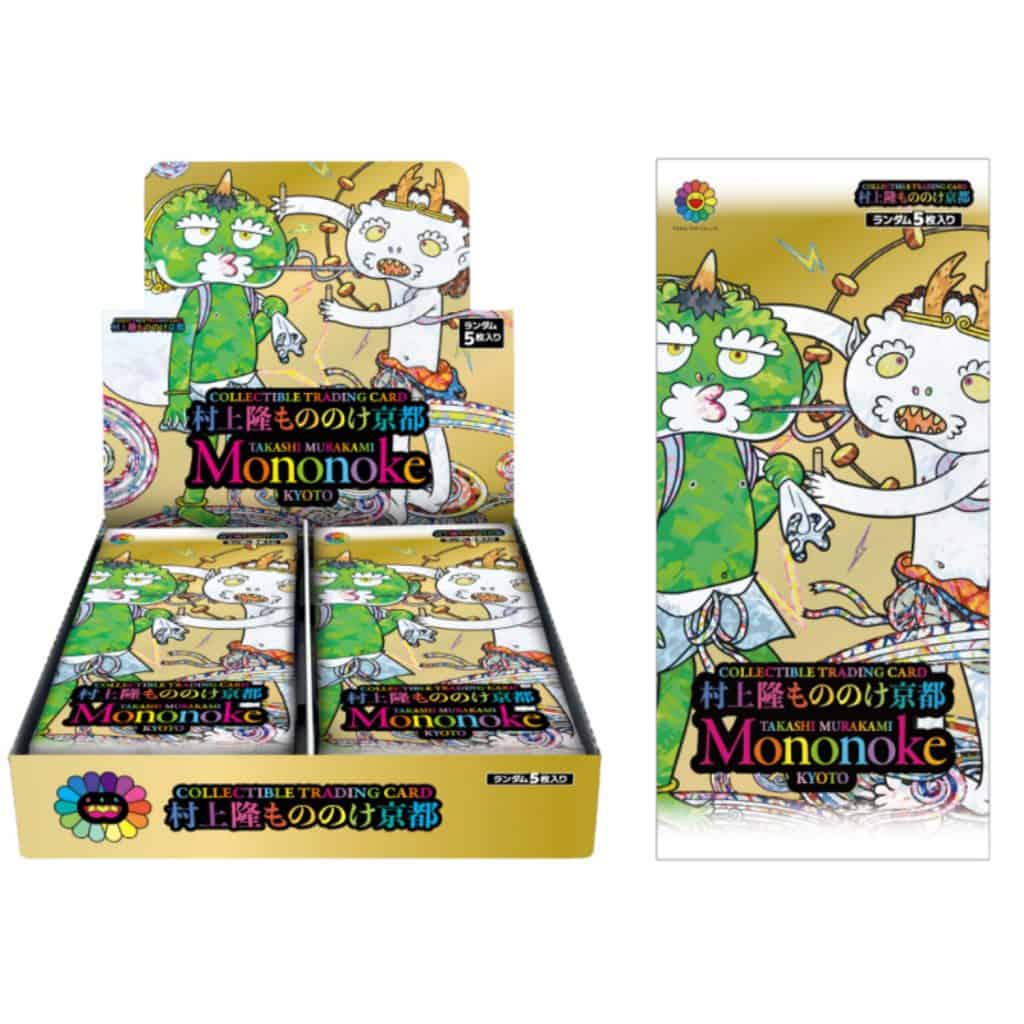
Takashi Murakami Mononoke Kyoto Collectible Trading Card Box (Japanese Edition)
The Mononoke Kyoto Collectible Trading Card Box (Japanese Edition) is a premium art trading card release by internationally acclaimed artist Takashi Murakami, originally presented for the Mononoke Kyoto exhibition. This Japanese edition reflects the authentic presentation and artistic vision of the original release.
For display collectors, the sealed box also functions as a self-contained art object. Its exterior design is part of the piece. Opening it converts a sealed collectible into a collection of individual cards, which carries its own value but eliminates the sealed premium that secondary market buyers consistently pay.
At Rare Inventory, every Mononoke Kyoto Trading Card Box ships factory sealed and verified original.
Available Now at Rare Inventory
The Takashi Murakami x Mononoke Kyoto Trading Card Box (Japanese Edition) is available now at Rare Inventory, shipped from France to collectors across Europe. Stock on exhibition-tied Murakami releases moves without warning. When it is gone, the secondary market takes over.
Browse the complete Takashi Murakami collection at Rare Inventory for more pieces across formats.

The Shop
Available Now at Rare Inventory
Pieces related to this article, in stock and ready to ship.

In Stock
Takashi Murakami – Mononoke Kyoto Collectible Trading Card Box – English Edition
€150
Shop Now →
In Stock
Takashi Murakami Mononoke Kyoto Square Memo Pad (Kyoto City KYOCERA Museum Edition)
€40
Shop Now →
In Stock
Mononoke Kyoto Collectible Trading Card Box | Takashi Murakami (Japanese Edition)
€150
Shop Now →100% Authentic Shipped from France Free Shipping Over €200