
The Case for Kaiyodo Takara × Takashi Murakami Superflat Museum Complete 10 Piece Figure Set: Why It Deserves More Attention
The collectibles market has a short memory. Right now, every serious collector is chasing Murakami prints, bidding on his flower paintings, and tracking his latest institutional shows. Meanwhile, one of the most genuinely important Murakami artifacts sits quietly undervalued: the Kaiyodo Takara × Takashi Murakami Superflat Museum Complete 10 Piece Figure Set. This is not a peripheral merchandise play. This is a core artifact from the Superflat era, produced in direct collaboration with Kaiyodo, Japan’s most technically rigorous figure manufacturer, and Takara, one of its most respected toy houses. The market has not caught up to what this set actually represents.


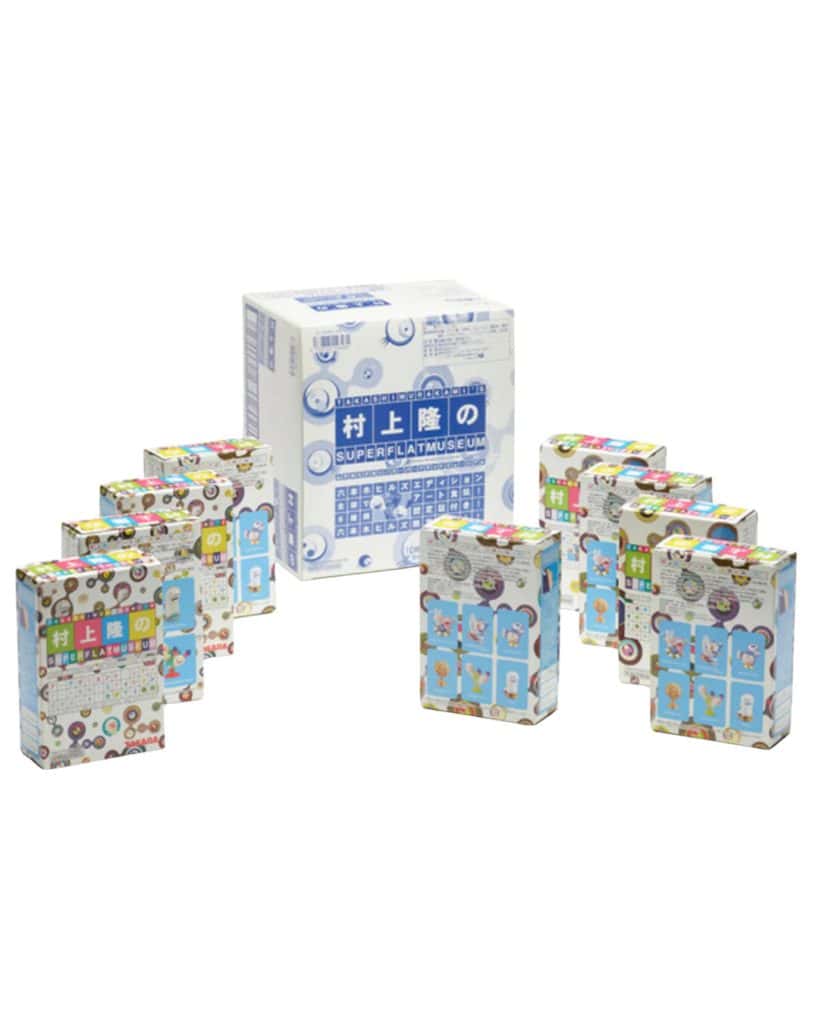
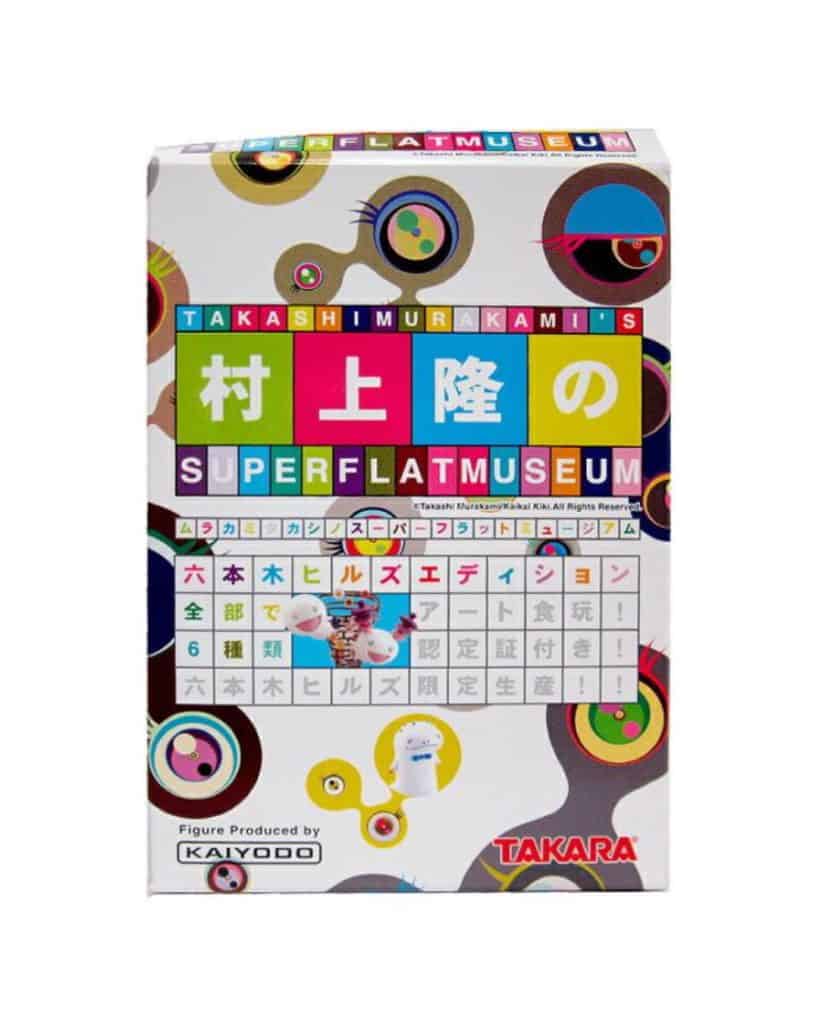
Kaiyodo Takara × Takashi Murakami Superflat Museum Complete 10 Piece Figure Set
Understanding the Superflat Context
What Superflat Actually Meant
First, collectors need to understand what they are looking at historically. Murakami launched Superflat as both an aesthetic movement and a critical framework in 2001, with the landmark exhibition at MOCA Los Angeles. The movement argued that postwar Japanese visual culture, including anime, manga, and commercial illustration, constituted a legitimate fine art lineage. For Murakami, toys were never merchandise. They were arguments. Every figure he approved was a physical extension of his thesis about the collapse of distinctions between high and low culture.

Additionally, the timing of this collaboration matters enormously. The Kaiyodo Takara partnership happened during peak Superflat fever, when Murakami’s studio Kaikai Kiki was actively producing objects designed to blur the gallery and the toy store. That context makes this set irreplaceable as a document of that moment. For collectors tracking Murakami’s market trajectory, his 2010 work I’ve Left My Love Far Behind recently appeared for sale on Artsy, reinforcing that early-period Murakami objects are back in circulation and back in conversation.
Explore the full collection
Figures, art toys & limited editions — shipped across Europe from France.
Why Kaiyodo’s Involvement Elevates Everything
Kaiyodo is not a generic manufacturer. The company built its reputation on obsessive anatomical accuracy in figure production, originally through museum-grade natural history models before moving into licensed collectibles. Their involvement in this set means the sculpts operate at a different technical standard than typical Murakami merchandise from the same period. The figures capture the characteristic flatness of Murakami’s visual language while translating it into three dimensions with genuine craft. That tension, between Superflat aesthetics and volumetric figure production, is exactly what makes this set intellectually interesting to serious collectors.
What the Complete Set Contains and Why Completeness Matters
The Pull Rate Problem
This set was originally distributed as a blind box gashapon-style series, meaning individual figures were sold at random. As a result, completing the full 10-piece set required either sustained purchasing or secondary market sourcing. The duplicate problem was real. Collectors who pulled multiples of common figures and never hit the scarce variants know exactly how frustrating this format can be. For context, Japanese gashapon series from this era typically ran pull rates where the rarest variant appeared in roughly 1 in 24 to 1 in 36 units, depending on the series configuration. Murakami-branded sets were no exception.

However, the complete set changes the value equation entirely. Individual figures are interesting. The complete 10-piece set is a coherent collection that tells the full Superflat visual story Murakami intended. This is the same logic that makes complete Pokémon booster box sets more valuable than their individual card equivalents on a per-card basis. Completeness creates a premium that exceeds the sum of parts.
Condition Grading Considerations
For figures from this production era, condition tracking follows a specific hierarchy. First, original packaging significantly impacts value, particularly for sets where the gashapon capsules or display boxes survive intact. Second, paint integrity on early-2000s Kaiyodo production is generally excellent, but collectors should inspect joint points and any translucent plastic elements, which can yellow with UV exposure over two decades. Third, completeness of any included display bases or backdrop cards matters for serious grading purposes. These figures will not reach PSA or AFA grading thresholds that transform trading cards, but the condition logic is identical: marginal differences in presentation state create non-marginal differences in secondary market pricing.
Murakami’s Market Trajectory and What It Means for This Set
The Institutional Validation Cycle
Murakami’s institutional footprint has expanded dramatically in recent years. The Broad in Los Angeles featured a major Murakami installation in late 2025. His Mononoke Kyoto exhibition at the Kyoto City Kyocera Museum generated significant collector attention, producing official merchandise including the Takashi Murakami Mononoke Kyoto Square Memo Pad Kyoto City Kyocera Museum Edition that now circulates as a desirable collectible in its own right. MyArtBroker published comprehensive buyer’s guides to Murakami’s characters and market in early 2026, signaling that the artist’s secondary market has reached a level of formalization where institutional research tools are now available.


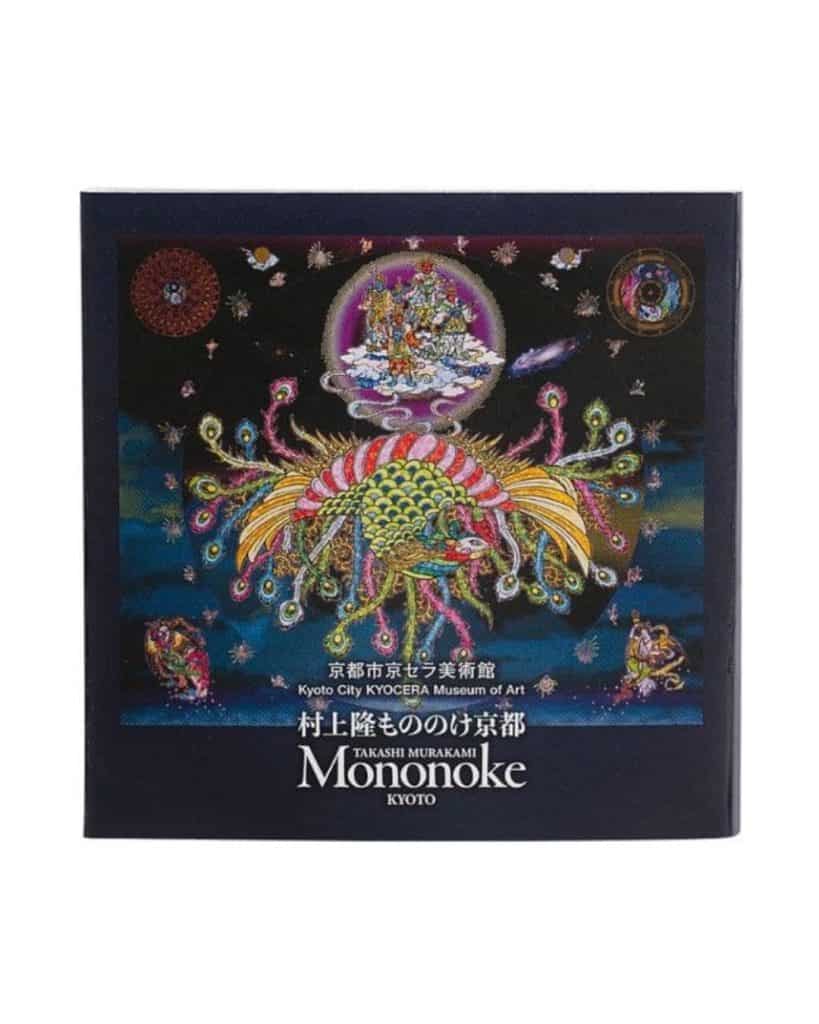
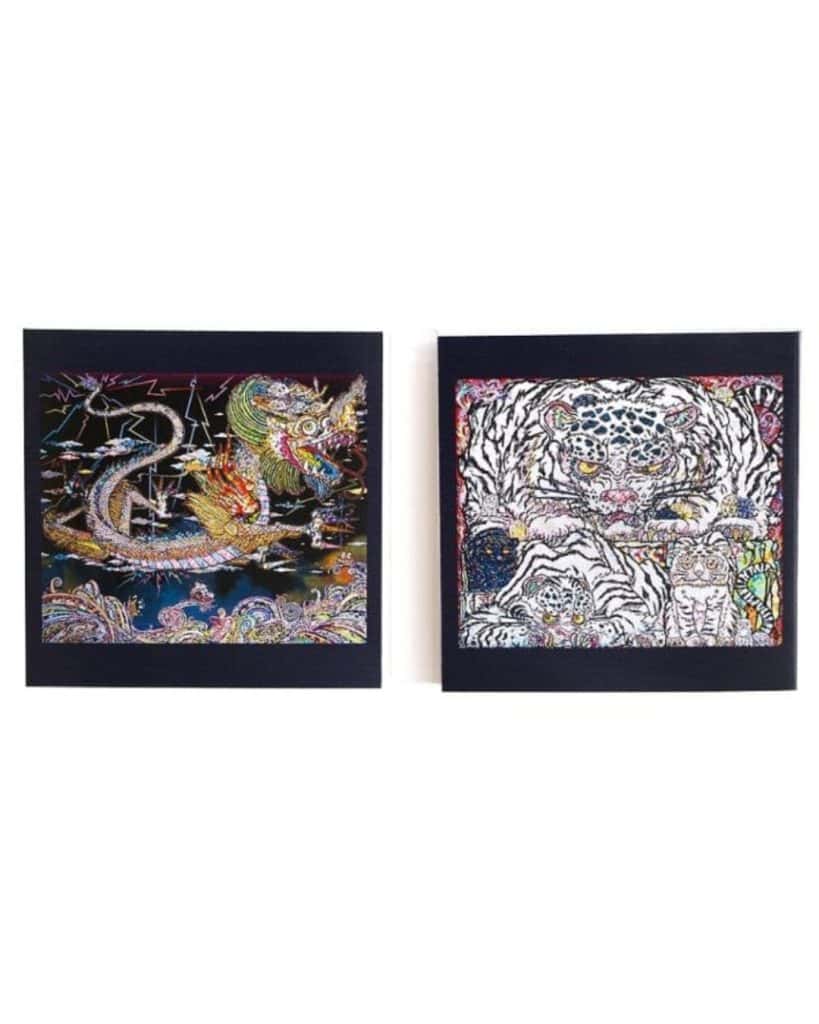
Takashi Murakami Mononoke Kyoto Square Memo Pad (Kyoto City KYOCERA Museum Edition)
The Takashi Murakami Mononoke Kyoto Square Memo Pad is an official collectible stationery piece released in conjunction with the Kyoto City KYOCERA Museum of Art exhibition.
That institutional validation cycle always flows backward through an artist’s catalog. As a result, early-production objects that were undervalued during the post-hype trough become increasingly sought after as new collectors enter through contemporary shows and then research backward. The Superflat Museum figure set is precisely the kind of object that benefits from this dynamic. It predates the global Murakami mainstream, carries direct studio involvement, and exists in finite quantity.
Cross-Collaboration Precedent
Consider how the market has responded to other Murakami collaborations. The Spark 2022 Lewis Hamilton × Takashi Murakami Collaboration Miniature Helmet commands serious collector interest precisely because it bridges two distinct collector universes, Formula 1 die-cast and contemporary art. The Kaiyodo Takara set operates on the same cross-universe logic: it bridges the Japanese figure collector market, the contemporary art market, and the Superflat cultural history space simultaneously. Objects that appeal to multiple collector categories consistently outperform single-category collectibles on secondary markets.
Explore the full collection
Figures, art toys & limited editions — shipped across Europe from France.
Superflat Museum Set vs. Comparable Murakami Collectibles
How It Stacks Up
| Item | Production Era | Manufacturer | Market Availability | Collector Category Appeal |
|---|---|---|---|---|
| Kaiyodo Takara Superflat Museum Complete 10 Set | Early 2000s | Kaiyodo / Takara | Scarce, set completion rare | Art, Figures, Superflat History |
| Mononoke Kyoto Memo Pad | 2024 | Museum Edition | Limited museum run | Art, Murakami Contemporary |
| Lewis Hamilton × Murakami Miniature Helmet | 2022 | Spark | Limited edition | F1, Art Collaboration |
| Individual Superflat gashapon figures | Early 2000s | Various | Occasional single listings | Figures only |
The Japanese Market Angle
Japanese collectors have always maintained deeper awareness of the Kaiyodo Takara collaboration than Western markets. In Japan, Kaiyodo’s reputation functions similarly to how Sideshow or Hot Toys does in Western collector circles, except Kaiyodo carries academic museum credibility alongside commercial production history. That dual credibility means Japanese secondary market pricing for Kaiyodo-produced art collaborations tends to run higher than Western equivalent listings. For Western collectors, this represents an arbitrage opportunity that is closing as global market information becomes more transparent through platforms like Mercari Japan and Yahoo Auctions.
| Market | Awareness Level | Typical Pricing Premium | Availability of Complete Sets |
|---|---|---|---|
| Japan (domestic) | High | Strong | Rare |
| Western Europe | Low to moderate | Below Japan | Very rare |
| North America | Low | Lowest | Extremely rare |
The Investment Argument in Plain Terms
Why This Is the Right Moment
The case for acquiring this set now comes down to three converging factors. First, Murakami’s institutional profile is at a multi-decade high, creating new collector demand that will inevitably push interest toward early catalog objects. Second, the complete set format means the supply constraint is structural, not cyclical. Nobody is producing more complete Superflat Museum sets. Third, Kaiyodo’s technical involvement gives this set defensible value beyond pure speculative demand, rooted in the manufacturing quality that collectors can verify physically.
Additionally, the Superflat Museum set benefits from what serious collectors call the documentation premium. This is an object with a clear historical narrative, a named artist, a named manufacturer, a defined movement, and institutional exhibition context behind it. Documentation premium is exactly what separates a collectible from a toy. This set has it in full.
Explore the full collection
Figures, art toys & limited editions — shipped across Europe from France.
What to Watch For
However, buyers should perform basic due diligence before acquiring. Verify that complete sets include all 10 distinct figures rather than 10 figures with duplicates. Check that paint applications show no significant chipping on the facial details, which are the most technically demanding elements on Kaiyodo figure production. Confirm that any original packaging, capsule housing, or display accessories are present. These checks take minutes but separate genuinely complete sets from assembled approximations.
Rare Inventory Recommendation
The Takara × Takashi Murakami Superflat Museum Complete 10 Piece Set is the primary acquisition target here. For collectors who want to enter at a lower price point or add individual pieces to an existing collection, the Kaiyodo Takara × Takashi Murakami Superflat Museum single figure at €20 offers direct access to this collaboration without the complete-set premium. Both represent legitimate Superflat-era artifacts with genuine Kaiyodo production provenance.
Where to Buy
Rare Inventory, based in France and shipping across Europe, carries both the complete 10-piece set and individual figures from the Kaiyodo Takara × Takashi Murakami Superflat Museum series. Visit rareinventory.com for current availability and pricing across the full Murakami collectibles catalog. As one of the few European sources for authenticated Superflat-era production figures, Rare Inventory represents a reliable acquisition channel for collectors who cannot access Japanese domestic markets directly.
Frequently asked questions
How many figures are in the complete Superflat Museum set and are all 10 unique?
The complete set contains 10 figures, and each piece is a distinct character or variant from Murakami’s Superflat visual universe. However, buyers acquiring assembled sets on secondary markets should confirm all 10 pieces are unique. The original gashapon distribution format means some sellers may list 10-piece lots that include duplicates rather than the full unique lineup.
What makes Kaiyodo’s manufacturing relevant to value?
Kaiyodo built its reputation on museum-grade figure production, originally for natural history institutions before moving into licensed commercial collectibles. That background means their paint application, sculpt detail, and material quality consistently exceed typical toy manufacturer standards from the same period. For collectors focused on long-term value preservation, manufacturer quality is a direct variable in durability and presentation stability over decades.
Is this set graded or gradable by services like AFA?
AFA grading applies primarily to sealed, packaged collectibles where original packaging condition is a central value factor. For the Superflat Museum figures, professional grading is less standardized than in the trading card space. That said, condition documentation including clear photography of paint integrity, joint quality, and packaging survival significantly strengthens resale positioning on any serious collector platform.
How does the Superflat Museum set compare to Murakami’s more recent collaborations?
Recent Murakami collaborations, including the Lewis Hamilton Formula 1 helmet project and the Mononoke Kyoto museum merchandise, generate strong short-term attention but lack the historical depth of Superflat-era production. The Kaiyodo Takara set predates Murakami’s global mainstream breakthrough, which gives it primary source status within his catalog. For serious collectors, early-period objects with direct studio involvement consistently outperform later mainstream collaborations over long holding periods.
The Shop
Available Now at Rare Inventory
Pieces related to this article, in stock and ready to ship.


In Stock
Kaiyodo Takara × Takashi Murakami Superflat Museum Complete 10 Piece Figure Set
€140
Shop Now →
100% Authentic Shipped from France Free Shipping Over €200