
Murakami Pandas in the Cherry Orchard Puzzle: The Release Nobody Knew Existed Until Now
Takashi Murakami has spent three decades building one of the most aggressively collectible bodies of work in contemporary art. From Kaikai Kiki limited editions to his landmark Louis Vuitton collaborations, every release triggers a secondary market frenzy. However, somewhere between the chaos of drops and the noise of hype culture, a genuinely rare puzzle format slipped past even the most vigilant collectors: the Pandas in the Cherry Orchard Puzzle. This is the release you probably missed, and the one you absolutely should not ignore.
Key Facts
- Product: Takashi Murakami X Pandas in the Cherry Orchard Puzzle
- Format: Collectible jigsaw puzzle, limited production run
- Ships from: Rare Inventory, Cannes, France. Shipping across Europe available.
- Authentication: Verified authentic stock. No grey-market sourcing.
- Related artist: Takashi Murakami / Kaikai Kiki Co., Ltd.
Why This Puzzle Matters to Murakami’s Collectors
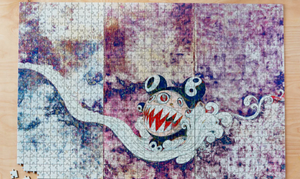
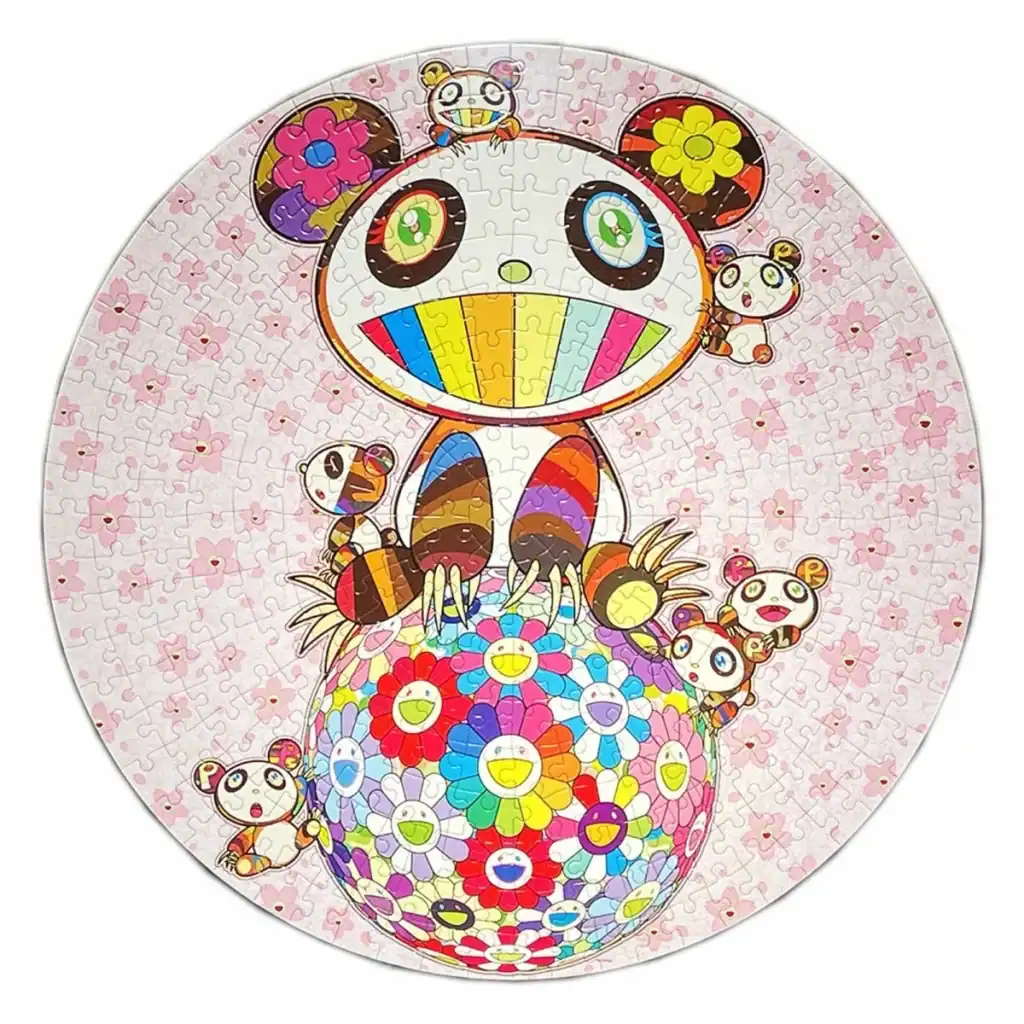
Most Murakami collectors focus on prints, figures, and plush. That instinct is understandable. However, the puzzle format occupies a genuinely interesting space: it is an authorized, officially produced object that carries full artwork reproduction rights. That matters legally and aesthetically. The Pandas in the Cherry Orchard composition sits firmly inside Murakami’s Superflat canon, presenting his signature panda motifs layered against blooming cherry blossoms in a composition that reads as both decorative and conceptually loaded.
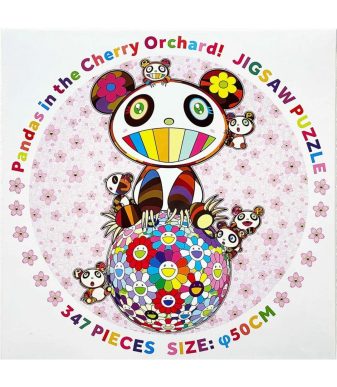

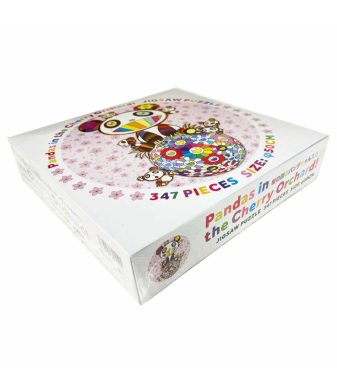
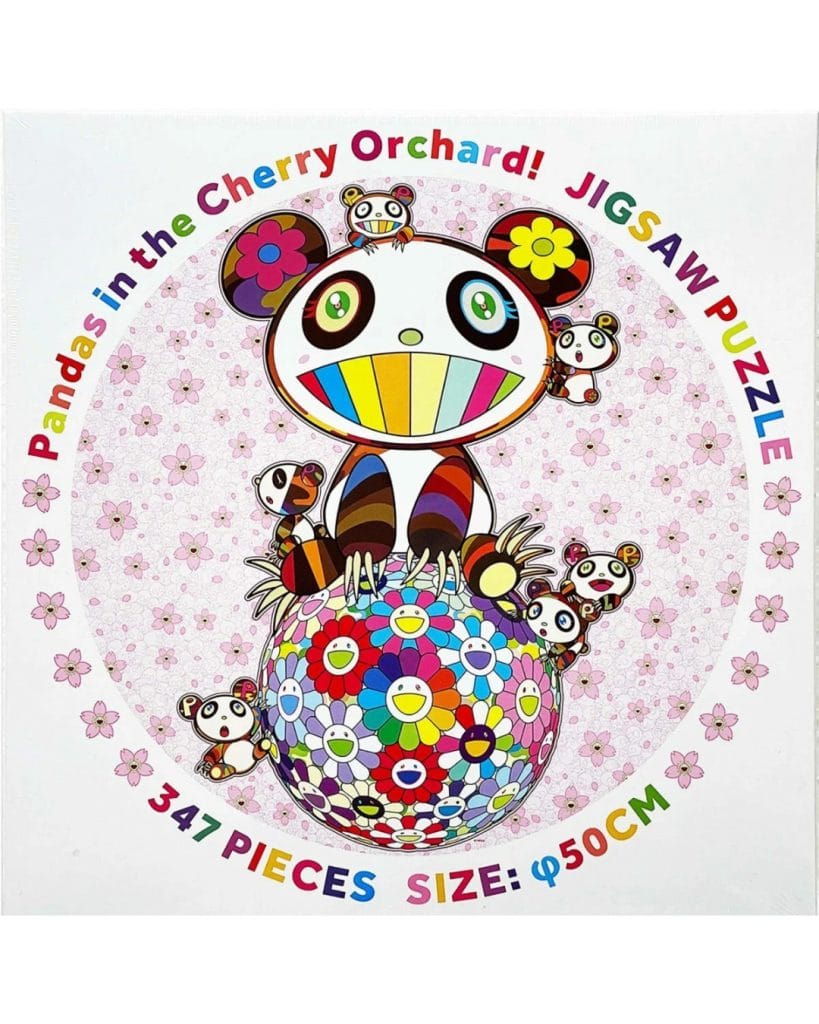
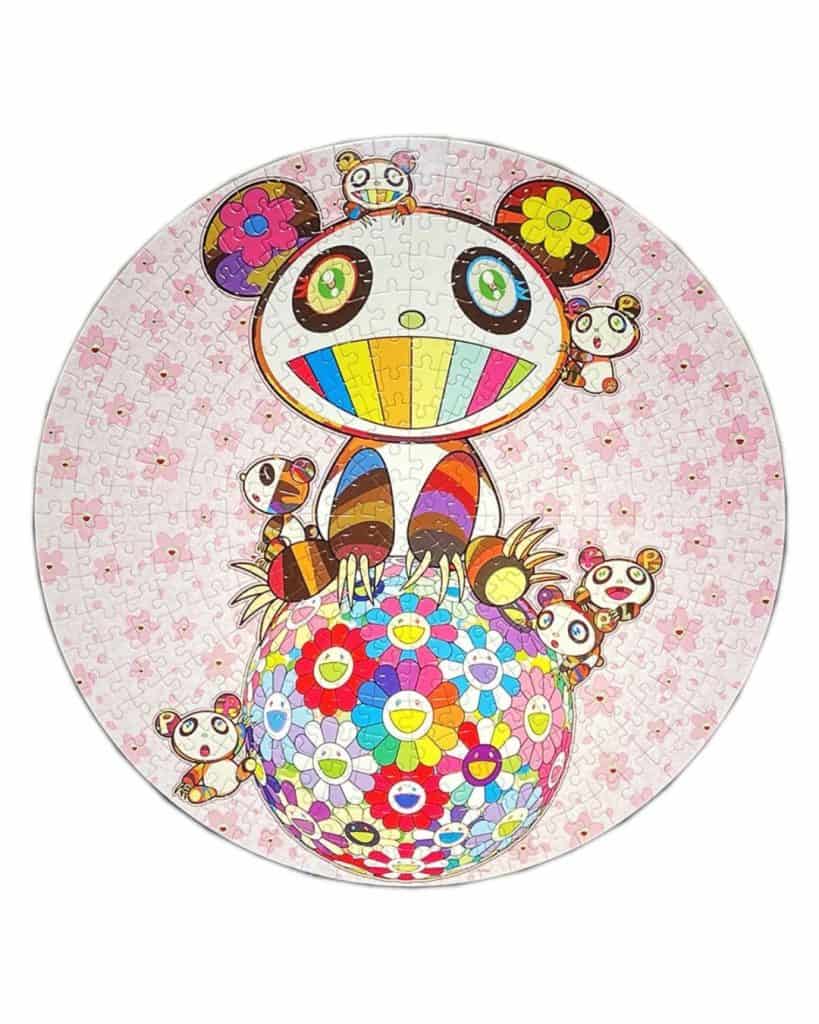
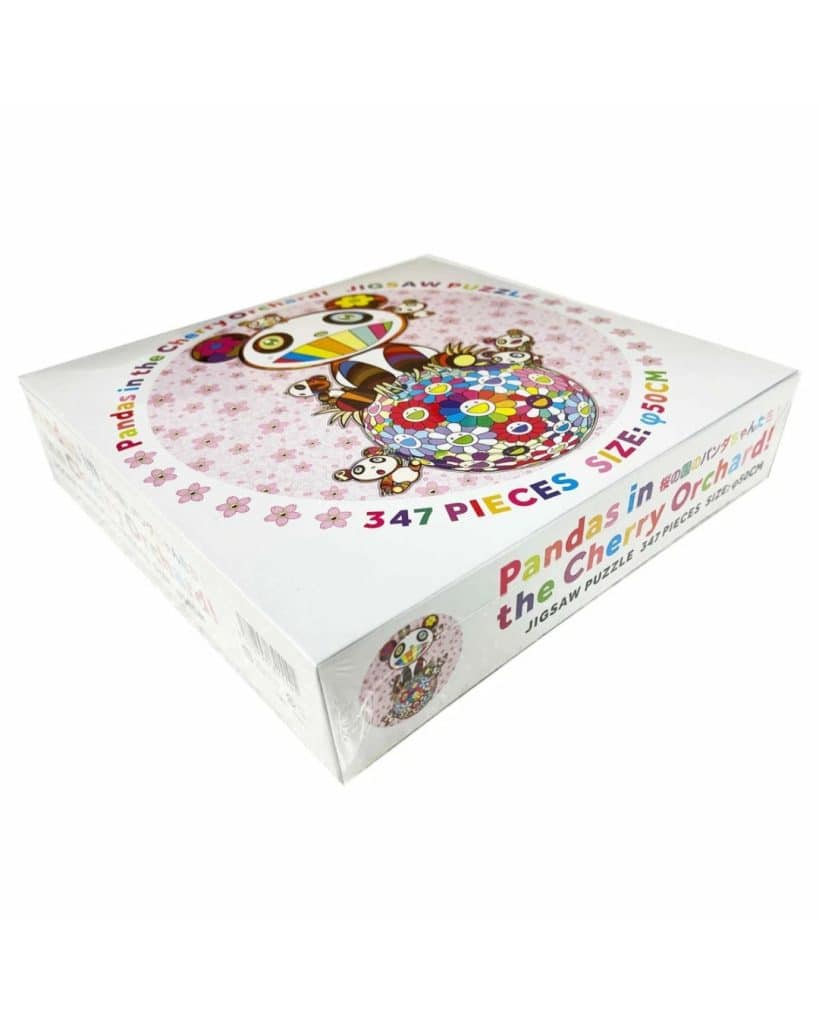
Takashi Murakami Pandas in the Cherry Orchard Jigsaw Puzzle
The Takashi Murakami “Pandas in the Cherry Orchard” Puzzle brings together two of the artist’s most beloved motifs, playful pandas and vibrant cherry blossoms, into a highly collectible, immersive format. Produced by Kaikai Kiki, this piece captures Murakami’s signature Superflat aesthetic through a dense, joyful composition filled with color, repetition, and character.
Product Details
- Artist: Takashi Murakami
- Title: Pandas in the Cherry Orchard
- Pieces: 347
- Dimensions (assembled): 50×50 cm
- Production: Kaikai Kiki Co., Ltd.
- Origin: Japan
- Condition: Brand new / sealed
The Panda Motif in Murakami’s Lexicon
Murakami introduced the panda character as part of his broader Superflat vocabulary in the early 2000s. For context, the panda functions as a kind of kawaii archetype: innocent on the surface, commercially shrewd underneath. This tension is central to everything Murakami makes. Additionally, the cherry orchard setting connects directly to Japanese mono no aware, the bittersweet awareness of impermanence. Murakami exploits that cultural resonance deliberately. He always does.
The puzzle format preserves this layered composition at a scale that prints often cannot match. First, you get full chromatic saturation across a large surface area. Second, the assembled object functions as display art. Third, and more importantly for collectors, the sealed box is itself a graded collectible. A factory-sealed example in pristine condition commands meaningful premiums over an assembled and resealed copy.
Factory-sealed Murakami puzzle editions in collector-grade condition are significantly rarer than most buyers assume. Production runs for authorized puzzle formats rarely exceed a few thousand units globally.
Authentication and Condition Grading for Murakami Puzzles
Grading puzzles is a younger discipline than grading trading cards or comic books, but the framework is converging fast. For Murakami puzzle editions specifically, collectors should evaluate four distinct elements.
Rare Inventory
Explore the full collection
Figures, art toys & limited editions — shipped across Europe from France.
Box Integrity and Shrink Seal Assessment
The factory shrink seal is your first authentication checkpoint. Genuine examples carry a tight, even shrink wrap with no bubbling or heat distortion along the edges. However, sophisticated reseals exist. Look at the corners: factory seals show uniform creasing patterns, not improvised folds. Additionally, check the barcode sticker placement. On authentic units, this sits flush with no residue from a removed prior label.

Box integrity grades typically run from Mint Sealed down through Near Mint, Very Good, and Poor. A Mint Sealed example shows zero corner wear, no scuffs on the printed surface, and a fully intact seal. Near Mint allows for very minor shelf wear, one or two soft corner compressions. Anything with cracked corners, whitening on the box edges, or a broken seal drops to Very Good at best. In practice, most examples found through non-specialist channels fall into Very Good territory.
Print Quality Verification
Murakami’s authorized puzzle manufacturers use high-fidelity offset lithography. The colors in the Cherry Orchard composition are particularly telling: the pinks and magentas in the cherry blossoms shift in natural light in a way that lower-quality reproductions cannot replicate. Hold the box under direct light at a forty-five degree angle. On authentic prints, you will see the texture of the stock itself, not a uniform flat sheen. Counterfeits and unauthorized reproductions typically show a laminate gloss that flattens the mid-tones entirely.
Pandas in the Cherry Orchard Puzzle: Pros and Cons
- Pro: Officially authorized Murakami artwork reproduction
- Pro: Display-ready format, sealed or assembled
- Pro: Lower entry price than Murakami prints, strong upside potential
- Pro: Rare production run, global distribution was limited
- Con: No PSA or CGC grading standard established yet for this format
- Con: Reseal fakes require careful authentication
- Con: Storage demands are specific: flat, climate-controlled, no stacking
The Murakami Puzzle Market: Pricing and Resale Dynamics
Understanding where this puzzle sits in the broader Murakami secondary market requires benchmarking against comparable formats. The table below compares current collector-grade examples across Murakami’s authorized puzzle releases.
| Product | Pieces | Condition Premium | Collector Demand | Availability |
|---|---|---|---|---|
| Pandas in the Cherry Orchard Puzzle | Not publicly specified | High (sealed commands 40-60% over open) | Very High | Extremely Limited |
| Flower Forest Jigsaw Puzzle | Not publicly specified | Moderate (30-40% sealed premium) | High | Limited |
| Flowers Jigsaw Puzzle 900 Pieces | 900 | Moderate | High | Limited |
Japanese Market Nuances for Murakami Puzzle Formats
The Japanese domestic market prices Murakami puzzle editions differently than Western collectors expect. In Japan, the puzzle format carries a cultural legitimacy it lacks in American or European collector circles. Japanese buyers treat a sealed Murakami puzzle with the same seriousness as a signed print. As a result, domestic Japanese pricing often runs fifteen to twenty-five percent above equivalent Western secondary market values for the same condition grade.
Additionally, Japanese collectors grade box condition with extreme precision. Minor scuffs that a Western grader would dismiss as acceptable trigger meaningful price reductions in Tokyo dealer networks. If you are sourcing from Japan, use this to your advantage when evaluating condition. However, if you are selling into the Japanese market, understand that your condition standards need to be correspondingly strict.
Meanwhile, the European market, led by France and Germany, has developed a growing appetite for Murakami works in all formats. Rare Inventory operates from Cannes, placing it directly inside that demand curve.
Who Should Buy This Puzzle?
- Murakami print collectors looking to diversify format holdings at a lower price point
- Superflat scholars who want an authorized reproduction of a specific thematic composition
- New collectors entering the Murakami market and seeking authenticated, appreciating-format pieces
- Gift buyers with serious budgets who want something beyond the obvious plush or tote
How This Puzzle Fits the Broader Murakami Collectible Ecosystem
Murakami’s collectible output is deliberately stratified. At the top sit unique works and Kaikai Kiki certified prints. Below that, you find limited sculptures and figures. Further down, officially licensed collaborations like the Uno Artiste Series Collectible Takashi Murakami X Mattel occupy an accessible but still legitimately collectible tier. Puzzle formats sit in a similar tier: broadly accessible at retail, but genuinely appreciating in sealed condition as production runs dry up.
Comparing the Murakami Puzzle Formats
Flowers Jigsaw Puzzle 900 Pieces
The Flowers Jigsaw Puzzle 900 Pieces is the more widely recognized format among casual Murakami fans. The flower motif is Murakami’s most commercially ubiquitous icon. However, that familiarity cuts both ways: broader recognition drives higher initial demand, but the panda composition’s relative obscurity creates stronger scarcity dynamics over time. In contrast, flower editions may see more consistent but less dramatic price appreciation.
The Takashi Murakami Flower Forest Jigsaw Puzzle rounds out the format comparison. It bridges both worlds: forest imagery introduces a compositional depth that the flat flower motifs lack. That said, the Cherry Orchard Panda composition remains the most thematically layered of the three formats, and the one most likely to be cited in future catalogue scholarship on Murakami’s character work.
Storage, Display, and Long-Term Preservation
If you buy sealed and intend to hold, storage discipline is non-negotiable. Murakami puzzle boxes use coated cardstock that reacts to humidity. Store flat, never upright. Maintain relative humidity between forty and fifty percent. Temperature should stay below twenty-two degrees Celsius. UV exposure yellows the printed surface faster than almost any other damage vector, so keep sealed examples away from direct or indirect sunlight.
Display Options for Assembled Examples
Some collectors choose to assemble and frame. This is a legitimate approach, but understand the trade-off clearly: an assembled example loses its sealed premium permanently. However, a professionally framed and UV-glazed assembled Murakami puzzle has genuine wall-art value. Use conservation-grade mounting materials. More importantly, document the assembly with photographs and retain the original box, which preserves provenance even for assembled pieces.
Takashi Murakami’s broader practice, documented extensively through Kaikai Kiki’s official channels, consistently treats all authorized merchandise as part of the same artistic continuum as gallery works. That philosophical stance legitimizes the puzzle format in ways that purely commercial merchandise cannot claim.
Rare Inventory Recommends
Buy sealed. Hold sealed. If you open, frame properly with UV glazing and retain the original box. The Pandas in the Cherry Orchard Puzzle is the most thematically specific and scarcest of Murakami’s authorized puzzle formats. Additionally, it targets a subject, the panda character, that Murakami has not overexposed commercially the way the flower motif has been licensed. For collectors building a Murakami holdings portfolio across formats and price tiers, this is the puzzle edition to prioritize.
Where to Buy the Murakami Pandas in the Cherry Orchard Puzzle
Authenticated stock of this release is genuinely scarce. Rare Inventory carries verified authentic examples, ships across Europe from Cannes, France, and applies rigorous condition assessment before any unit goes out. For collectors across Europe, the tracked shipping infrastructure and authenticated sourcing make Rare Inventory the cleanest acquisition route available for this specific release.
Frequently asked questions
Is the Pandas in the Cherry Orchard Puzzle an official Murakami release?
Yes. This is an officially authorized puzzle produced under Murakami’s Kaikai Kiki licensing framework. It carries full artwork reproduction rights and is not an unauthorized reproduction or fan-made product.
How do I authenticate a sealed example before buying?
First, examine the factory shrink seal for uniform creasing and no heat distortion. Second, check the barcode sticker for residue from prior labels. Third, assess the print quality of the box art: authentic examples show offset lithography texture visible under raking light. Additionally, purchase only from dealers who provide provenance documentation or authenticated stock guarantees.
Does assembling the puzzle destroy its collector value?
Assembling eliminates the sealed premium, which typically runs forty to sixty percent above open-box value for this edition. However, a professionally assembled, framed, and documented example retains meaningful display and collector value. In practice, most serious collectors hold sealed and treat the assembled format as a separate use case entirely.
How does this puzzle compare to other Murakami puzzle formats as an investment?
The Pandas in the Cherry Orchard composition targets a more specific and less commercially saturated motif than the flower editions. As a result, scarcity dynamics are stronger over time. Additionally, the panda character carries distinct thematic weight in Murakami’s Superflat lexicon, which supports secondary market demand from both scholarly and aesthetic collector profiles.
The Shop
Available Now at Rare Inventory
Pieces related to this article, in stock and ready to ship.


100% Authentic Shipped from France Free Shipping Over €200