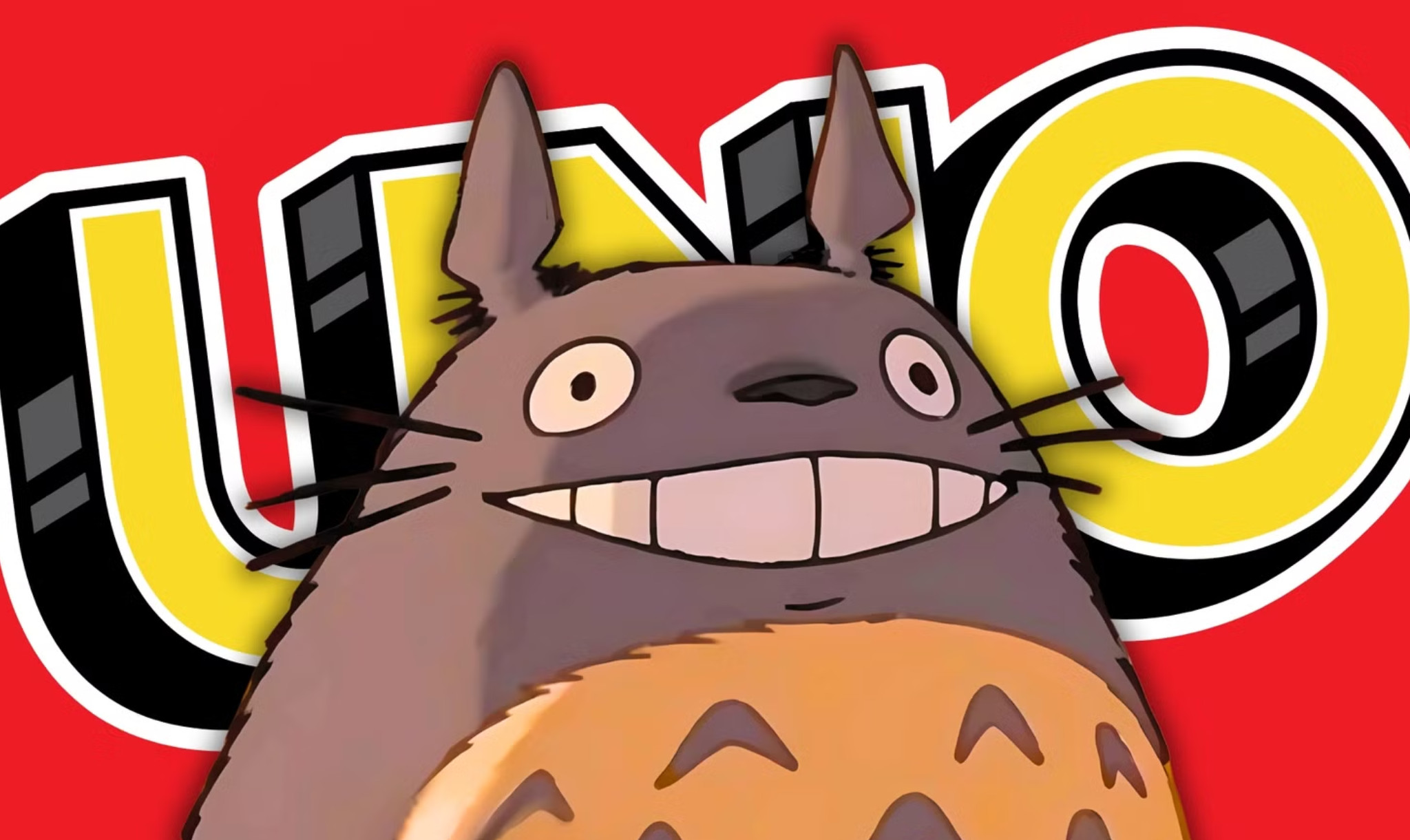
UNO x Studio Ghibli My Neighbor Totoro: Why This Is the Most Collectible UNO Ever Made
Some collaborations are marketing exercises. Others become artifacts. The UNO x Studio Ghibli My Neighbor Totoro edition falls firmly into the second category, and serious collectors already know it. This is not a novelty deck you leave on a shelf ironically. This is a licensed product backed by one of the most protective IP holders in entertainment history, featuring artwork from a film that has never stopped appreciating culturally or financially since its 1988 release. First, understand what you are actually dealing with before you dismiss this as a card game crossover.

Additionally, the collector dynamics here are genuinely unusual. UNO as a brand has collaborated with dozens of properties. However, Studio Ghibli maintains famously strict licensing standards, particularly for Western markets. The fact that this deck exists at all is a signal. That signal is worth reading carefully.
Studio Ghibli Licensing: Why Scarcity Is Structural
Studio Ghibli does not license casually. The Tokyo-based studio, founded by Hayao Miyazaki and Isao Takahata in 1985, has historically rejected the kind of mass-market merchandise saturation that defines most major animation studios. For context, Ghibli refused to allow Netflix streaming rights until 2020, decades after every comparable studio had moved to digital platforms. That same conservatism governs physical product licensing.
What Strict Licensing Means for Secondary Market Value
When Ghibli does approve a licensed product, the approval itself functions as a quality signal. The studio’s internal review process means that artwork on this UNO deck meets Ghibli’s published standards for character representation. Totoro’s proportions, color palette, and linework are not approximated. They are authenticated by the licensor. For collectors who understand provenance, that matters enormously.
Furthermore, Ghibli licensed products in Western markets tend to have shorter production windows than comparable Disney or Pokémon merchandise. Production runs close. Retail channels sell through. Secondary market prices follow. In Japan, the pattern is even more pronounced, because domestic Ghibli merchandise commands a loyalty premium from collectors who treat the IP as cultural patrimony. As a result, Western editions of Ghibli products that penetrate Japanese collector networks can see dramatic price appreciation.
Studio Ghibli merchandise in sealed, mint condition has historically appreciated 40-200% above retail on Japanese secondary platforms within 18-36 months of a product’s discontinuation.
The Card Design: Artwork Quality as a Collectible Driver
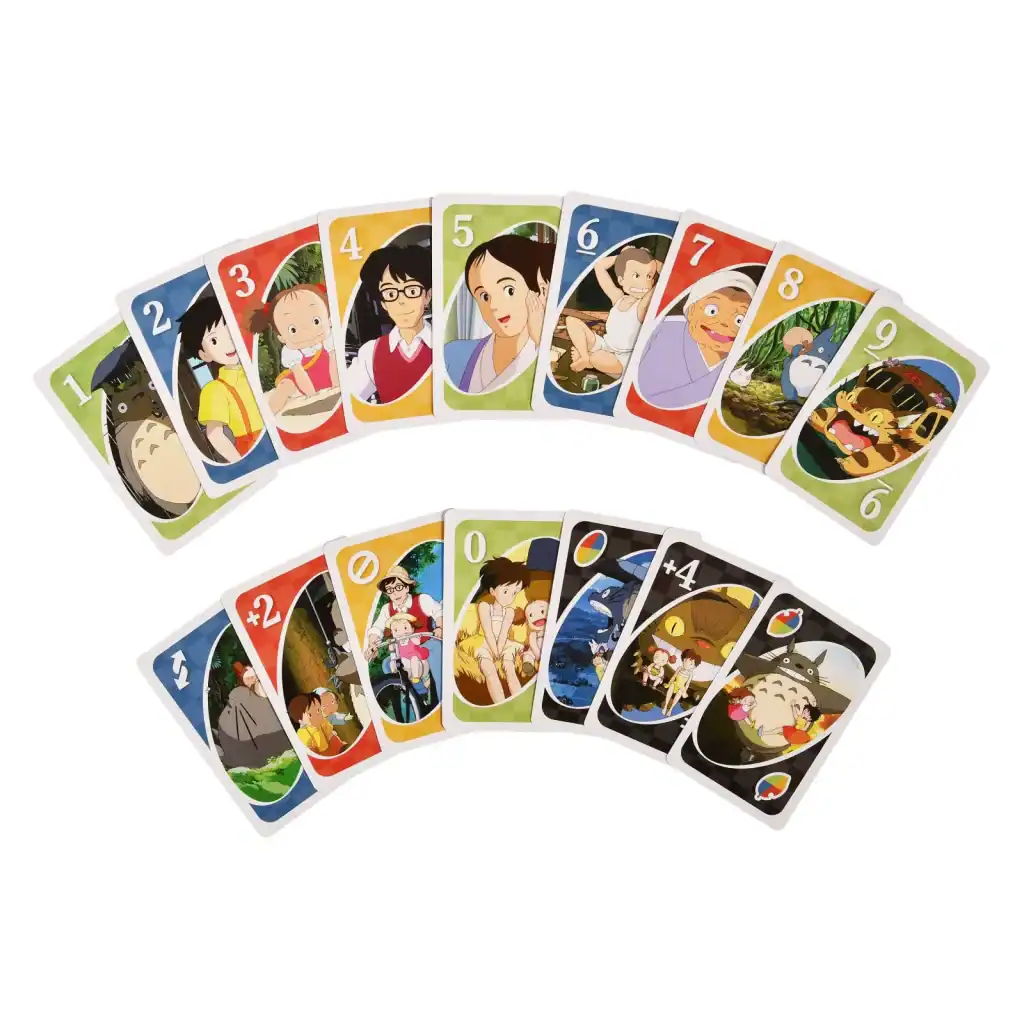
Most licensed UNO decks swap character imagery onto standard card backs and call it a collaboration. The My Neighbor Totoro edition takes a different approach. Each card category features distinct Totoro universe artwork. The action cards, Skip, Reverse, Draw Two, are not generic illustrations with a Totoro logo dropped in. They carry scene-specific imagery drawn from the film’s visual language.
Reading the Card Stock and Print Quality
Beyond aesthetics, the physical production quality matters to graders and long-term collectors. The card stock on this edition is notably heavier than standard UNO retail decks. Colors are saturated and consistent across the print run, which is not always a given with licensed merchandise produced at scale. Print consistency directly affects PSA and BGS grading outcomes for individual cards, a market that remains niche but is growing rapidly as the trading card grading boom expands into non-TCG territory.
For collectors considering PSA submission, the relevant grade categories are Surface, Centering, Corners, and Edges. The Totoro edition’s matte finish on card faces reduces surface scratch visibility significantly compared to gloss-finish UNO variants. However, the corners on this edition are sharp-cut rather than micro-rounded, which means handling damage shows faster. Store these unplayed. Seriously.
The Special Cards: Where the Real Value Lives
The Wild cards and Wild Draw Four cards in this deck feature full-bleed Totoro artwork. These are the chase cards within the set itself. In graded individual card markets, full-bleed illustration cards from licensed decks command disproportionate premiums. Additionally, the deck includes a Totoro-specific Wild card variant that exists only in this edition, not in standard UNO releases. That exclusivity is a secondary market multiplier.


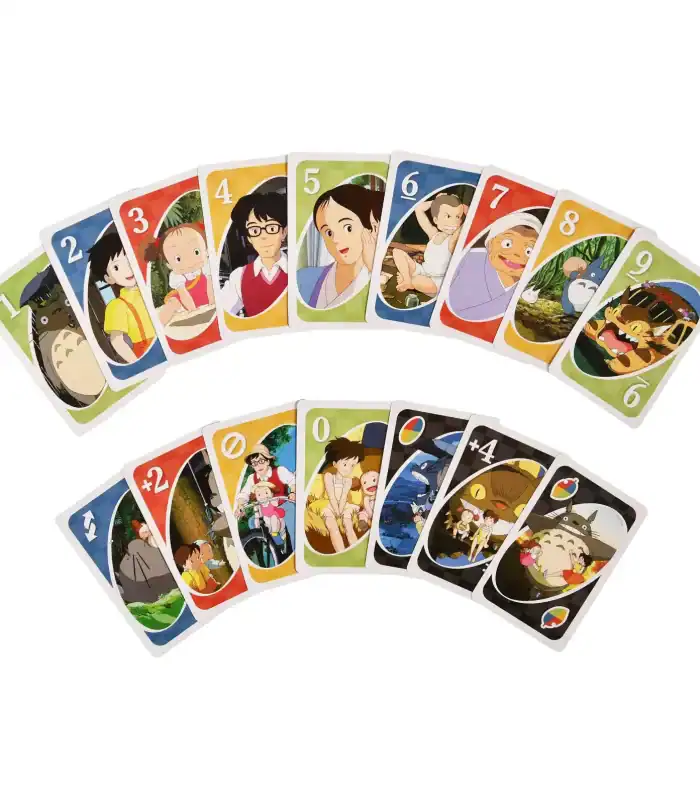

UNO x Studio Ghibli My Neighbor Totoro Card Game | Mattel
Official Studio Ghibli x UNO collaboration featuring the world of My Neighbor Totoro. Every card in the deck is illustrated with iconic characters and scenes from Hayao Miyazaki’s timeless classic, from Totoro and the Catbus to Satsuki, Mei and the soot sprites.
How This Edition Compares to Other Collectible UNO Releases
Context matters in any collectibles argument. The UNO brand has produced dozens of special editions, and not all of them hold value. Understanding where the Totoro edition sits in the hierarchy requires honest comparison.
| Edition | IP Tier | Artwork Quality | Secondary Market Demand | Collector Ceiling |
|---|---|---|---|---|
| UNO x Studio Ghibli Totoro | Elite | Film-accurate, scene-specific | Very High | High |
| UNO Gold Edition | Brand Premium | Metallic, minimalist | Moderate | Moderate |
| UNO Tom and Jerry x Mattel | Classic IP | Standard character art | Low-Moderate | Low-Moderate |
| Standard UNO Retail | None | Generic | Minimal | Minimal |
The UNO Gold Edition is a premium product with genuine aesthetic appeal. However, it lacks IP backing, which means its long-term collector ceiling is lower. The UNO Tom and Jerry x Mattel edition carries strong nostalgic IP but benefits from far less licensing restriction, which dilutes scarcity. Totoro wins this comparison on every axis that drives long-term value: IP strength, licensing scarcity, artwork fidelity, and cross-market demand.
The Japanese Collector Market Factor
Western collectors frequently underestimate Japanese secondary market influence on Ghibli merchandise pricing. In Japan, My Neighbor Totoro is not simply a beloved film. It is a cultural institution, encoded into the national identity in ways that parallel how Americans relate to certain Disney classics. However, unlike Disney, Ghibli has resisted full commercialization, which means genuine licensed merchandise carries more emotional and financial weight among Japanese collectors.
Cross-Market Arbitrage and What It Means for You
Japanese secondary platforms, specifically Mercari JP, Yahoo Auctions Japan, and Surugaya, show consistent demand for sealed Western-market Ghibli licensed products. The reason is simple: Japanese collectors often perceive Western licensed editions as limited regional variants. In practice, a sealed Western-market Totoro UNO deck appearing on Yahoo Auctions Japan regularly fetches 150-300% of Western retail. That cross-market arbitrage dynamic puts upward pressure on Western prices too.
Additionally, the Ghibli Museum in Mitaka, Tokyo, sells exclusive Ghibli merchandise that never reaches Western retail. Japanese collectors understand scarcity at a structural level. When they encounter a Western Ghibli product with genuine scarcity characteristics, they buy. As a result, sealed stock of this UNO edition is being absorbed across multiple markets simultaneously, which accelerates supply reduction faster than single-market products experience.
Rare Inventory
Explore the full collection
Figures, art toys & limited editions — shipped across Europe from France.
Authentication and Grading for the Totoro UNO Deck
For collectors considering PSA or BGS submission of individual cards, the authentication process begins with confirming the deck’s production origin. Legitimate editions carry both Mattel and Studio Ghibli licensing marks on the box and on individual card backs. Counterfeit Ghibli merchandise exists, particularly in grey-market channels. On the authentic edition, the Ghibli mark on card backs shows fine-line detail under magnification. Bootlegs typically show ink bleed or line softening at that scale.
For sealed box grading, CGC and AFA both accept game box submissions. The Totoro UNO box has clean die-cut edges and a foil-laminate finish on the front face, which grades well under AFA’s surface assessment criteria. Seal integrity is critical: original factory shrink wrap must be fully intact. Any resealing attempts are detectable under UV light examination. Store sealed units away from humidity and direct light to preserve the box’s surface grade long-term.
Rare Inventory Recommends
Collector Recommendation: Buy two units minimum. Keep one factory sealed for long-term appreciation and investment-grade storage. Open the second for display or play. The sealed premium on this edition will compound as production runs close and cross-market demand continues pulling inventory. This is not speculative advice. It is pattern recognition from watching how Ghibli merchandise has behaved across every product category for the past two decades.
UNO Collaborations as a Collecting Category
Beyond the Totoro edition specifically, the broader UNO collaboration space deserves attention as an emerging collectibles category. Mattel has accelerated its premium licensing strategy significantly since 2019. The Casio x UNO Collab A168WEUC-1AJR watch is the clearest proof that UNO is now being positioned as a lifestyle and collectible brand, not merely a family card game. That repositioning has direct implications for how the market values UNO special editions going forward.
Pull Rate Dynamics in Fixed-Content Decks
Unlike trading card booster packs, UNO decks are fixed-content products. Every unit contains the same cards. However, the concept of a pull rate still applies in a modified sense: print run variation. Earlier production runs of limited UNO editions sometimes show slightly different color calibration or minor card stock differences compared to later runs. Collectors who purchase early in a product’s lifecycle typically acquire the most consistent print quality. For the Totoro edition, first-wave retail stock is demonstrably preferable to later replenishment stock based on current collector community reporting.
| Collectible UNO Factor | Totoro Edition | Standard Special Edition |
|---|---|---|
| IP Licensing Strictness | Very High (Ghibli) | Variable |
| Artwork Authenticity | Studio-approved | Often generic |
| Japanese Market Demand | Very High | Low |
| Sealed Premium Potential | High | Low-Moderate |
| Grading Suitability | Excellent | Fair |
Where to Buy UNO x Studio Ghibli My Neighbor Totoro
Authenticated stock is the only stock worth buying for investment-grade collecting. Rare Inventory carries the UNO x Studio Ghibli My Neighbor Totoro edition with full authentication verification and ships across Europe from Cannes, France, ensuring sealed units arrive in grade-preserving condition. For collectors across Europe, the tracked shipping infrastructure removes the access friction that typically pushes buyers toward grey-market channels.
Buy directly from Rare Inventory’s authenticated product listing to ensure provenance integrity from purchase to long-term storage.

Frequently asked questions
Is the UNO x Studio Ghibli Totoro edition a limited production run?
Mattel has not published official production figures. However, Studio Ghibli’s licensing history strongly suggests limited production windows rather than ongoing replenishment. Once initial retail stock clears, secondary market sourcing becomes the primary option. Buy sealed units while authenticated retail stock is available.
Can individual cards from this deck be submitted to PSA or BGS for grading?
Yes. Both PSA and BGS accept non-TCG card submissions, including licensed game cards. The Totoro edition’s card stock grades particularly well due to its matte finish and heavier weight. Focus submissions on the full-bleed Wild and Wild Draw Four cards, which carry the highest individual card value.
How does this edition compare to other Ghibli merchandise for investment purposes?
Ghibli merchandise broadly appreciates well in sealed condition. The Totoro edition specifically benefits from being the most universally recognized Ghibli IP globally, which maximizes cross-market demand. In contrast, more niche Ghibli titles produce merchandise with strong domestic Japanese demand but weaker Western secondary market support. Totoro is the safest Ghibli collectible bet for Western collectors.
What storage conditions best preserve this deck for long-term grading potential?
Store sealed units in a climate-controlled environment between 65-70°F with relative humidity below 50%. Keep boxes away from direct light to prevent UV degradation of the foil-laminate surface. Acid-free protective sleeves designed for board game boxes provide additional surface protection. Additionally, vertical storage with light pressure from neighboring items is preferable to stacking, which risks corner crush on the box edges.
The Shop
Available Now at Rare Inventory
Pieces related to this article, in stock and ready to ship.


100% Authentic Shipped from France Free Shipping Over €200