How to Read a Banpresto Box: Every Panel Explained Including the Japanese nobody reads
You just bought your first Banpresto figure from an import seller. The box arrives, covered in Japanese text, a Bandai Spirits logo, a holographic sticker, what looks like a copyright notice, and a string of numbers you have absolutely no idea what to do with. Most collectors peel the tape, bin the box, and move on. Serious collectors read every panel, because the box tells you whether what you paid for is real, what sub-line it belongs to, and exactly what resale ceiling to expect. This guide decodes all of it, front to back, top to bottom, in plain language.
Reading a Banpresto box correctly lets you authenticate a figure before you open it and reveals key collector data printed in Japanese that most buyers ignore. Every official Banpresto box follows a consistent panel structure: manufacturer details in Japanese, a product code, licensing marks, and a sub-line identifier. Together, these tell you everything about provenance, authenticity, and value tier.

Explore the full collection
Figures, art toys & limited editions, shipped across Europe from France.
What Is a Banpresto Box, Really? Understanding the Prize Figure Format
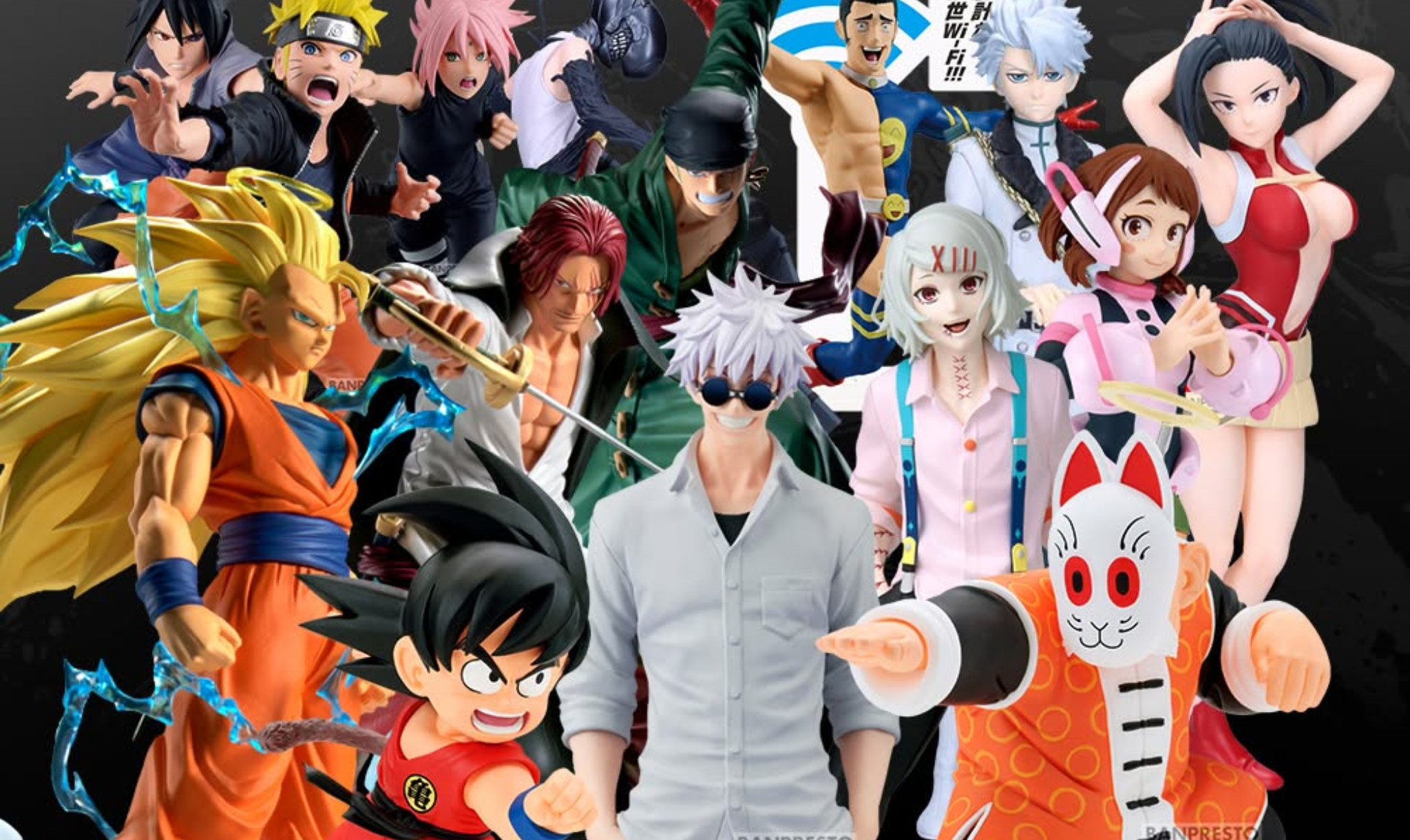
Bandai Namco operates Banpresto as its prize figure arm, and that origin shapes every box the company produces. Originally designed as prizes for Japanese arcade crane games, Banpresto figures have since become a retail-available collecting category in their own right, sold through import retailers alongside traditional premium figure lines. Because of this dual life, the boxes carry two sets of information: arcade distribution data for the Japanese market and consumer-facing branding for international collectors.
Banpresto occupies a unique spot in the anime figure market as the company behind Japan’s crane-game (UFO catcher) prize figures, which means its catalog is enormous, priced lower than premium statue brands, and released at a pace no other company matches. However, that pace also means counterfeits flood the market fast. Bootleggers copy the artwork but skip the technical text. That Japanese nobody reads? That is exactly where fakes fall apart.
Banpresto is a leading Japanese figure and collectible manufacturer, founded in 1977 and now part of Bandai Spirits under Bandai Namco Holdings. Most importantly, every legitimate box carries that Bandai Spirits affiliation in print. If yours does not, stop right there.
How to Read a Banpresto Box: The Front Panel Decoded
The front panel is the marketing face. It shows the character artwork, the sub-line logo (more on that shortly), the franchise name in both Japanese and English, and a scale or size indicator. Treat it as a quick reference, not a trust signal. Bootleggers reproduce this panel well. Your authentication work starts on the sides and bottom.
The Sub-Line Name: Your First Value Signal
Banpresto organises its output into named sub-lines. Each one signals a different quality and price tier, so knowing the sub-line tells you the figure’s collector ceiling before you even open the box. Grandista generally offers the strongest detail-to-price ratio, sitting well below premium statue pricing while delivering noticeably more sculpted detail. Similarly, MAXIMATIC targets dynamic action poses, often from peak arcs. In September 2026, Banpresto’s MAXIMATIC line unveiled a new Kurosaki Ichigo form from the BLEACH: Thousand-Year Blood War arc, showing exactly how the line chases prestige moments.
Other sub-lines include: FIGLIFE! (character-accurate static poses, recently used for the Killer Queen figure from JoJo’s Bizarre Adventure: Diamond is Unbreakable), GLITTER&GLAMOURS (fashion-forward female figures), DXF (budget entry-point), and Ichiban Kuji (lottery-exclusive, highest resale potential). Beyond that, DIGIVICE STAND! is a newer collectible base series from Banpresto, with the Agumon prize figure releasing as the second entry in September 2026. Sub-line identification alone separates a €25 shelf-filler from a €150 secondary-market piece.
How to Read a Banpresto Box: The Side and Back Panels in Japanese
Here is where most collectors check out. Do not. The side panels and back carry the information that actually protects your purchase.
The Manufacturer Block (製造元 / 発売元)
Look for the kanji block that reads 製造元 (seizou-moto, “manufacturer”) or 発売元 (hatsubai-moto, “distributor/seller”). On a genuine box, this block names either Banpresto Co., Ltd. or Bandai Spirits Co., Ltd., with a Japanese postal address in Tokyo. Specifically, Banpresto is a renowned Japanese toy and figure manufacturer, and later acquired by Bandai Namco Holdings. Any box that lists a Chinese city as the manufacturer address, with no Japanese distributor block, fails this check immediately.
The Product Code (品番)
Find the label 品番 (hinban, “product number”). This is a string of digits, typically starting with a Bandai Spirits prefix (often formatted as BP followed by numerals, for example BP28707P). Many authentic figures include unique serial numbers, QR codes, or batch IDs on the box or base of the figure, and you can often verify these directly on the manufacturer’s official website. Bootlegs either omit this field entirely or copy a real number that does not correspond to the character in the box. Cross-reference the product number against the character shown on the front: a mismatch is a hard red flag.
The Copyright Line (©)
The copyright block sits near the bottom of the back panel. For a Dragon Ball figure, you will see © Bird Studio/Shueisha, Toei Animation. For One Piece, © Eiichiro Oda/Shueisha, Toei Animation. At the heart of Banpresto’s success is its commitment to authenticity, and the company works closely with major studios and licensors to create figures that are faithful to the original characters. Counterfeit boxes often truncate this line, misspell “Shueisha,” or drop the Toei credit entirely. Read it character by character.
The Holographic Licensor Sticker
Most authentic figures include a shiny authenticity sticker, for example from Toei Animation or Bandai Namco. However, do not treat this sticker as the only check. Banpresto is inconsistent in placing stickers when it comes to their European versions, as some figures come with them and others without. Therefore, the sticker confirms authenticity when present, but its absence on a European import does not automatically signal a fake. Judge it alongside the other panels.
Explore the full collection
Figures, art toys & limited editions, shipped across Europe from France.
The Bottom Panel: Weight, Materials, and the Age Warning Nobody Reads
Flip the box over. The bottom panel carries four critical fields that collectors routinely skip.
| Field Label (Japanese) | What It Means | What Fakes Do |
|---|---|---|
| 品番 (Hinban) | Product code, unique per figure | Omit it or reuse a random BP number |
| 素材 (Sozai) | Material: PVC, ABS listed here | Leave blank or list only “plastic” |
| 対象年齢 (Taishou Nenrei) | Target age, usually 15歳以上 (15+) | Print 3+ to sidestep safety standards |
| 製造国 (Seizou-koku) | Country of manufacture, always China (中国) | Leave blank or print “Japan” incorrectly |
Note that 製造国 showing 中国 (China) is completely normal and not a fake indicator. Authentic figures are usually made with solid materials, giving them noticeable weight and a premium feel. So, use the materials list to confirm PVC and ABS, then physically weigh the figure against published collector data. Counterfeits often use lightweight or hollow plastic to save costs.
Banpresto Sub-Lines Compared: Choosing the Right Tier
| Sub-Line | Typical Height | Price Range (Retail) | Resale Potential | Best For |
|---|---|---|---|---|
| DXF | ~17 cm | €15-25 | Low | First-time buyers |
| Grandista | ~28 cm | €30-45 | Medium | Display collectors |
| MAXIMATIC | ~20 cm | €30-40 | Medium-High | Shonen action fans |
| FIGLIFE! | ~15-17 cm | €25-35 | Medium | Franchise completists |
| Ichiban Kuji | ~20-25 cm | €50-150+ | High | Investment-minded collectors |
Where to Buy Authentic Banpresto Figures
Rare Inventory sources directly verified Japanese collectibles and ships across Europe from France. For a proven entry point into Banpresto collecting, the Majin Vegeta History Box Figure Dragon Ball Z Banpresto at €36 shows exactly what a genuine History Box panel layout looks like, making it a smart first purchase and a box-reading tutorial in itself. Beyond figures, Rare Inventory stocks broader Japanese collectibles including the Animation Chronicle 2021 Box Yu-Gi-Oh OCG and the Doom of Dimensions Japanese Yu-Gi-Oh OCG Box, both sourced from Japan with full licensing integrity. For collectors ready to invest at a higher tier, the World Tour Tokyo Series Topps Trading Cards Box Set by Takashi Murakami x MLB represents the premium end of Japanese-licensed collectibles. Browse the full catalog at rareinventory.com for current stock.


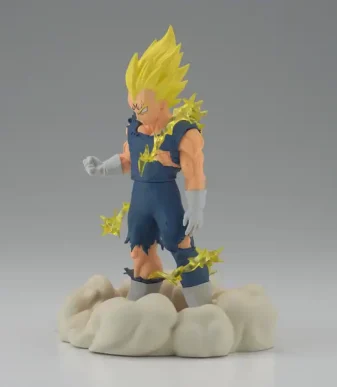
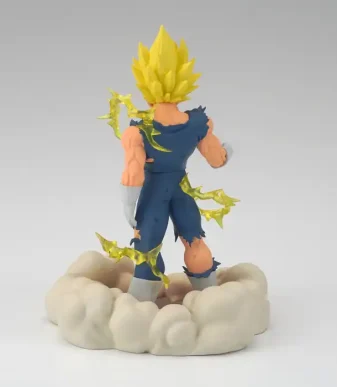
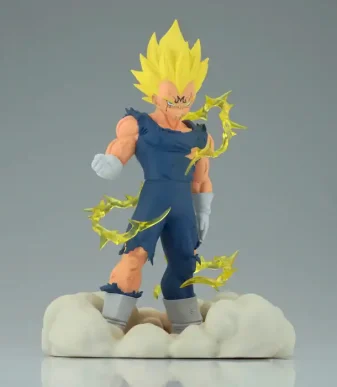


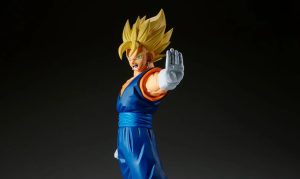
Majin Vegeta History Box Figure Dragon Ball Z | Banpresto
One of the most iconic and emotionally charged moments in Dragon Ball Z history is immortalized in this stunning History Box figure by Banpresto. Majin Vegeta is captured in a dynamic power-up pose, his Super Saiyan aura blazing around him as he channels the dark energy of Babidi’s magic, the moment the Prince of all Saiyans chose pride over everything else.
Rare Inventory Editor’s Pick
For your first Banpresto box-reading exercise, choose the Majin Vegeta History Box Figure Dragon Ball Z. The History Box line carries a clean, well-structured panel layout with all key Japanese fields present and legible. Use it as your reference specimen for every Banpresto box you handle after this. At €36, it costs less than a tutorial and ships to your door from France.
Frequently asked questions
How to spot fake anime figures before you open the box?
Check four things in order: the manufacturer block in Japanese (must name Bandai Spirits or Banpresto Co., Ltd. with a Tokyo address), the product code (品番) matched against the character shown, the copyright line (must include the correct licensor, such as Toei Animation), and the physical weight of the box. An original retails around €25-40, while a copy sells for €10-15. A price dramatically below market almost always means a bootleg. Additionally, hold the figure gently: if it feels flimsy, bendable, or uneven, it is most likely a fake.
How to tell bootleg anime figures from genuine ones once unboxed?
Three physical checks settle it fast. First, assess paint application: genuine Banpresto figures carry sharp, clean paint lines with no bleed between color zones. Second, check the base: if you are sold a figure without a base, that is a serious red flag. Third, compare the sculpt to official photography on the Bandai Spirits product page. Bootleggers consistently soften fine detail around eyes and hair because their molds are lower-resolution copies of the original tooling.
Where can I find authentic anime figures if I live outside Japan?
Banpresto’s crane-game prize figures are one of the most accessible entry points into anime figure collecting, covering nearly every major franchise at a fraction of the cost of premium scale statues. Outside Japan, buy from specialist import retailers who source directly and provide authenticity guarantees. Rare Inventory ships authentic Japanese collectibles across Europe from France. For Good Smile Company scale figures and Kotobukiya model kits, apply the same rule: buy from authorised importers, not anonymous secondary listings.
Is collecting anime figures a legitimate hobby with real resale value?
Absolutely, and the data backs it. Some limited editions, such as Ichiban Kuji and anniversary editions, produce only small quantities, and that rarity directly explains their price premium. Moreover, sub-lines like MAXIMATIC and Grandista consistently hold secondary-market value when kept in original, undamaged packaging. Serious collectors store boxes flat, away from UV light, and never remove the holographic licensor sticker. The box itself is part of the asset.
The Shop
Available Now at Rare Inventory
Pieces related to this article, in stock and ready to ship.


100% Authentic Shipped from France Free Shipping Over €200