Yoshitomo Nara: The Iconic Japanese Artist
A collector in Tokyo spots a small Nara print at a weekend market, pays next to nothing, and flips it six months later for fifteen times the price. Another buyer in Paris overpays for a mass-produced poster, convinced it holds the same energy as the originals. The gap between those two outcomes comes down entirely to knowledge. This guide closes that gap.
“Nara Is a Niche Artist – Only Anime Fans Care”
False. Yoshitomo Nara ranks among the most beloved Japanese artists of his generation, and the institutional proof is impossible to ignore. LACMA mounted a career retrospective, the largest exhibition dedicated to the artist in the United States to date, featuring 100 paintings, sculptures, drawings, ceramics, and more. That is not anime-convention territory. That is major museum real estate on Wilshire Boulevard.
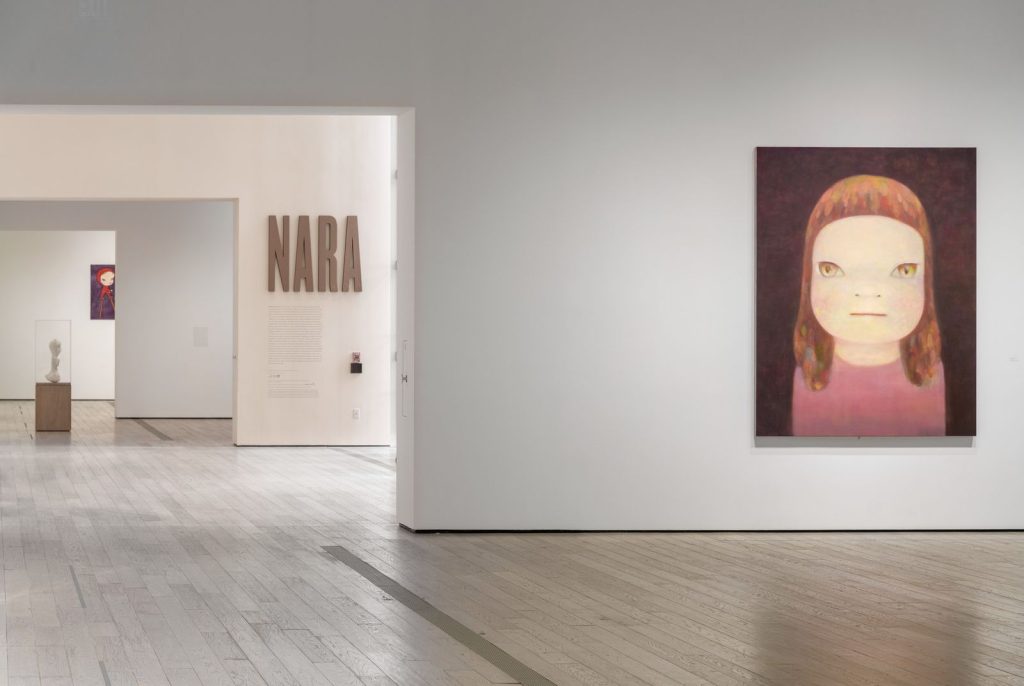
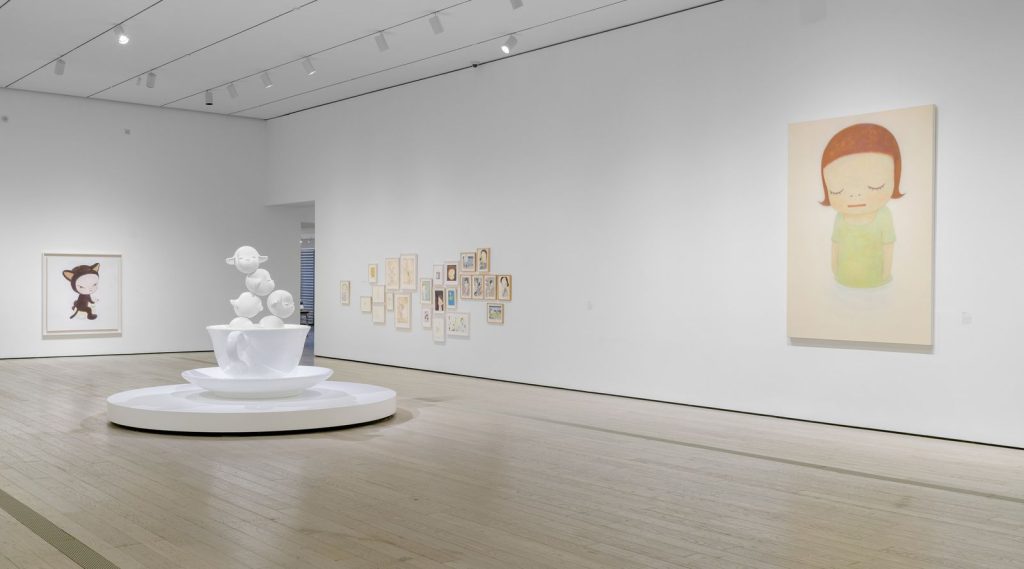
Moreover, his work belongs to the San Francisco Museum of Modern Art, the Rubell Collection, the Museum of Modern Art, and the Aomori Museum of Art, among many other collections. Additionally, numerous key galleries and museums such as the Guggenheim Bilbao have featured Nara’s work. The audience spans serious institutional collectors, hedge fund advisors, and punk record enthusiasts simultaneously. That crossover is precisely what makes him dangerous to underestimate.
The Music Connection Is Not a Gimmick
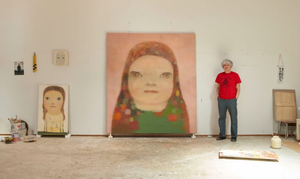
Nara’s oeuvre draws inspiration from memories of his childhood, music, literature, studying and living in Germany between 1988 and 2000, and modern art from Europe and Japan. The LACMA exhibition views his work through the lens of his longtime passion: music. The exhibition catalogue features “liner notes” written by the artist about various albums in his personal collection, published in English for the first time. First, understand that music is not a theme Nara sprinkles in for personality. It is the structural backbone of his entire practice. A devoted punk rock fan, Nara often worked late into the night, blasting music and chain-smoking as he immersed himself in his art.

Explore the full collection
Figures, art toys & limited editions — shipped across Europe from France.
“Yoshitomo Nara’s Work Is Just Cute: It Has No Depth”
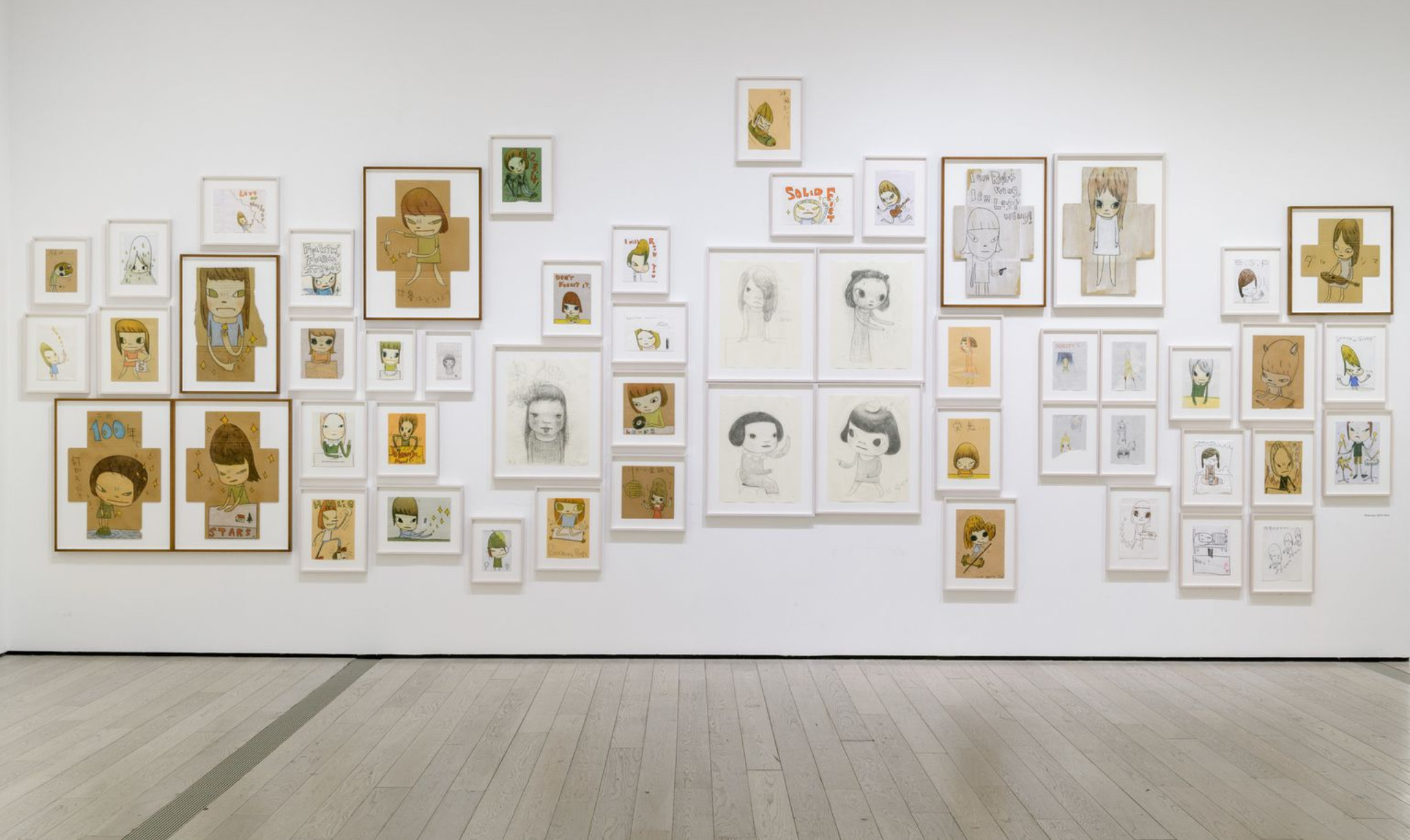
Wrong, and this myth costs collectors money. Nara’s deceptively simple paintings, sculptures, and drawings draw on the pop culture aesthetics of manga, Walt Disney cartoons, and punk rock, populating his work with alternately adorable and sinister child characters who run amok in flat backgrounds rendered with simple bold lines and solid hues. The operative word there is “sinister.” Surface-level cuteness masks something far more confrontational.
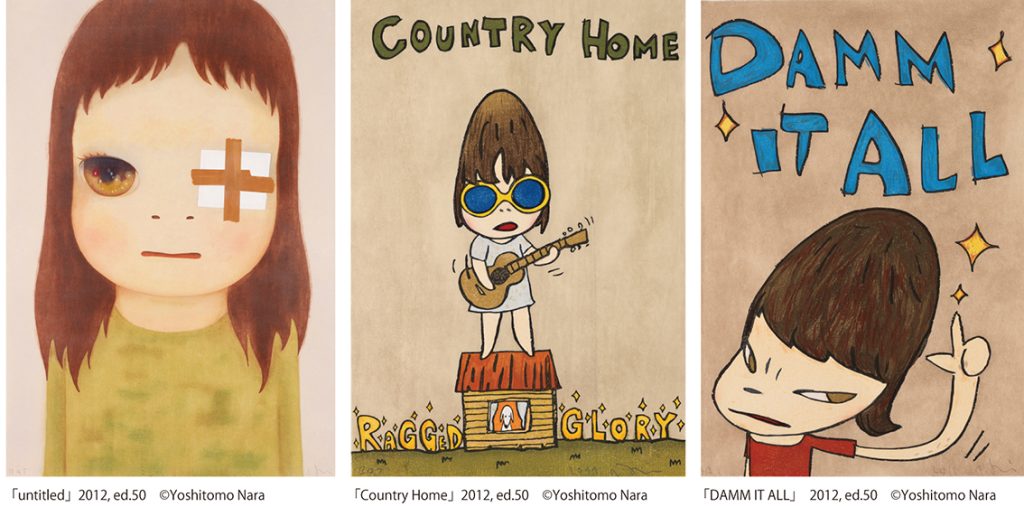
Nara’s works explore themes of memory, alienation, defiance, and the interior life, offering viewers a deeply personal reflection that transcends cultural boundaries. Furthermore, alongside his most recognizable wide-eyed figures, his earliest paintings were sketched on envelopes and cardboard during his time in Germany, while his most recent works include large-scale bronze and ceramic figurines made following the 2011 earthquake that devastated Japan. That trajectory, from envelope scraps to museum-scaled bronze, is not a cute story. It is a serious art historical arc.
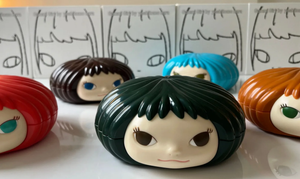
For collectors who want to own a piece of that arc without an eight-figure auction budget, the Yoshitomo Nara Gummi Girl Ringokko Red and the Yoshitomo Nara Gummi Girl Blue represent the artist’s sculptural language at an accessible entry point. These small-format pieces carry the same visual vocabulary as his museum-scale work.
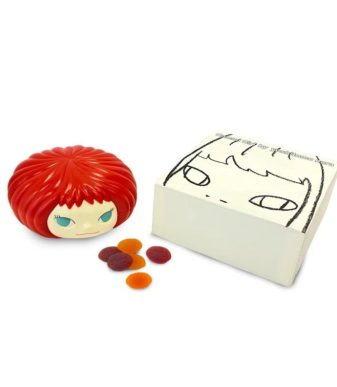

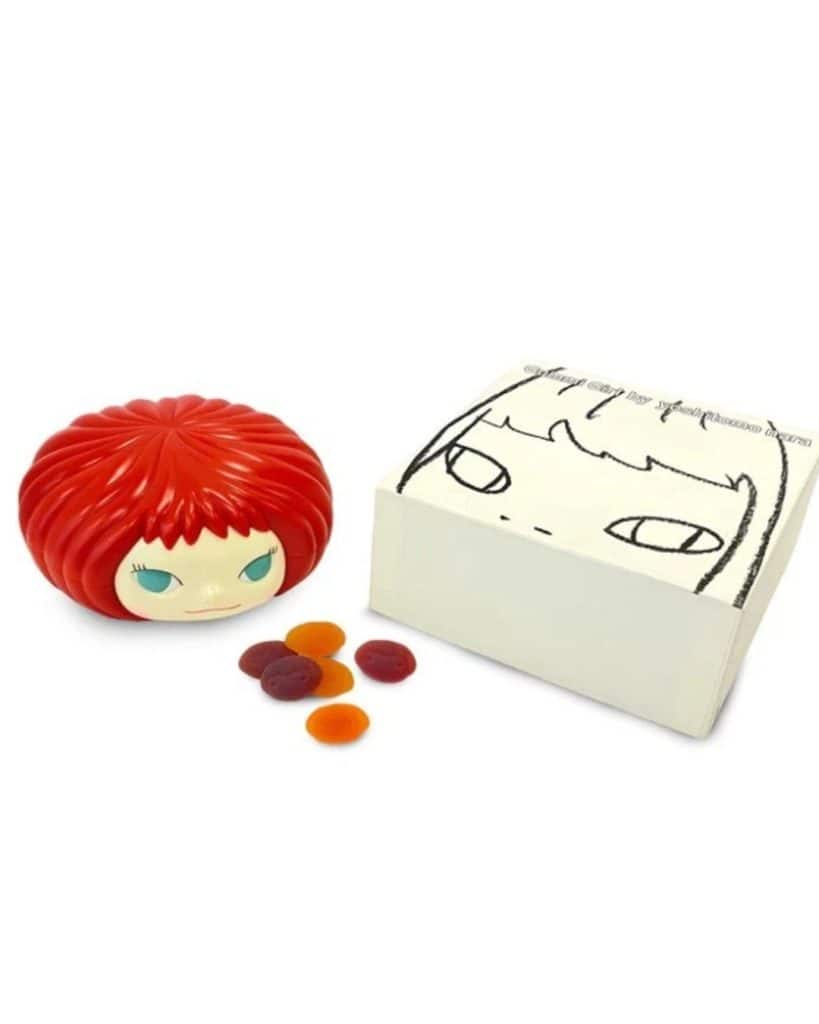

Yoshitomo Nara – Gummi Girl Ringokko Figure (Red)
Yoshitomo Nara’s Gummi Girl Ringokko in Red is an officially licensed plastic candy case collectible from one of contemporary art’s most iconic names. Part of the Gummi Girl series, the collection features five characters, each distinguished by a unique hair and eye color combination. Ringokko appears in her signature red colorway, rendered in Nara’s unmistakable style: wide eyes, a quiet expression, and the kind of deceptive simplicity that made his work a staple of both gallery walls and serious collector shelves worldwide.
“A LACMA Show Doesn’t Move the Secondary Market”
The data says otherwise. In June 2021, just months after Nara’s retrospective opened at LACMA, Missing in Action (2000) fetched HKD 123.7 million ($15.9 million (about €14.2 million)), achieving the second-highest auction price for the artist. Institutional validation accelerates collector demand. This is not coincidence. Museums create a permission structure for new buyers to enter the market confidently.
Beyond that, the auction trajectory for Nara is unambiguous. In October 2019, Knife Behind Back (2000) sold for an astounding HK$195,696,000 at Sotheby’s in Hong Kong, setting a record as the most expensive work by a Japanese pop artist. That sale established Nara as the most expensive Japanese artist of all time. Even so, the more relevant number for most collectors is what happens to limited editions and multiples when a major retrospective runs. Consistently, prices on smaller works accelerate during and immediately after institutional shows.
Explore the full collection
Figures, art toys & limited editions — shipped across Europe from France.
Key Auction Benchmarks at a Glance
| Work | Year | Sale Price | House / Location |
|---|---|---|---|
| Knife Behind Back | 2000 | ~$25M USD | Sotheby’s Hong Kong, 2019 |
| Missing in Action | 2000 | ~$15.9M USD | Phillips Hong Kong, 2021 |
| Hothouse Doll (in the white room III) | 1995 | ~$13.3M USD | Phillips / Poly HK, 2020 |
| Cosmic Eyes (in the Milky Lake) | 2005 | ~$11.4M USD | Sotheby’s London, 2025 |
| Nice To See You Again | , | ~$15.4M USD | Sotheby’s New York, 2021 |
“Miss Forest at LACMA Is Just Outdoor Decoration”
Absolutely not. One of the main exhibition highlights is Miss Forest, a 26-foot outdoor painted bronze sculpture gracing Wilshire Boulevard. A 26-foot painted bronze on one of America’s most trafficked museum corridors functions as a permanent landmark, not decoration. Consequently, any Nara edition object referencing the Miss Forest motif carries significant institutional weight.
Similarly, the exhibition features album covers Nara began collecting as an adolescent, paintings, drawings, sculpture, ceramics, a studio recreation installation, and never-before-exhibited idea sketches that reflect the artist’s empathic eye. That studio recreation is key for collectors: it contextualizes Nara’s process, making every object that emerges from that process legible within a larger narrative. Narrative drives long-term value.
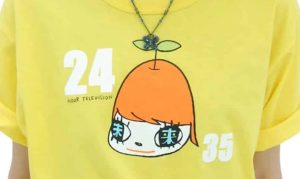
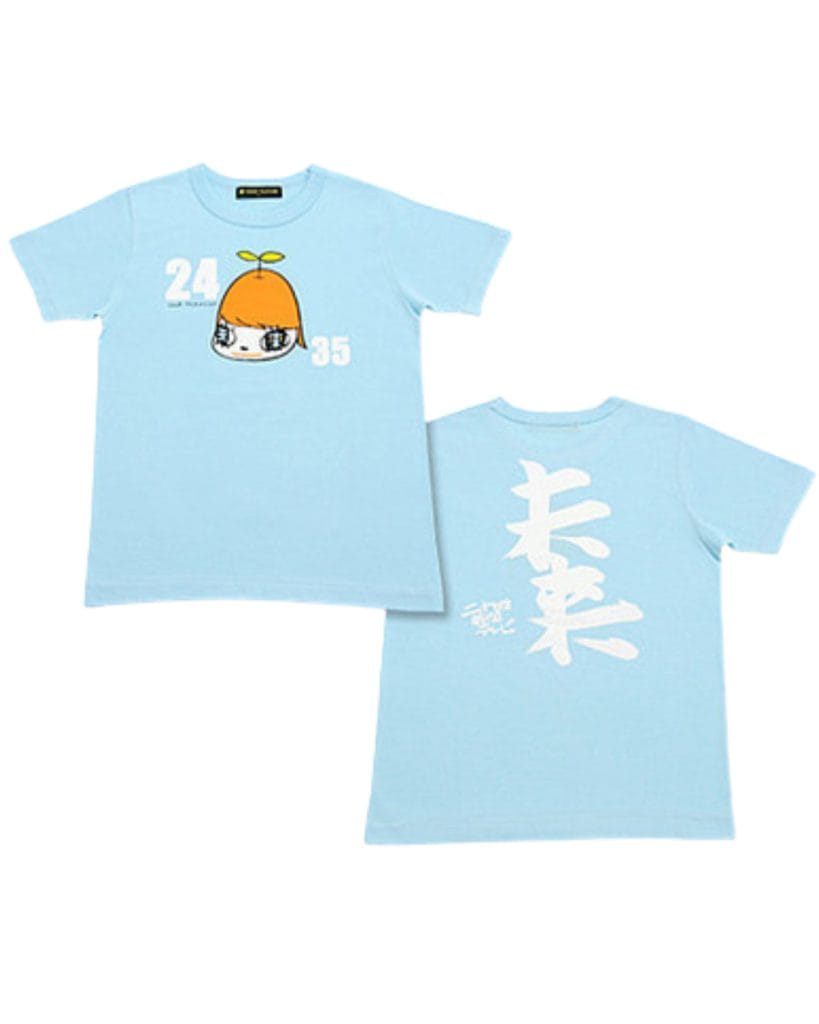
For daily-use collectibles that carry genuine Nara authorship, the Yoshitomo Nara Puppy Magnetic Card Holder sits at a compelling €75 entry point. Meanwhile, the Yoshitomo Nara x Satoshi Ohno T-Shirt TV Charity 2012 demonstrates the artist’s crossover into Japanese pop culture collaborations, a legitimate collectible category that the secondary market actively tracks.
“Nara Merchandise Is a Collector’s Dead End”
This is the myth that hurts new collectors most. Nara-authorised objects, multiples, and editions consistently outperform expectations on the secondary market because the primary market prices them accessibly. Between 2012 and 2021, the same Nara installation piece sold for ten times more, moving from HK$11,300,000 to HK$120,000,000. That multiplier logic applies across format sizes. Smaller authorised objects follow the same demand curve, just at lower absolute values.
The Japanese domestic market adds another layer. N’s YARD, Nara’s own museum in Nasushiobara, produces exclusive goods that rarely circulate outside Japan. Those pieces carry real scarcity, not manufactured scarcity. Additionally, Nara’s 2026 schedule includes exhibitions at the Takaoka Art Museum in Toyama running September through November, ensuring continued institutional momentum in Japan and sustained demand for verified collectibles globally.
Collectible Format Comparison
| Format | Typical Edition Size | Market Liquidity | Authentication Risk |
|---|---|---|---|
| Original painting | Unique | High (auction) | High: provenance critical |
| Signed print / lithograph | 50–300 | Medium–High | Medium: verify publisher |
| Authorised sculpture / multiple | 100–500 | Medium | Low: box and cert required |
| Merch (charity, collab editions) | Varies, often low | Medium | Low: documentation helps |
| Mass retail merch (phone case, poster) | Unlimited | Very Low | Low: but no investment thesis |
In short, the collector who buys unlimited retail posters and expects appreciation will be disappointed. Instead, focus on publisher-documented editions, charity collaborations with fixed runs, and Japan-market exclusives. Those three categories hold and build value. The Rare Inventory selection focuses precisely on this verified tier of Nara objects.
Medicom Toy has collaborated with Nara on authorised vinyl figures that remain highly sought in the Japanese market. Good Smile Company and Kaikai Kiki represent the kind of authorised Japanese art-object ecosystem where Nara’s work circulates most credibly at the collectible tier. Understanding which objects come through these pipelines versus generic retail channels separates informed buyers from tourists.
Rare Inventory Recommends
First, anchor your Nara collection with objects that carry clear provenance and documented edition context. The Yoshitomo Nara Gummi Girl Ringokko Red at €120 is the strongest entry point currently available: a named, characterised sculpture with direct ties to Nara’s established visual language. Pair it with the Yoshitomo Nara Puppy Magnetic Card Holder for a thematically coherent display that references Nara’s recurring dog motif, a subject the artist elevated to institutional status with permanent installations at venues including LACMA, the Asia Society, and the Aomori Museum of Art.
Where to Buy
Rare Inventory sources verified Yoshitomo Nara collectibles and ships across Europe from France, making the full catalogue accessible to collectors in Paris, London, Berlin, and beyond. Browse the complete selection directly at rareinventory.com, where every listed piece carries documented authenticity. For collectors building a position ahead of continued institutional momentum, acting before the next major exhibition opening is the only sensible timing.
Frequently asked questions
Why is Yoshitomo Nara so famous?
Nara bridges manga-inflected imagery, punk rock sensibility, and deeply personal reflection. His deceptively innocent yet emotionally potent depictions of children and animals look outward with disarming vulnerability while hinting at undercurrents of defiance and existential longing. That combination resonated simultaneously with the Western contemporary art market, the Japanese pop culture world, and the global youth subculture audience, creating a rare cross-demographic demand that few living artists achieve.
Why is Yoshitomo Nara so expensive?
An uptick in attention from critics and art historians fueled Nara’s fast rise on the art market. In 2019, Sotheby’s sold Knife Behind Back for a record-setting $25 million (about €22.3 million) in Hong Kong, and since that sale he has become one of the most expensive artists in Asia and an in-demand staple in international contemporary art auctions. Beyond scarcity, institutional validation from LACMA, MoMA, and the Guggenheim created a permission structure for major collectors to enter the market at seven-figure price points, permanently re-rating the floor for all Nara works.
Where can I see Yoshitomo Nara’s art in a museum?
LACMA holds a permanent exhibition of Nara’s artwork, making Los Angeles one of the most reliable destinations for Western collectors. In Japan, permanent installations include the Aomori Dog at the Aomori Museum of Art and several works at Nara’s own N’s YARD museum in Nasushiobara. Additionally, the Takaoka Art Museum in Toyama hosts a Nara exhibition running September through November 2026 for collectors travelling to Japan this year.
Is Yoshitomo Nara merchandise worth collecting as an investment?
Authorised, limited-run Nara objects, particularly Japan-market exclusives, charity collaborations, and publisher-documented editions, hold and build value over time. However, unlimited retail merchandise such as generic posters and phone cases carries no meaningful investment thesis. The distinction is edition documentation: always verify the publisher, the edition size, and the existence of a certificate or original box before purchasing any Nara object with appreciation in mind.
The Shop
Available Now at Rare Inventory
Pieces related to this article, in stock and ready to ship.


100% Authentic Shipped from France Free Shipping Over €200