The World of Murakami: Superflat, Flowers & Pop Art Explained
Takashi Murakami is not simply a contemporary artist. He is a market force, a cultural theorist, and one of the most strategically intelligent operators in the global art world. His work commands auction prices that rival blue-chip Western artists, while simultaneously sitting in streetwear drops and trading card packs. Understanding him requires more than aesthetic appreciation. It requires knowing the philosophy, the publishing ecosystem, the grading landscape, and the secondary market dynamics that make his work genuinely collectible.
First, however, you need the foundation. Without Superflat, nothing else makes sense.
Superflat: The Theory That Built an Empire
What Superflat Actually Means
Murakami introduced Superflat as both an artistic style and a critical theory in 2000, anchored by his landmark exhibition in Los Angeles. The concept identifies a specific quality in Japanese visual culture: the compression of foreground and background into a single plane. Traditional Western painting builds depth through perspective. Japanese art, from ukiyo-e woodblock prints to manga, historically flattens its imagery. Murakami argued that this flatness was not a limitation. It was a defining cultural statement.

Additionally, Superflat was a sociological critique. Murakami connected the flatness of Japanese postwar consumer culture to the flatness of the imagery it produced. Mass media, anime, and advertising all collapsed emotional depth into surface. His art mirrors this condition rather than escaping it.
Why the Theory Matters to Collectors
Collectors who treat Murakami as simply a colorful pop artist miss the intellectual infrastructure beneath the surface. That infrastructure is precisely why institutional buyers, museums, and serious print collectors remain committed to the work through market cycles. However, for the secondary market, the theory also legitimizes premium pricing on items that might otherwise read as commercial merchandise. The Superflat framework transforms product into artifact.
The Flowers: Iconography, Variants, and Collector Significance
The Origin of the Smiling Flower
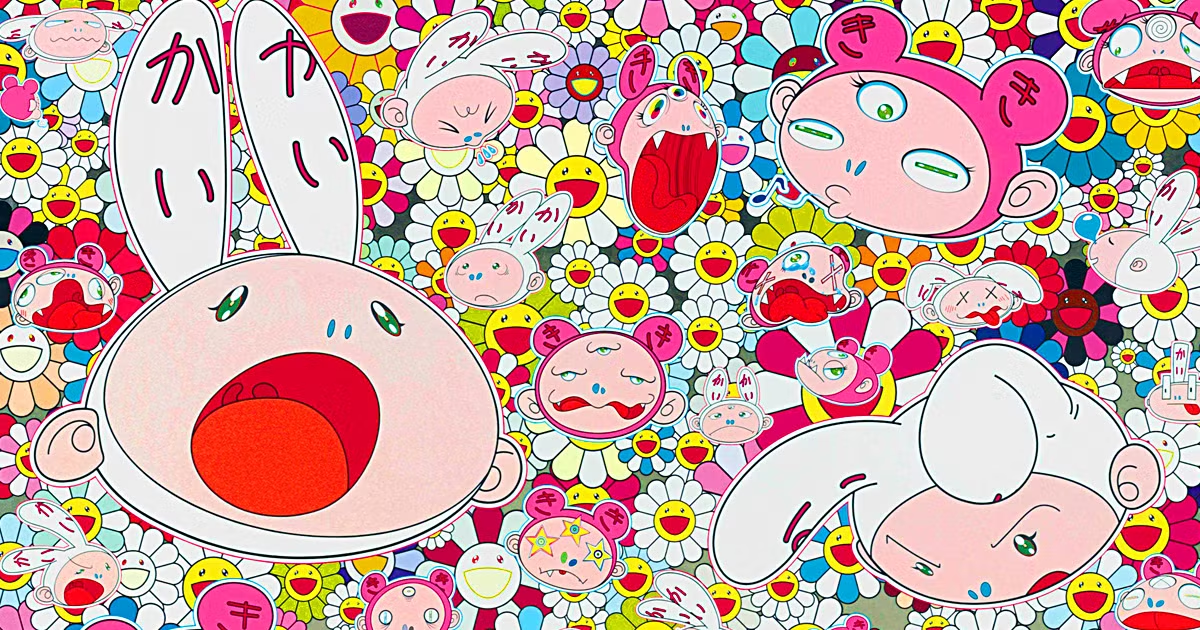
Murakami’s flower motif debuted in the early 1990s and became his most recognizable visual signature. The design is deceptively simple: a circular face surrounded by petals, almost always smiling. In practice, this icon operates across media at extraordinary scale. It appears on canvas paintings worth millions, on limited edition prints, on collaborative apparel, and on collectible publications. The flower is simultaneously fine art and logo.

Beyond that, the flower carries specific iconographic weight within Japanese visual traditions. The circular face references the idealized human face in Buddhist iconography. The petals draw from decorative motifs in Edo-period craft. Murakami collapses centuries of reference into a single graphic unit that communicates instantly across cultural contexts.
108 Flowers: The Publication That Serious Collectors Own
The 108 Flowers publication represents one of the most important entries in Murakami’s publishing catalog. The number 108 is not arbitrary. In Buddhist tradition, 108 represents the number of earthly desires or afflictions. Murakami uses it to structure a visual inventory of flower variants, each rendered with obsessive detail and chromatic specificity. For collectors, this publication is both a reference document and a collectible object in its own right.
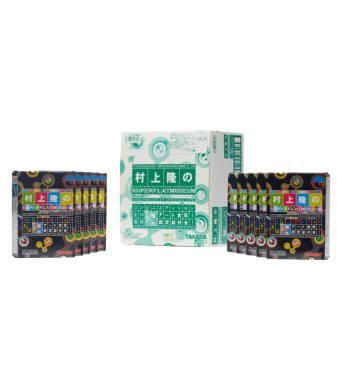
Two editions currently matter in the market. The Takashi Murakami 108 Flowers Box Revised Japanese Edition, priced at €200, is the more sought-after version among serious Japanese collectors and institutions. The Japanese edition preserves original text context and carries stronger resonance in the Tokyo secondary market. In contrast, the Takashi Murakami 108 Flowers Box Revised English Edition at €250 commands a slight premium in Western markets due to accessibility and broader collector reach.
For collectors weighing both, the Japanese edition is the correct long-term hold. The Tokyo market consistently rewards authenticity of context, and Japanese-language editions of significant artist publications retain stronger institutional credibility at auction.


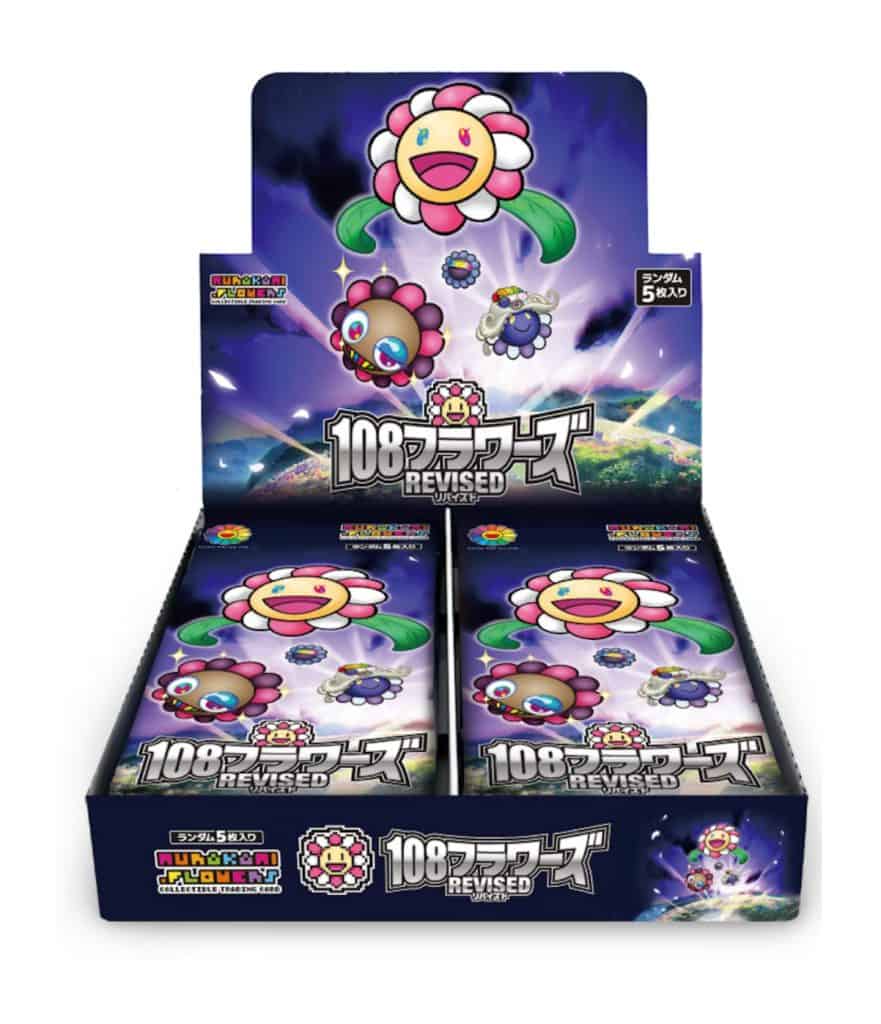
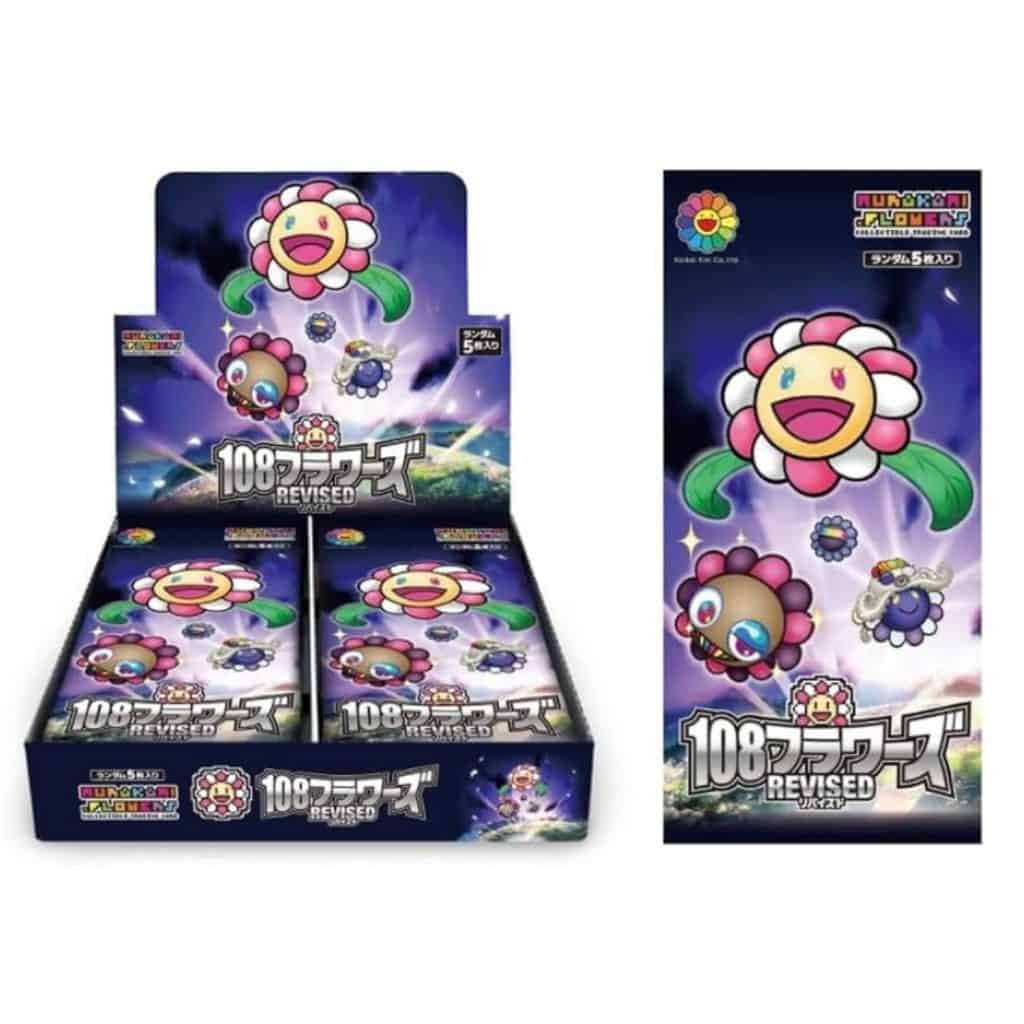
Takashi Murakami 108 Flowers Revised Trading Card Box (Japanese Edition)
The 108 Flowers Box – Revised by Takashi Murakami is a refined and highly collectible edition celebrating one of the artist’s most iconic visual motifs. This updated version reimagines Murakami’s famous “108 Flowers” artwork with enhanced detailing and a polished presentation, offering collectors a refreshed take on a beloved classic.
Murakami and the Japanese Market: What Western Collectors Miss
Tokyo Pricing Dynamics
The Japanese secondary market operates on different logic than Western platforms like Christie’s or Phillips. Condition grading in Japan is stricter by cultural convention. Japanese collectors expect near-mint or better on any collectible object. As a result, items that grade PSA 8 or below lose value faster in Tokyo than they would in New York or London. Additionally, Japanese collectors place higher weight on original packaging completeness, insert cards, and accompanying documentation than their Western counterparts.
Meanwhile, the yen’s volatility over the past three years has created genuine arbitrage windows. Collectors buying Murakami-related publications and objects in Japan during weak yen periods have captured real value. However, this opportunity requires local market knowledge and ideally Japanese-language purchasing capability.
Rare Inventory
Explore the full collection
Figures, art toys & limited editions — shipped across Europe from France.
Authenticity and the Kaikai Kiki Certification
Murakami’s studio, Kaikai Kiki Co., Ltd., operates a certification and authentication infrastructure that directly affects secondary market value. Works and publications produced under Kaikai Kiki oversight carry stronger provenance than unlicensed merchandise, even when both appear visually identical. Collectors should always verify the Kaikai Kiki imprint on publications and the authenticity documentation on any signed or numbered works. On the secondary market, this distinction separates strong-performing lots from stagnant inventory.
Collectible Objects: Trading Cards, Plush, and Market-Ready Formats
The Murakami x MLB Topps Trading Cards
The Takashi Murakami MLB World Tour Tokyo Series Topps Trading Cards Box Set at €500 represents a genuinely interesting convergence of collector markets. Topps brought Murakami into baseball card culture through the MLB World Tour Tokyo Series, producing cards that fuse his visual language with athlete subjects. The result appeals simultaneously to PSA-focused sports card collectors, Murakami print collectors, and streetwear-adjacent buyers who follow his collaborations.


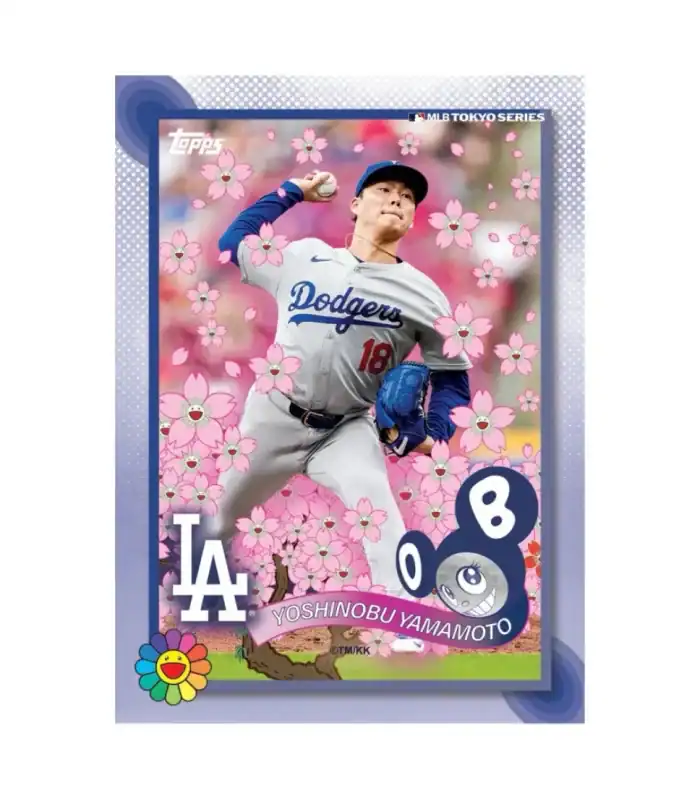

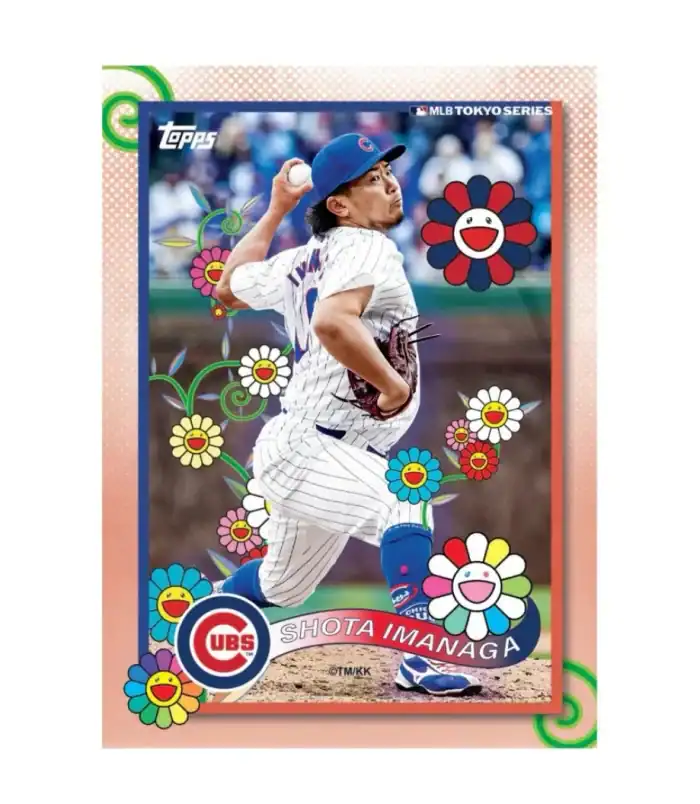
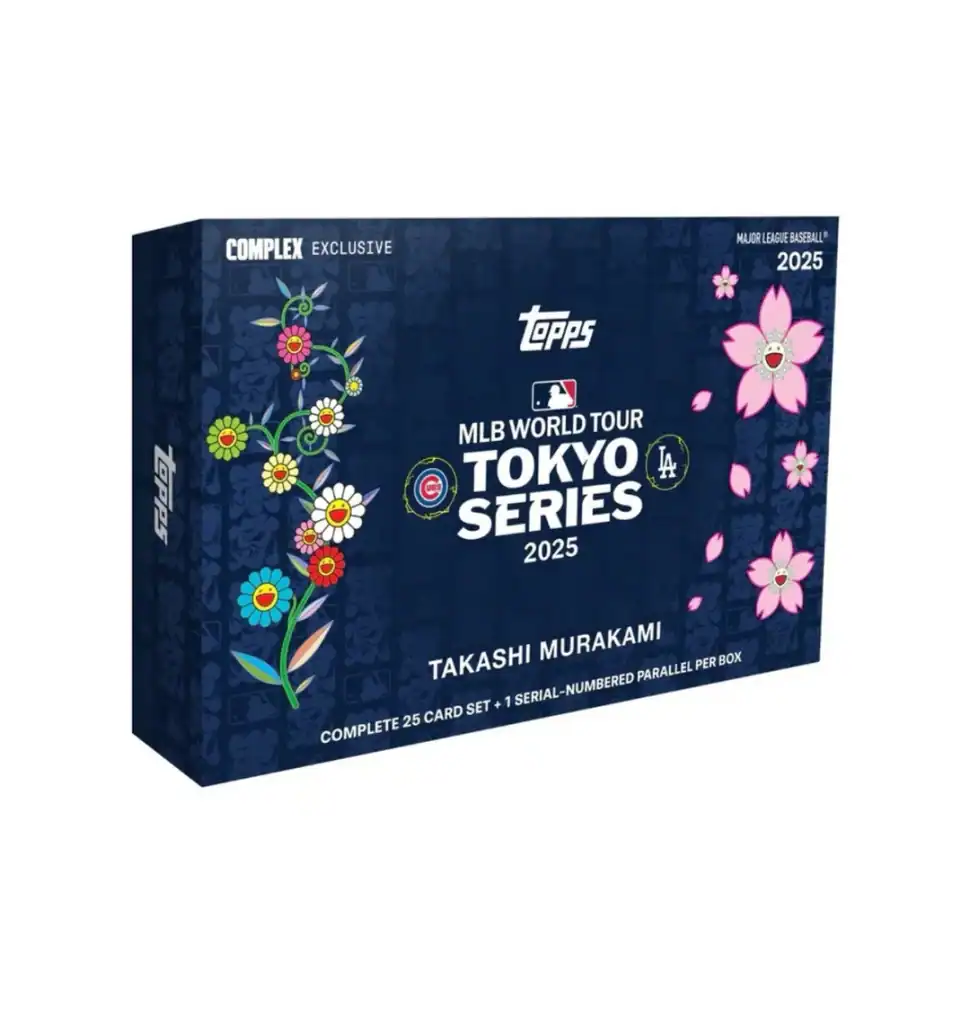
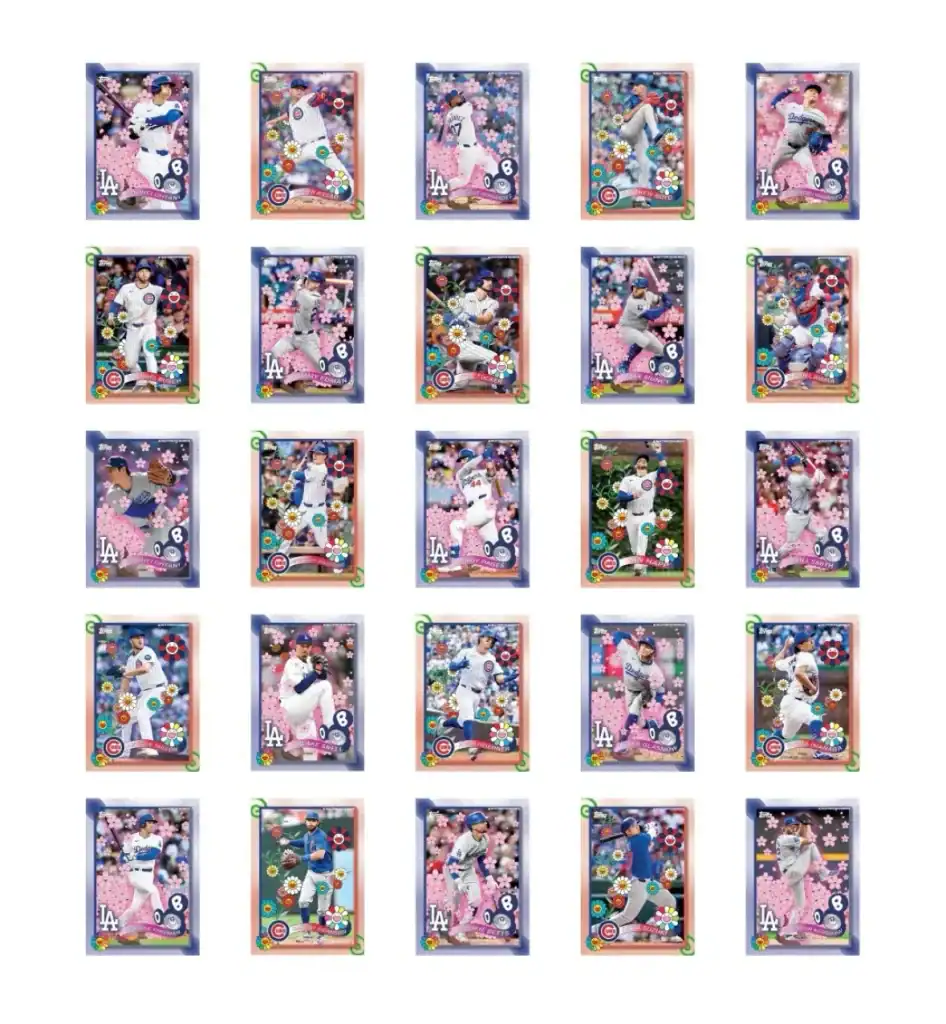


Topps World Tour Tokyo Series Trading Cards Box Set | Takashi Murakami x MLB
The Takashi Murakami + MLB World Tour Tokyo Series – TOPPS Trading Cards Box Set is a standout collectible that unites two worlds: the vibrant, iconic artistry of Takashi Murakami and the global excitement of the MLB World Tour Tokyo Series.
This limited-edition box set features exclusive TOPPS cards redesigned through Murakami’s unmistakable visual language, bold colors, playful characters, and his signature “flowers,” transforming each card into a mini art piece. The fusion of professional baseball stars with one of the most influential contemporary artists creates a product that appeals not only to sports fans, but also to art collectors and trading card enthusiasts.
For grading purposes, these cards operate within standard PSA and BGS protocols. However, the pull rates on Murakami-specific parallels and chase cards are significantly tighter than standard Topps products. Collectors opening sealed boxes should expect the primary value to concentrate in rainbow foil variants and any autographed inserts. First, grade anything pulled above PSA 9 standard immediately. Additionally, hold sealed boxes as an alternative to breaking, since sealed product in this collaboration has shown stronger appreciation than broken singles in the current market.
The Flowers and Skulls Teddy Bear: Soft Goods as Hard Assets
The Takashi Murakami Flowers and Skulls Jacquard Denim Teddy Bear at €320 belongs to a category of Murakami collectibles that Western collectors frequently undervalue. Sculptural soft goods, particularly those produced in limited quantities with documented production runs, perform well in the Japanese collectible market. The jacquard denim construction signals production quality above standard plush merchandise, and the skulls motif connects directly to Murakami’s ongoing engagement with mortality themes in his fine art practice.


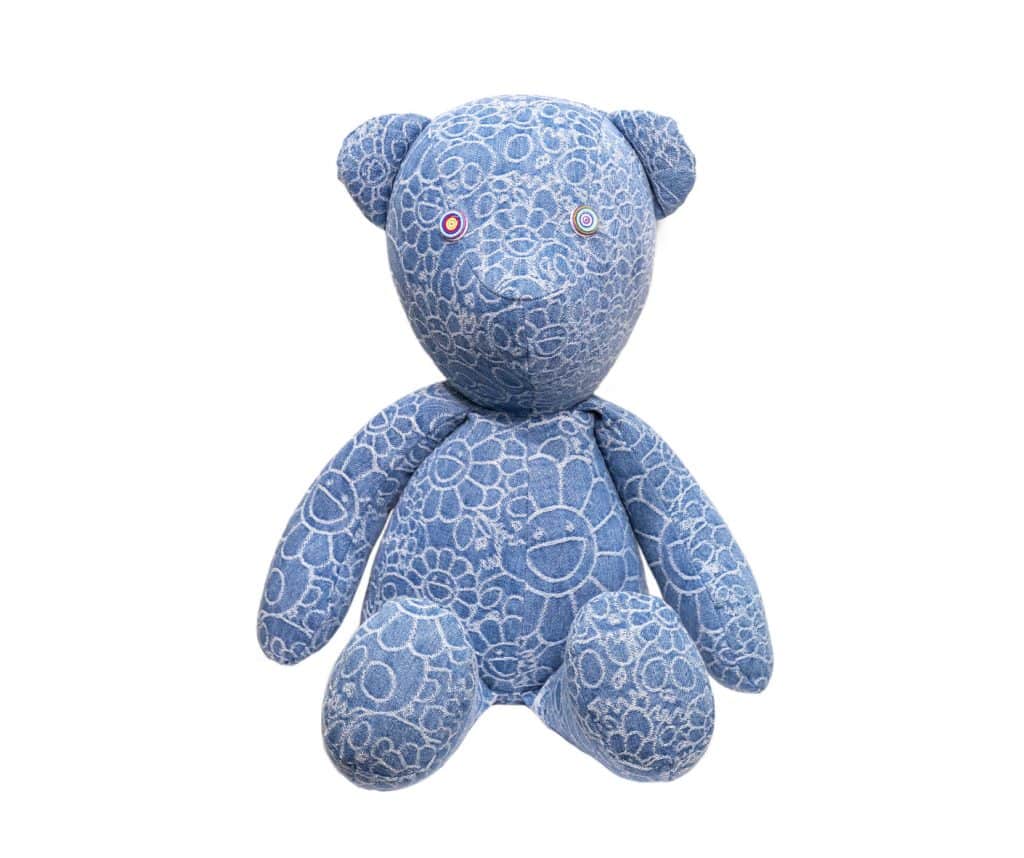
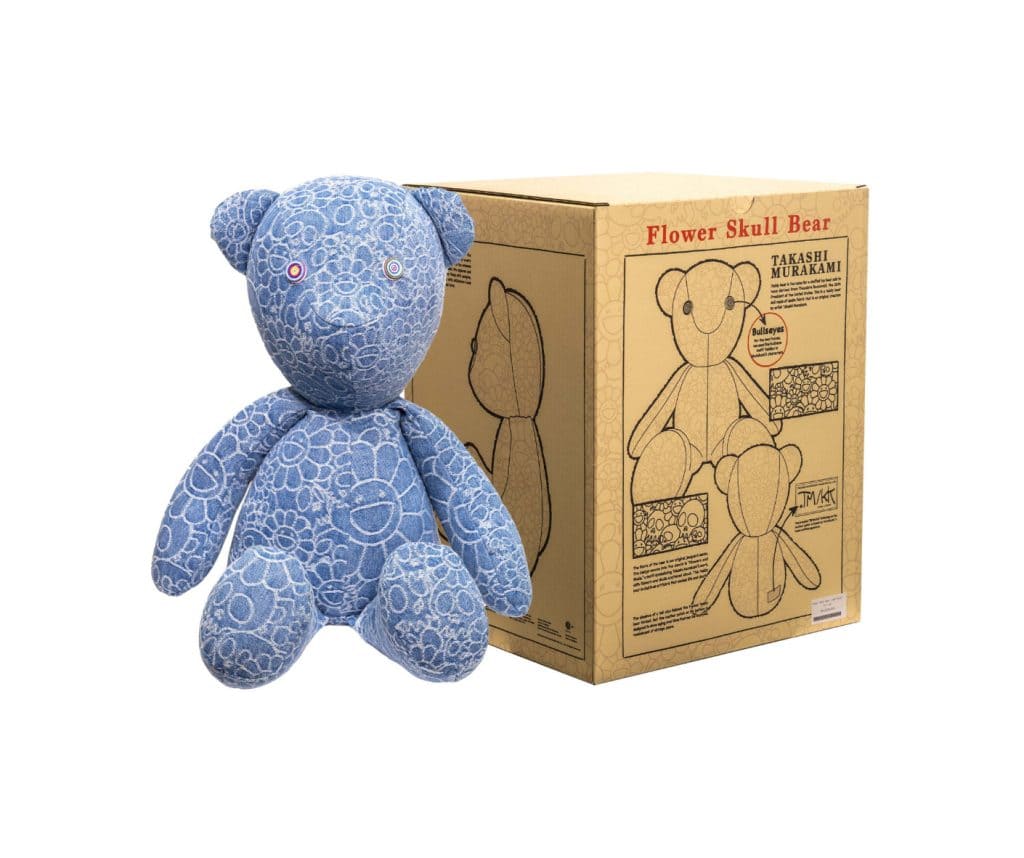
Takashi Murakami – Flowers & Skulls Jacquard Denim Teddy Bear
The Flowers & Skulls Jacquard Denim Teddy Bear is a bold statement piece that blends craftsmanship, symbolism, and contemporary design. Carefully crafted using high-quality jacquard denim fabric, this teddy bear features an intricate woven pattern of flowers and skulls, creating a striking contrast between softness and edge, innocence and rebellion.
In practice, condition is everything on these objects. Display without removal from any original packaging preserves maximum value. The secondary market on comparable Murakami soft goods suggests 15 to 25 percent appreciation over 24-month holds when condition is maintained. That said, this is a speculative category. Serious collectors should treat it as a high-interest addition rather than a cornerstone holding.
Grading, Condition, and Long-Term Holding Strategy
Publication Grading Standards
Unlike trading cards, artist publications do not have a universal grading standard. However, the market has developed working conventions. For Murakami publications, spine integrity, cover corner sharpness, and box condition (where applicable) are the primary value drivers. A publication with a tight, uncreased spine and box grades as near-mint and commands full market price. Box damage, even minor corner compression, reduces realized value by 20 to 35 percent on Japanese auction platforms including Mercari Japan and Yahoo Auctions.
Comparison: 108 Flowers Editions
| Feature | Japanese Edition (€200) | English Edition (€250) |
|---|---|---|
| Language | Japanese | English |
| Primary Market Strength | Tokyo, Asia | Europe, North America |
| Institutional Credibility | Higher | Moderate |
| Auction Performance (Tokyo) | Stronger | Weaker |
| Accessibility for Western Collectors | Lower | Higher |
Comparison: Trading Cards vs. Publications as Holdings
| Category | Topps MLB Box Set | 108 Flowers Publication |
|---|---|---|
| Entry Price | €500 | €200 to €250 |
| Grading Ecosystem | PSA, BGS | No universal standard |
| Liquidity | High (sports card market) | Moderate |
| Appreciation Horizon | 12 to 24 months | 24 to 60 months |
| Cross-Market Appeal | Sports cards plus art | Art and publishing |
Rare Inventory Editor’s Pick
The 108 Flowers Box Revised Japanese Edition is the single most important Murakami publication for serious collectors right now. The price point relative to its long-term auction performance is still favorable. Buy it in mint condition, store it correctly, and hold. This is not a flip. It is a foundation piece.
Frequently asked questions
Is Murakami’s work considered fine art or commercial art?
Both categories apply, and this is deliberate. Murakami explicitly collapses the distinction between fine art and commercial production as part of his Superflat philosophy. His paintings sell at Christie’s for millions. His flower prints appear on Louis Vuitton bags. He views this range as theoretically consistent, not contradictory. For collectors, this means his market spans auction houses, streetwear resale platforms, and trading card exchanges simultaneously.
How do I authenticate a Murakami publication?
First, verify the Kaikai Kiki Co., Ltd. imprint on the copyright page. Additionally, check for edition numbering on limited runs. For publications like 108 Flowers, cross-reference the ISBN against official Kaikai Kiki catalog records. On the secondary market, provenance documentation, including original purchase receipts from authorized retailers, significantly strengthens authentication claims at auction.
Are Murakami trading cards worth grading through PSA?
Yes, for any pull above base set rarity. However, grading costs relative to card value only make sense on parallel variants and autographed inserts from the Topps MLB collaboration. Standard base cards do not return grading investment at current market prices. Focus your grading budget on the highest-rarity pulls from a sealed box break.
What makes the Japanese edition of a Murakami publication more valuable?
The Tokyo secondary market prioritizes Japanese-language editions of Japanese artist publications because they carry stronger cultural and institutional context. Japanese auction platforms, museum acquisition committees, and private collectors in Asia view the Japanese edition as the primary object. The English edition is a translation artifact. For Western collectors holding long-term with potential sale into Asian markets, the Japanese edition is the stronger strategic choice.
The Shop
Available Now at Rare Inventory
Pieces related to this article, in stock and ready to ship.

In Stock
2024 One Piece Japanese OP09 – Emperors in the New World #061 Monkey D. Luffy (Alternate Art) – PSA 10
€400
Shop Now →

100% Authentic Shipped from France Free Shipping Over €200