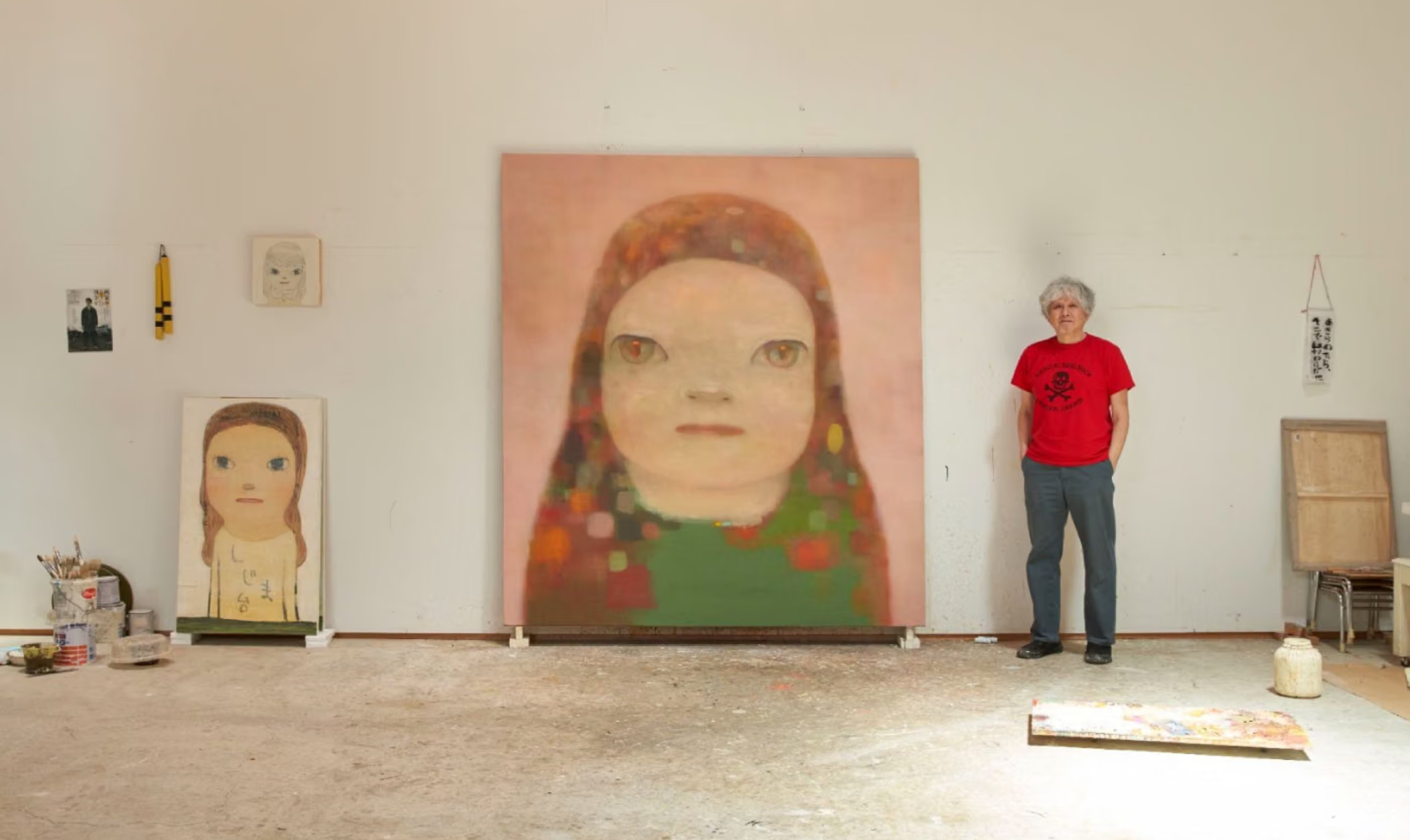
David Zwirner Announces a Two-Location Yoshitomo Nara Showcase in NYC
A Yoshitomo Nara painting sold for US $11.6 million (about €10.3 million) at Seoul Auction in March 2026, setting a new record for any artwork ever auctioned in South Korea. That number is not an outlier. It is a pattern. Nara’s market has compounded steadily for three decades, and every major institutional moment, an auction record, a retrospective, a gallery signing, has historically pushed secondary prices higher. The David Zwirner announcement is exactly that kind of moment, and serious collectors need to decide now whether they are in or out.
The Yoshitomo Nara showcase at David Zwirner is a strong buy signal for entry-level and mid-tier collectors. The two-location NYC exhibition runs October 29 through December 12, 2026, and arrives simultaneously with a major Hirshhorn Sculpture Garden installation. Together, they represent the most concentrated institutional validation Nara has received in years. Collectors who act before the opening will almost certainly face higher floor prices after it.
What the David Zwirner Yoshitomo Nara Exhibition Actually Is
Spanning David Zwirner‘s 537 West 20th Street and 533 West 19th Street locations in New York, this exhibition marks the artist’s first solo presentation with David Zwirner and his first major solo exhibition in New York in nearly a decade. That gap matters. Collectors forget how rare Nara solo shows actually are in the United States, and scarcity of access consistently supports price floors in his market.
The paintings and drawings show at 20th Street, while 19th Street features 13 of Nara’s sculptural enlargements from 2024, for which he scaled up palm-sized sculptures cast in bronze. Two distinct venues, two distinct entry points for collectors. The bronze heads carry larger price tags but also stronger institutional provenance arguments. The drawings and works on paper, historically, represent the most accessible tier for new collectors.

Explore the full collection
Figures, art toys & limited editions, shipped across Europe from France.
The Gallery Signing Context
The exhibition follows David Zwirner’s announcement in late 2025 that it would represent Nara. Nara joined Zwirner after being previously represented by Pace and Blum galleries. Gallery transitions at this level always reshape an artist’s market infrastructure. Zwirner brings a different collector network, stronger Hong Kong and European institutional ties, and a publishing platform that amplifies critical narrative around every show. For Nara, this is a commercial and cultural upgrade.
This exhibition will coincide with the opening of “Yoshitomo Nara: Sentinels of Stillness” at the Hirshhorn Sculpture Garden in Washington, DC, where three monumental sculptures, sixteen-times enlargements of Nara’s small clay heads, will inaugurate the Annual West Lawn Series and remain on view from October 31, 2026 through November 7, 2027. Simultaneous museum-level and gallery-level exposure in the same month is not an accident. Zwirner planned this coordination deliberately, and collectors should read it as peak visibility momentum.
The Case FOR Buying Yoshitomo Nara Collectibles Right Now
The auction data does not require interpretation. A Nara canvas sold for KRW 17.7 billion, around US $11.6 million (about €10.3 million), at Seoul Auction in March 2026, setting a new high for any artwork sold at auction in South Korea. Moreover, a 2007 Nara installation set a record as the most expensive Nara installation ever sold at auction, with the only higher Nara result being Knife Behind Back (2000), which sold for US $24.9 million (about €22.2 million) at Sotheby’s Hong Kong in 2019.
Beyond price records, when Nara’s dynamic imagery emerged in the 1990s, collectors recognized it as an expression of raw emotion, carrying a spirit comparable to punk and rock music in its directness and intensity. That cultural resonance crosses demographics in a way few living artists manage. Streetwear collectors, fine art buyers, and anime figure collectors all recognize the same iconography. This breadth of demand creates market liquidity that pure fine art purchases rarely offer.
Entry-Level Collectibles Perform Too
Most collectors cannot buy a painting or a bronze. However, the Nara ecosystem rewards patience at every price tier. Since the mid-1980s, Nara’s multidisciplinary approach has produced a distinctive and varied body of work. That multidisciplinary output includes prints, merchandise editions, and sculptural objects that trade actively on the secondary market and tend to spike in value around major exhibition announcements.
The Yoshitomo Nara Puppy Magnetic Card Holder at €75 and the Yoshitomo Nara Gummi Girl Ringokko Red at €120 represent exactly this tier. Both carry the artist’s iconography, both move in the collector market, and both cost less than a museum gift shop print. At these prices, the downside is minimal. The upside, especially during peak exhibition visibility, is real.
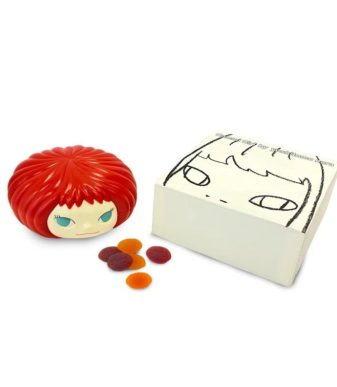

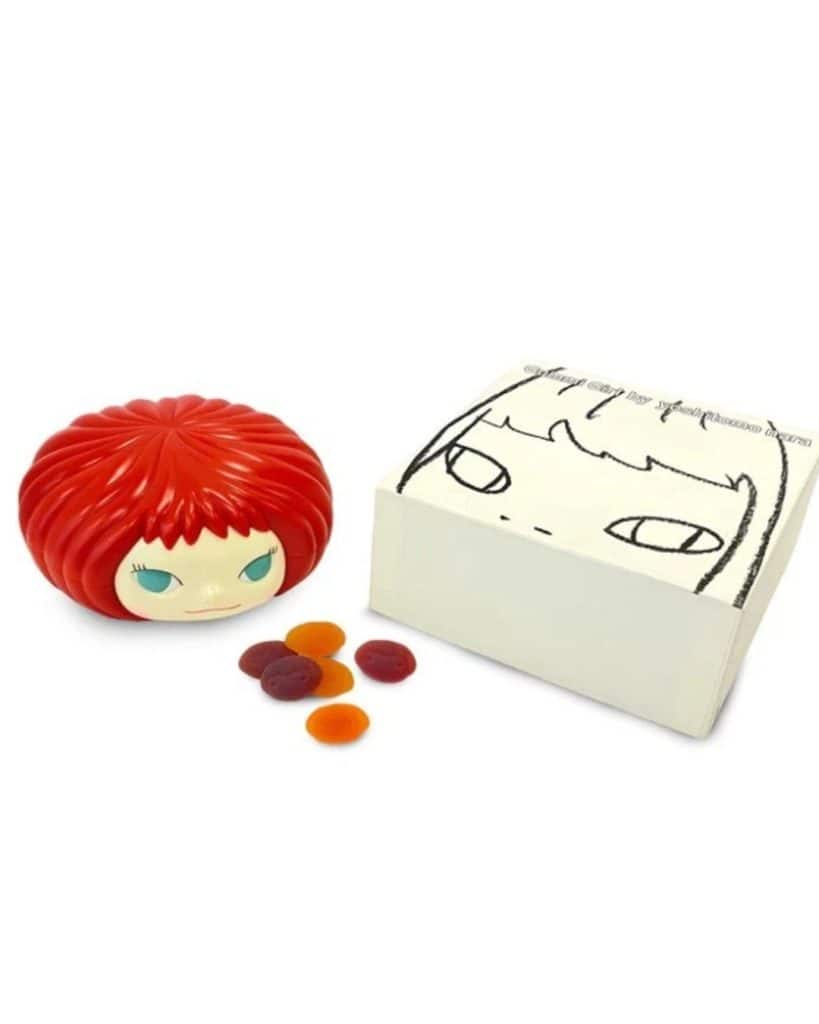

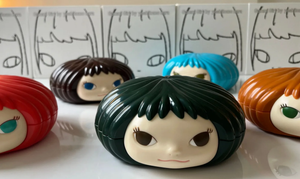
Yoshitomo Nara – Gummi Girl Ringokko Figure (Red)
Yoshitomo Nara’s Gummi Girl Ringokko in Red is an officially licensed plastic candy case collectible from one of contemporary art’s most iconic names. Part of the Gummi Girl series, the collection features five characters, each distinguished by a unique hair and eye color combination. Ringokko appears in her signature red colorway, rendered in Nara’s unmistakable style: wide eyes, a quiet expression, and the kind of deceptive simplicity that made his work a staple of both gallery walls and serious collector shelves worldwide.
The Case AGAINST: Honest Objections Every Collector Must Weigh
The counterargument deserves equal space. First, Nara’s top-end auction market concentrates almost entirely in Hong Kong and Seoul. The Asian secondary market drives his record prices, and Western collectors entering at gallery prices during a Manhattan show buy into a different liquidity pool. Second, the David Zwirner signing almost certainly raised primary market prices. Gallery transitions to blue-chip platforms routinely push painting prices 30 to 50 percent above prior-gallery levels before the first opening reception.
Third, the sculptural enlargements shown at 19th Street, coated in white urethane paint with a matte surface affording apparent softness, recalling the snow monsters Nara knew from childhood winters, are spectacular objects but expensive ones. These are not liquid assets. They require climate-controlled storage, specialist insurance, and a very specific buyer profile on resale. Collectors who romanticize the institutional moment and ignore these practicalities make expensive mistakes.
Print and Works-on-Paper Caveats
Collectors searching for Yoshitomo Nara prints should proceed carefully. The prints market contains significant variation in quality, provenance, and edition documentation. Nara authorized editions exist alongside unsigned, undocumented works that surface regularly. Additionally, the jump from an authorized print to a unique work on paper is enormous in terms of both price and liquidity. Collectors must verify edition numbers, publisher documentation, and certificate authenticity before any purchase. Print condition also matters acutely: Nara’s works on paper lose significant value with any foxing, light damage, or creasing.
| Collectible Tier | Price Range | Liquidity | Exhibition Impact |
|---|---|---|---|
| Objects and Merchandise Editions | €75 – €300 | High | Strong short-term spike |
| Authorized Prints (signed, editioned) | €2,000 – €30,000 | Medium | Moderate sustained lift |
| Works on Paper (unique) | €30,000 – €500,000+ | Medium-Low | Strong sustained lift |
| Paintings (primary gallery) | €500,000+ | Low (specialist market) | Highest long-term upside |
| Bronze Sculptures (2024 series) | POA | Very Low | Museum-grade provenance |
Who Should Buy and Who Should Skip the Yoshitomo Nara Showcase Moment
Buy If You Match This Profile
Collectors who already own artist-driven merchandise or signed editions from adjacent markets such as Medicom Toy collaborations or Kaikai Kiki productions understand how Nara’s cultural adjacency works. If you collect across the art-to-collectibles spectrum, this is your moment to add a foundational Nara piece at a price that still makes sense. The Gummi Girl Soran Chan and Puppy Magnetic Card Holder are not fine art, but they are genuine Nara objects that carry legitimate cultural weight and will only become harder to source at current prices after the October opening.
Similarly, collectors building a Japanese contemporary art focus alongside figures from Good Smile Company or Kotobukiya will find Nara merchandise integrates naturally into a curated collection narrative. These are objects with art world credibility and figure-collector crossover appeal. That dual audience is rare and valuable.
Explore the full collection
Figures, art toys & limited editions, shipped across Europe from France.
Skip If You Match This Profile
However, if your goal is quick resale within six months, skip the primary gallery entirely. Gallery-priced Nara paintings and sculptures require years to find the right secondary buyer. Flipping is not the strategy here. Similarly, collectors with no existing relationship to Japanese contemporary art who plan to buy a print purely as a financial instrument should reconsider. The print market requires genuine knowledge of edition hierarchies, publisher reputation, and condition grading to navigate safely. Without that knowledge, you will overpay or undersell, possibly both.
| Buyer Type | Recommended Entry Point | Verdict |
|---|---|---|
| Cross-category collector (figures + art) | Merchandise editions, €75–€120 | Strong Buy |
| Japanese contemporary art collector | Authorized prints, works on paper | Buy on verification |
| Institutional / long-hold investor | Primary gallery paintings or bronze | Buy with patience |
| Speculative short-term flipper | Any tier | Skip |
| First-time art buyer, no research | Any tier above €300 | Skip until educated |
Where to Buy Yoshitomo Nara Collectibles
Rare Inventory, based in France and shipping across Europe, carries authenticated Yoshitomo Nara collectibles at accessible price points ahead of the October 2026 David Zwirner opening. The Yoshitomo Nara Puppy Magnetic Card Holder (€75) and the Yoshitomo Nara Gummi Girl Ringokko Red (€120) are available now, before the exhibition momentum pushes collector interest to peak levels. Act before October 29.
Frequently asked questions
Why is Yoshitomo Nara so famous?
Nara’s artistic sensibilities formed through a solitary childhood in rural northern Japan, and his formative encounters with nature, folklore, children’s fables, and popular music, discovered through a self-built radio, became the source of his creativity. Nara understands his figures as self-portraits, and when his dynamic imagery emerged in the 1990s, collectors recognized it as an expression of raw emotion carrying a spirit comparable to punk and rock music in its directness and intensity. That authenticity, combined with instantly recognizable iconography crossing fine art and pop culture, explains his sustained global relevance.
Are Yoshitomo Nara prints a good investment?
Authorized, signed, and editioned Nara prints have historically appreciated over multi-year holds, particularly around major exhibition moments. However, the prints market requires rigorous due diligence. Collectors must verify edition documentation, publisher provenance, and condition grading before purchasing. Unsigned or undocumented prints carry substantially higher risk and significantly lower resale liquidity. Always prioritize authorized editions with complete documentation.
What is the most expensive Yoshitomo Nara work ever sold?
In 2019, Nara’s Knife Behind Back (2000) sold for HK $195 million (about €173.9 million) at Sotheby’s Hong Kong, setting an auction record for the artist and making him the most expensive Japanese artist at auction. Secondary results have compounded consistently since then, with a 2026 Seoul Auction result of US $11.6 million (about €10.3 million) setting a new Korean record and confirming sustained global demand across multiple auction markets.
What does the David Zwirner signing mean for Nara’s collectibles market?
The David Zwirner exhibition follows the gallery’s announcement in late 2025 that it would represent Nara. Gallery transitions to blue-chip platforms historically push primary market prices upward and attract new collector demographics. For entry-level Nara collectibles, this translates to increased demand and reduced supply at current prices. Collectors who secured objects before the October 2026 opening benefit from the pre-announcement price floor.
The Shop
Available Now at Rare Inventory
Pieces related to this article, in stock and ready to ship.


100% Authentic Shipped from France Free Shipping Over €200