How to display vinyl figures without yellowing
You spent serious money on a designer art toy. Now picture it sitting on your shelf two years from now, tinged that unmistakable antique cream color. Not a patina. Not character. Just irreversible chemical damage. The good news: yellowing rarely happens from a single catastrophic event. It builds slowly, mistake by mistake. This countdown ranks the five most damaging display habits from bad to catastrophic, so you know exactly where to spend your attention first.
The single best way to display vinyl figures without yellowing is to keep them inside a UV-filtering acrylic case, away from all windows, at a stable temperature between 18 and 25°C with 40 to 55% relative humidity. Controlling those three variables, light, heat, and moisture, stops the underlying chemistry before damage accumulates. Read on for a ranked breakdown of every mistake that accelerates that chemistry.
This guide counts down from mistake #5 (bad but fixable) to mistake #1 (the one that destroys the most collections). Each section tells you exactly what the error costs your figure and precisely how to correct it.
Why Vinyl Figures Yellow in the First Place
Vinyl figures, whether designer art toys or collector-grade anime statues, almost always consist of PVC, polyvinyl chloride. Plastic yellowing occurs when polymer chains degrade, either through photooxidation in the presence of oxygen and UV light, or through thermal oxidation from sufficient heat. Think of it like sunburn on skin: the damage accumulates invisibly, then surfaces all at once.
Every time light hits your figure, a tiny amount of energy absorbs into the plastics and paints. Over thousands of hours, that energy breaks chemical bonds in pigments and in the plastic itself. Additionally, commodity plastics like PVC carry increased risk because, without stabilizing additives, they are inherently unstable and can even degrade during processing.
Here is something most new collectors miss: deterioration of ester plasticizers due to ultraviolet rays occurs mainly as a result of the plasticizer absorbing UV energy through electron transition that involves energy higher than the bond energy of an ester bond in the plasticizer. In plain terms, UV attacks the softening agent inside your figure, not just the surface color. Fluorescent ceiling lights contribute to this too, because indoors, fluorescent lights emit sufficient UV light to cause premature aging and discoloring of plastics.

Explore the full collection
Figures, art toys & limited editions — shipped worldwide from France.
How to Display Vinyl Figures Without Yellowing: The Countdown
Below, each mistake gets a clear verdict: what causes it, what it costs your figure’s value, and the precise fix. Start at #5 and work toward #1, the single mistake responsible for most damaged collections.
#5: Dusting with the Wrong Materials
First, understand that dust itself causes slow yellowing. Airborne particles trap moisture and pollutants against the vinyl surface. Most collectors reach for paper towels or dry cloths, and both are wrong choices. Paper towels carry microscopic wood fibers that scratch matte and semi-gloss finishes. Dry synthetic cloths generate static, which pulls more dust back onto the figure.
Instead, use a clean, soft natural-hair brush, think wide Japanese calligraphy brush or a makeup blush brush, to lift dust off surfaces without contact pressure. For stubborn grime in recessed areas, dampen a cotton swab with distilled water only. Never use tap water, which carries minerals that leave white residue. Before touching your figures, make sure your hands are clean and free from oils or lotions, because skin oils attract and bond dust faster than almost anything else.
Moreover, regular dusting reduces the chemical load sitting against your vinyl at all times. Monthly maintenance beats annual crisis cleaning every time.
#4: Ignoring Humidity Levels
Many collectors control their lighting carefully and completely ignore the air around their figures. That oversight costs them. Plastic becomes brittle in extreme cold and warps in excessive heat, while high humidity causes decals to peel and joints to deteriorate.
Resin and PVC are sensitive materials: too much humidity may encourage mold or weaken glue and paint adhesion, while too little may cause drying or cracking. A good target sits around 15 to 25°C with relative humidity between 40 and 60%. For soft vinyl specifically, the material becomes harder in cold environments and softer in warm ones, with an ideal range of 18 to 28°C.
The fix costs very little. A basic digital hygrometer, the kind sold for 10 to 15 dollars at most hardware stores, reads both temperature and relative humidity and represents the entire toolkit most collectors need. Place silica gel packs inside sealed display cases and replace them every three months. Fluctuating conditions cause more damage than a steady slightly-off reading, because repeated expansion and contraction stresses vinyl far more than constant mild heat or dampness. Stability matters more than hitting a perfect number.
#3: Using the Wrong Display Case (or None at All)
Open-shelf display looks clean on Instagram. In practice, it exposes your figures to every variable simultaneously: ambient UV, airborne pollutants, humidity swings, and dust. A closed case handles all four at once.
The case material matters enormously. Standard glass blocks some UV but not all. UV-resistant acrylic display cases protect figures from dust, moisture, and light damage simultaneously. Standard acrylic, however, does not block UV. You specifically need acrylic labeled as UV-filtering or UV-stabilized, typically 99% UV blocking. The price difference between standard and UV-filtering acrylic cases runs roughly 30 to 50%, but that premium protects figures worth multiples more.
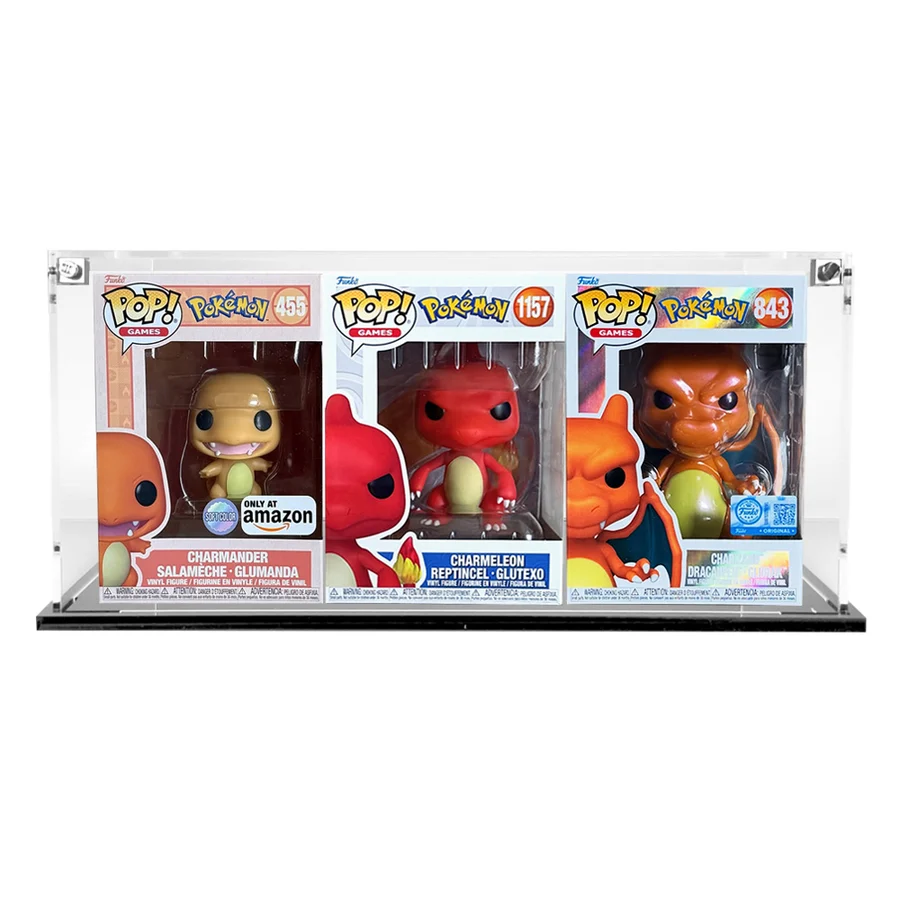
Similarly, avoid wood display cabinets with untreated interiors. Wood releases volatile organic compounds that can react with PVC plasticizers and accelerate yellowing from the inside out. Glass-doored metal-frame cases or purpose-built UV acrylic boxes represent the correct choice. A glass display cabinet protects from dust, UV, and accidental touching simultaneously.
Currently Available at Rare Inventory
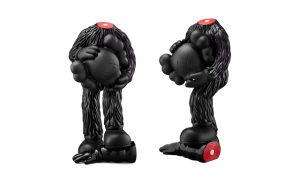
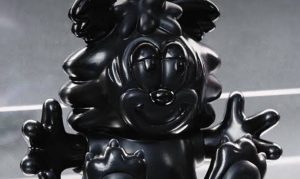
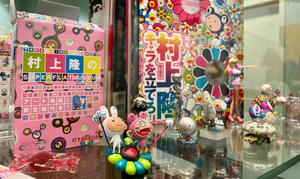
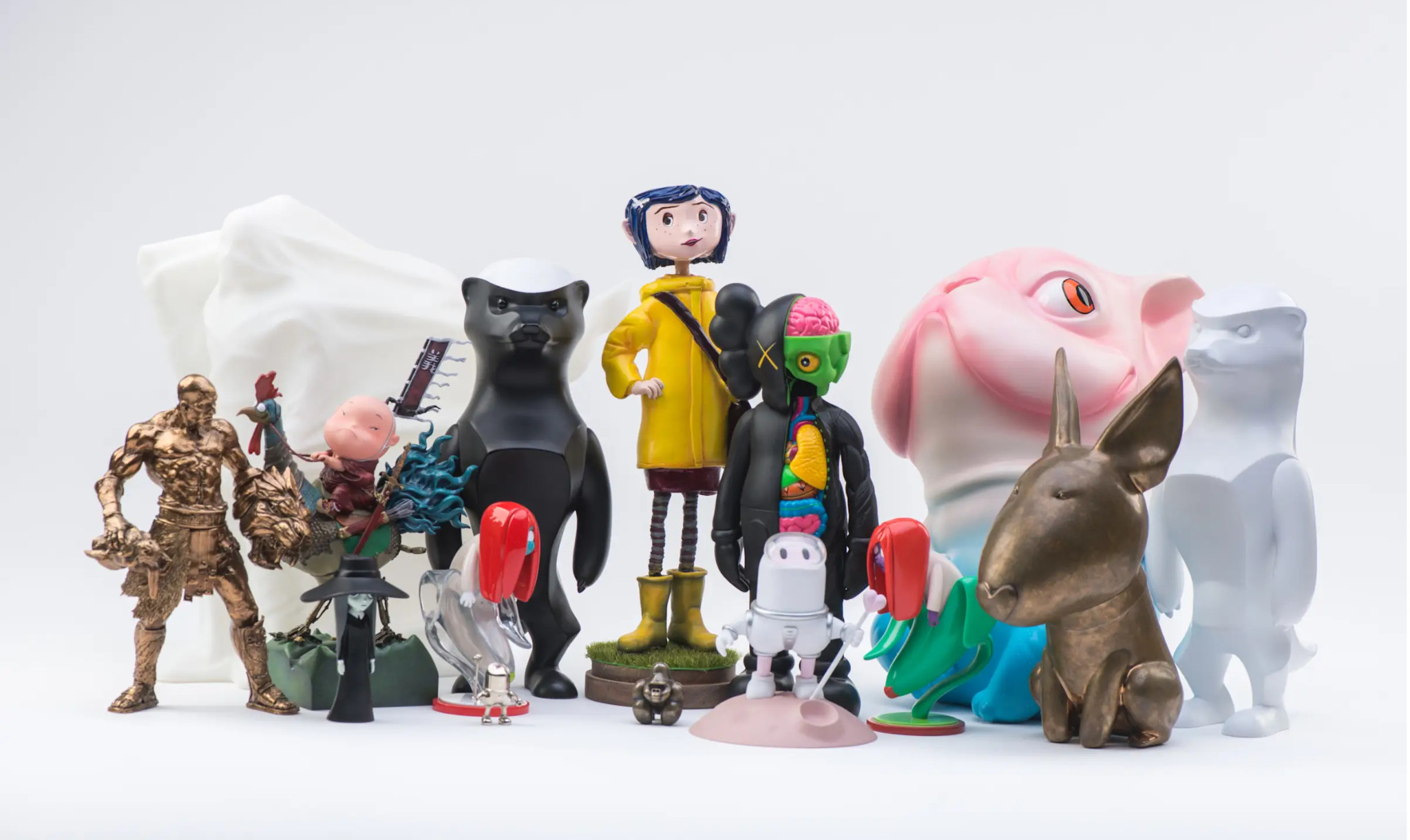
Two BoTT x Verdy Visty Vinyl Figures represent exactly the kind of investment-grade vinyl that rewards proper display care. The Visty character by Japanese designer Verdy, produced in collaboration with Tokyo streetwear label BoTT, measures approximately 20 x 15 x 10 cm and carries a retail price of €382 at Rare Inventory. The black colorway, the VERDY Visty x Babylon Art Toy Black, pairs that same Visty form with a matte black finish that makes UV-induced yellowing on light surfaces immediately visible if care lapses. Both pieces justify every display tip in this guide. Rare Inventory also carries the Kaiyodo Takara x Takashi Murakami Complete 10 Figure Set (2003) at €160, a two-decade-old PVC set that proves what careful storage achieves over time.
#2: Letting Heat Build Up Around Your Display
Heat ranks second because its effects compound over time and because most collectors underestimate the temperatures inside enclosed spaces near common household equipment. A closed acrylic case sitting 30 cm from a television or gaming PC can reach internal temperatures 8 to 12°C above room temperature during extended use. That matters because high temperatures can soften PVC and permanently deform parts like weapons or hair.
Beyond deformation, thermal oxidation accelerates the same yellowing chemistry that UV radiation drives. Exposure to visible light, extreme temperatures, humidity, or solvents can all cause a polymer to fail over time. In practice, attics and south-facing rooms with poor ventilation are the most dangerous environments. Avoid storing your collection in basements or attics, as these areas are prone to temperature fluctuations and moisture.
The fix: keep display areas away from electronics, radiators, and heating vents. Position display cases away from direct sunlight and heat sources, and install LED lighting at 3000K to 5000K color temperature for even illumination without harsh shadows. LED strips produce very little heat compared to halogen or incandescent alternatives, making them the correct lighting choice for any enclosed display case.
The #1 Mistake That Destroys the Most Collections
#1: Direct and Indirect Sunlight Exposure
Above all other factors, light exposure causes the most widespread and permanent damage to vinyl figure collections. Most collectors know to avoid direct sun. The dangerous misunderstanding is that indirect daylight, the ambient light flooding a bright room through north-facing or curtained windows, carries sufficient UV energy to yellow vinyl over months of continuous exposure.
UV light operates as one of the main slow killers of collectible plastics, inks, and cardboard, gradually causing fading, yellowing, and structural damage that permanently lowers both appearance and value. Furthermore, when ultraviolet radiation hits these plastics, it breaks some of the polymer chains that give vinyl its flexibility and strength, a process called photodegradation that eventually makes the material brittle, faded, and more likely to crack.
UV rays break apart the molecules that give colors their saturation, which is why collectors of bright vintage lines notice those areas lose intensity first. On a figure like the Visty vinyl, the pastel color blocking and crisp white areas show UV degradation almost immediately once it begins. Because of this, even “UV-stable” PVC formulations require protective casing. Protective additives and coatings only slow the process instead of stopping it completely, which is why even UV-stable vinyl still needs careful placement and casing.
The correct solution combines location and material. Position all display cases on interior walls, not exterior-facing ones. Apply UV-filtering window film (99% UV rejection rated) to any room windows where figures display. Use UV-filtering acrylic cases as a second defense layer. Finally, never display figures under spotlights or track lighting that uses halogen or unfiltered LED bulbs, since some LED spectra still carry a small UV component.
Quick-Reference Comparison: Display Environments
| Display Setup | UV Protection | Heat Risk | Humidity Control | Verdict |
|---|---|---|---|---|
| Open shelf, near window | None | High | None | Worst option |
| Open shelf, interior wall | Low | Medium | None | Marginal |
| Standard glass cabinet | Partial | Low | Low | Acceptable |
| UV-filtering acrylic case, interior wall | High (99%) | Low | Medium | Recommended |
| UV acrylic case + silica gel + LED lighting | Maximum | Minimal | High | Best practice |
Explore the full collection
Figures, art toys & limited editions — shipped worldwide from France.
Dusting and Cleaning: A Practical Schedule
| Task | Frequency | Tool | What to Avoid |
|---|---|---|---|
| Light dusting | Monthly | Soft natural-hair brush | Paper towels, synthetic cloths |
| Deep clean recesses | Quarterly | Distilled water + cotton swab | Tap water, alcohol, acetone |
| Replace silica gel packs | Every 3 months | Rechargeable desiccant cartridges | Letting packs saturate |
| Check hygrometer readings | Weekly | Digital hygrometer (€10 to €15) | Ignoring seasonal humidity swings |
For a deeper look at which vinyl figures merit this level of care from a collector standpoint, read The Ultimate Guide to Rare Vinyl Collectibles on the Rare Inventory blog. Brands like Medicom Toy and Good Smile Company publish specific material notes for their vinyl lines that inform smarter display decisions. Similarly, Kaikai Kiki, the gallery behind Takashi Murakami’s collectible releases, consistently produces PVC figures that reward archival-level care.
Where to Buy
Rare Inventory, based in France, ships vinyl figures and designer art toys worldwide to collectors across Europe, Asia, and the Americas. Browse current in-stock pieces including the BoTT x Verdy Visty Vinyl Figure and the Kaiyodo Takara x Takashi Murakami Complete 10 Figure Set (2003) directly at rareinventory.com. Every piece ships with careful protective packaging suited to long-distance transit.


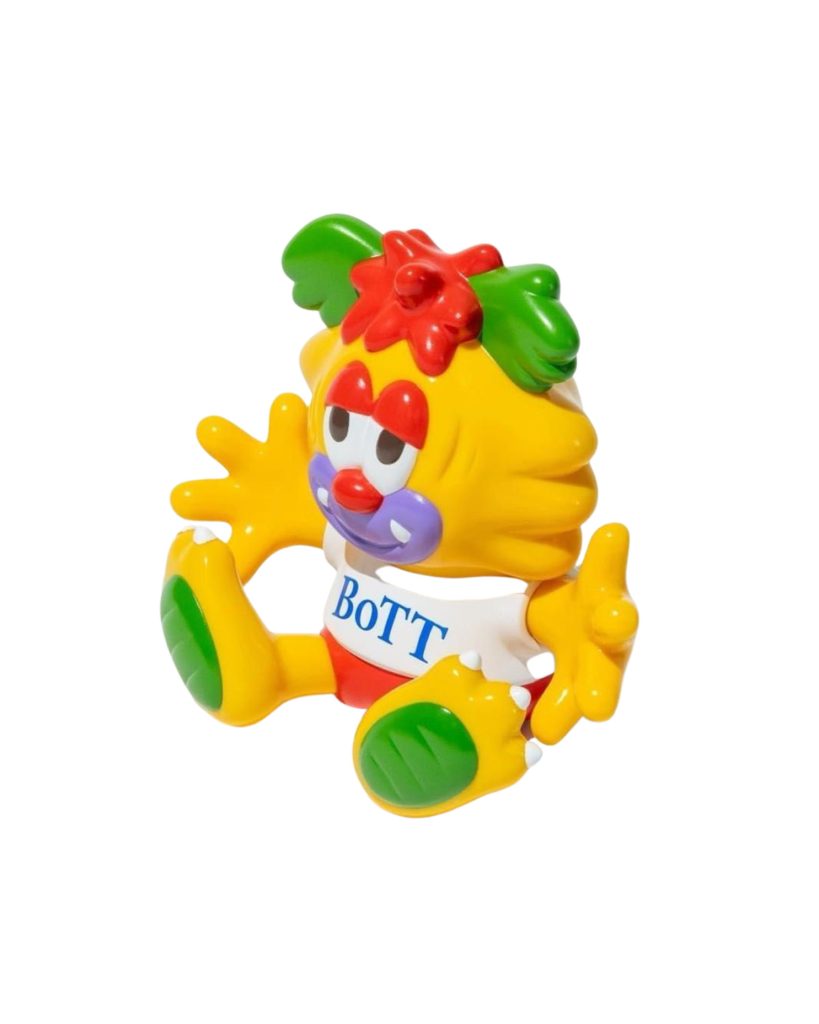
BoTT x Verdy Visty Vinyl Figure
This vinyl figure brings together two of Japan’s most distinctive creative voices. BoTT founder TEITO and graphic artist Verdy combined their signature aesthetics to reimagine Verdy’s beloved character Visty in a bold, exclusive colorway developed by TEITO for the collaboration.
Frequently asked questions
Can yellowed vinyl figures be restored to their original color?
Partial restoration is possible using retrobright formulas, which use hydrogen peroxide activated by UV light to reverse oxidation in certain plastics. However, results vary significantly by vinyl formulation and paint type. Retrobright works best on unpainted white or cream ABS plastics and carries real risk of uneven bleaching or paint lifting on designer vinyl figures. Prevention remains far more reliable than any restoration method. For investment-grade pieces, consult a professional conservator before attempting any treatment.
Do fluorescent lights in my room yellow vinyl figures?
Indoors, fluorescent lights emit sufficient UV light to cause premature aging and discoloring of plastics. Standard fluorescent tubes and many compact fluorescent bulbs produce a small but meaningful UV output. Over years of daily exposure at close range, that output causes measurable yellowing. Switch to shielded LED strips rated at 0% UV output for display lighting, and keep figures inside a case rather than under open lighting.
Where can I find authentic vinyl figures and how do I avoid bootlegs?
Authentic designer vinyl figures come from verified specialist retailers, official brand web stores, and authorized galleries. Bootleg figures often show softer detail on face sculpts, inconsistent paint application especially around eyes and fine lines, and lighter-than-expected weight from thinner vinyl walls. Check that any BoTT or Girls Don’t Cry piece carries the correct branded packaging with matching SKU labels on both the inner and outer box. Rare Inventory sources all pieces from authenticated channels, making it a reliable option for collectors new to buying online.
How long does it take for vinyl figures to start yellowing without protection?
Timeline depends on UV intensity, temperature, and the specific PVC formulation used by the manufacturer. In a bright room with direct southern-exposure light and no UV filtering, visible yellowing on white or light-colored vinyl can appear in as little as six to twelve months. In a controlled environment with UV-filtering cases and stable temperature, high-quality PVC figures can maintain their original color for decades. The Kaiyodo Takara x Takashi Murakami Complete Figure Set from 2003, now over twenty years old, demonstrates that correct storage genuinely preserves condition across that timespan.
The Shop
Available Now at Rare Inventory
Pieces related to this article, in stock and ready to ship.


100% Authentic Shipped from France Free Shipping Over €200