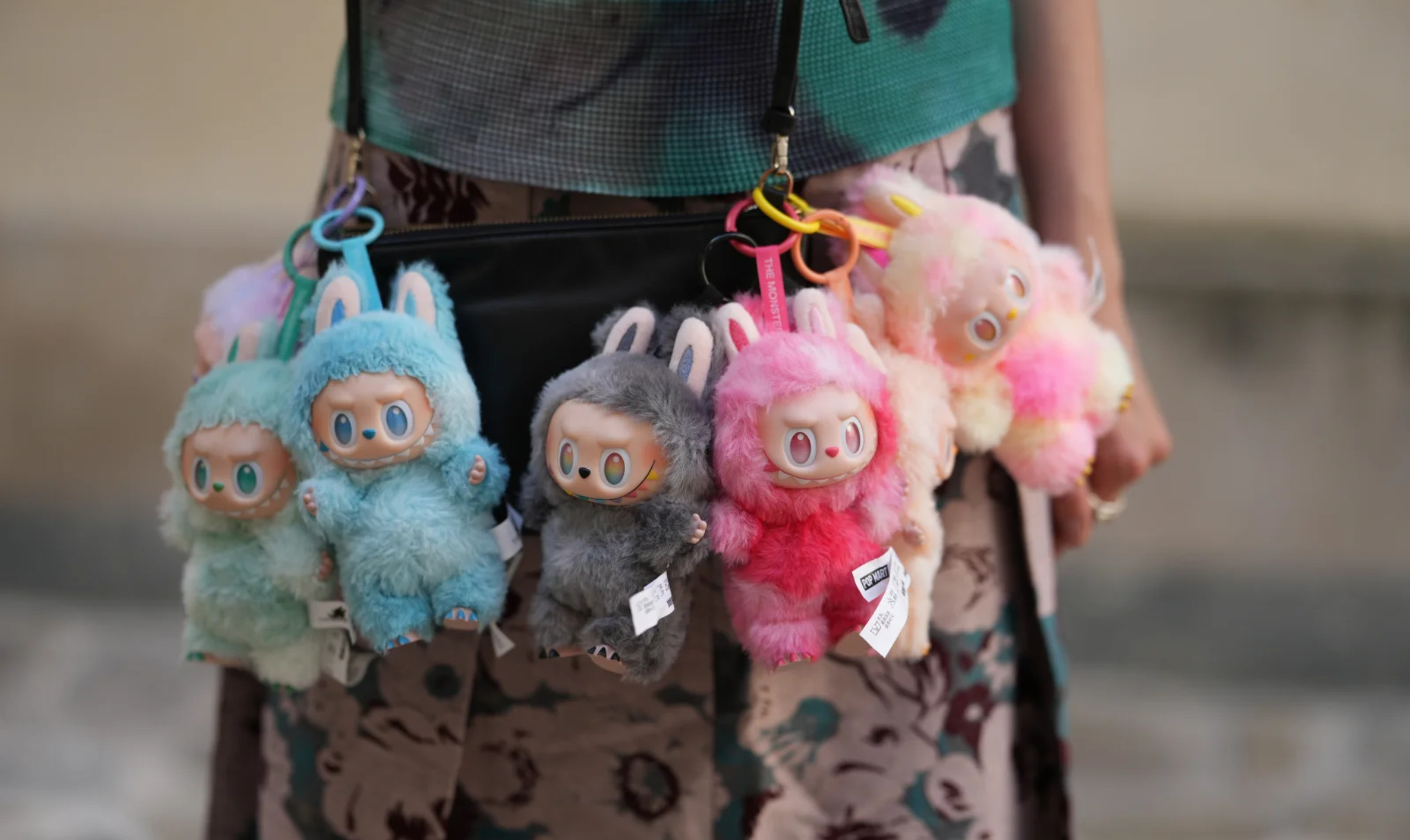
Labubu After the Hype: Is It Still a Collectible?
Two summers ago, Labubu was the hardest toy on the planet to buy. People queued overnight. Websites crashed. Bag charms that cost a few euros in a Pop Mart store resold for many times that price. One life-size figure even fetched more than a sports car at a Beijing auction.
In 2026, the picture looks very different. Shelves are fuller and resale prices are lower. Pop Mart itself calls this a year of adjustment.
So the question is simple. Was Labubu a fad that has run its course? Or is it settling into something more durable, like KAWS or Medicom before it? This article looks at the numbers, the history and the market signals to find out.
A forest monster with European roots
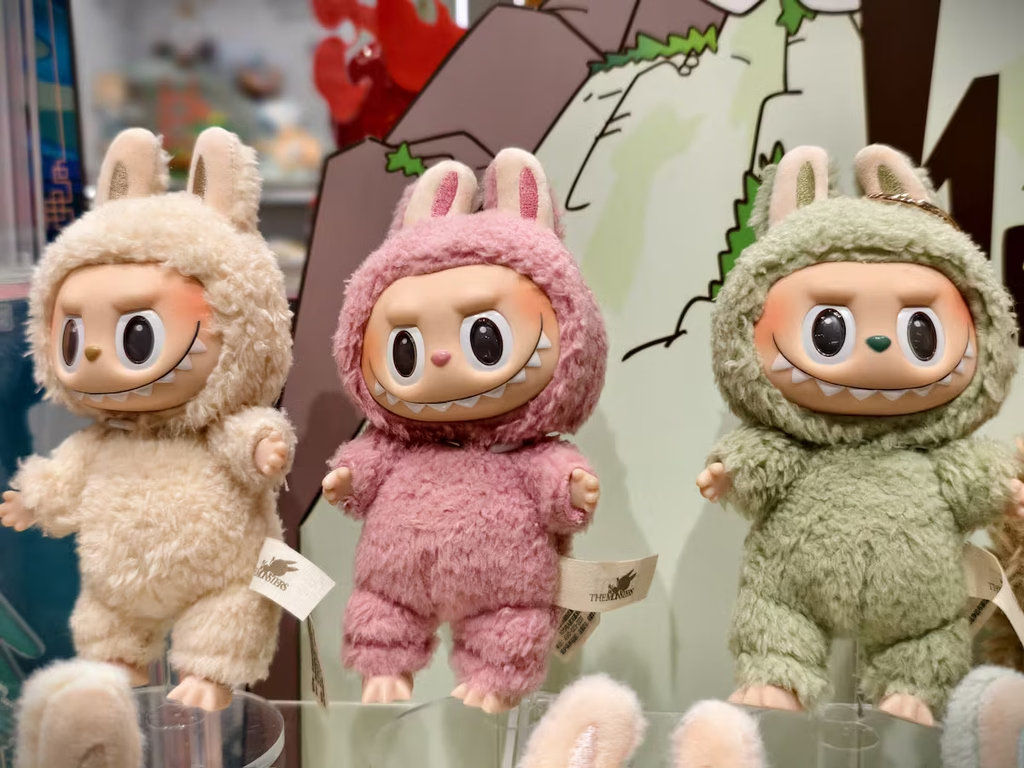
Labubu did not start as a toy. It started as a character in an illustrated story series, The Monsters. Kasing Lung created it in 2015. Lung’s life began in Hong Kong in 1972. He grew up in Utrecht, in the Netherlands, and later moved to Antwerp, Belgium.
The Nordic folklore of his childhood shaped the whole universe. Picture a tribe of elf-like creatures with pointed ears, wide eyes and sharp teeth. Many new fans miss one detail: in Lung’s books, Labubu is a girl. So is every member of her tribe.
The first physical figures came from How2Work, a Hong Kong design studio. For years, Labubu lived in the niche world of art toys. A small circle of designer vinyl collectors loved it. That early period still matters today. Pieces from before the boom carry the clearest scarcity and provenance.
The business turning point came in 2019. That year, Lung signed an exclusive licence with Pop Mart. The Chinese company had built its empire on the blind box format. You only discover which figure you got after you open the box. Under Pop Mart, The Monsters became a steady stream of themed series. Every purchase turned into a small gamble.

Explore the full collection
Figures, art toys & limited editions — shipped across Europe from France.
From quiet success to global frenzy
For a few years, Labubu sold well inside Asia’s designer toy scene. Then two launches changed the scale. In October 2023, Pop Mart released The Monsters: Tasty Macarons. Collectors now call these vinyl-face plush pendants V1. In July 2024 came Have a Seat, a softer, furrier seated version that fans call V2. These were bag charms. People wore them and photographed them everywhere.
Then celebrities stepped in. In 2024, Lisa from Blackpink appeared with a Labubu on her bag. The internet did the rest. Unboxing videos flooded TikTok and other stars followed. Pop Mart’s queueing culture went global.
The numbers followed. In the first half of 2025, The Monsters line alone brought in RMB 4.81 billion. That was about 34.7% of Pop Mart’s sales. For the full year 2025, Pop Mart’s revenue reached RMB 37.12 billion, up 184.7%.
The night a monster fetched a million yuan
One event captured the peak better than any other. On 10 June 2025, Yongle International Auction held a sale in Beijing. Yongle usually sells modern art and jewellery. This time, it ran the first auction ever dedicated entirely to Labubu.
The top lot was a mint green Labubu standing 131 cm tall. The auctioneer called it the only one in the world. It sold for 1.08 million yuan, roughly 150,000 US dollars. Buyers also paid a 15% premium on top. A brown, 160 cm figure went for about 114,000 dollars. The 48 lots raised 3.73 million yuan in total. Around 200 people attended, and more than a thousand bid through the app. For context, a standard blind box cost around 50 yuan in store at the time.
For serious collectors, though, another lot told the real story. Three Wise Labubu is a set of three PVC sculptures, each about 40 cm tall. Only 120 sets exist, all from 2017. One set fetched 510,000 yuan at Yongle. Another had recently sold for HK$203,200 at Sotheby’s in Hong Kong. That gap shows how hot the market ran. Yet the lasting lesson is different. A small, documented edition from before the boom is a different object from a blind box charm.
When supply finally caught up
Every hype cycle built on scarcity shares one weak point. The manufacturer can reverse scarcity whenever it wants. Pop Mart did exactly that. As demand exploded, the company ramped up production of its plush monsters. Trade press described output rising roughly tenfold, to tens of millions of units a month. Restocks came more often, and new stores opened.
Resale prices reacted as expected. Analysts reported drops of more than 50% on many models. Some designs even slipped below their retail price as speculators dumped stock. In June 2026, Pop Mart launched a new series called Retro Barbershop. According to Korean business press, its resale price started falling the day after launch. One collector put it simply. The year before, she could not find any series at all. This time, she bought one without effort.
This is the clearest sign that speculators have left. Many people used to buy boxes by the dozen and flip them at ten to thirty times retail. Most of them have stepped back. What remains is a much larger base of people who simply like the character.
Reading Pop Mart’s 2026 numbers
Pop Mart published its results for the first half of 2026 on 20 August. They offer the most reliable picture of the market. The headline and the details, however, tell different stories.
The headline still looks strong. Group revenue reached about RMB 17.17 billion, up 23.8% year on year. Profit rose 8.9% to about RMB 5.1 billion. Pop Mart is not a company in trouble.
The details show the cooling. The Monsters, the IP behind Labubu, fell 7.5% to RMB 4.45 billion. Its share of total revenue slid from a peak near 40% to 26%. Meanwhile, Twinkle Twinkle jumped 580.6% to RMB 2.65 billion. Crybaby, Dimoo, Skullpanda and Hirono all grew by double digits. Pop Mart is clearly spreading its bets.
Other signals point the same way. Overseas revenue fell 11.1% to RMB 4.97 billion, the segment’s first decline ever. Inventory turnover rose from 123 days at the end of 2025 to 201 days. In plain terms, products now take longer to sell. CEO Wang Ning admitted the year was harder than expected. He warned the company might miss its 20% growth target. He also said last year’s sudden traffic had exposed internal management problems. To support confidence, Pop Mart announced a buyback of RMB 2 to 5 billion.
None of this means Labubu is dead. A line that still earns over four billion yuan in six months is enormous. Rather, Labubu has moved from a one-off spike to a large, mature franchise within a wider portfolio.

Europe, the exception on the map
One detail stands out for European collectors. Overseas revenue fell overall. The Americas dropped 16.5% and Asia-Pacific lost 9.7%. Europe, however, grew. Revenue there rose 5.9% to around RMB 505.7 million, the only international region in positive territory.
The amount remains small next to China, but the direction matters. Labubu’s European story is younger than its Asian one. Pop Mart is still building its store network here. Europe also has a long tradition of designer toy collecting. Finally, the character’s creator grew up on this continent. That gives the brand a story that resonates locally. Pop Mart even chose Paris to announce the Labubu film.
Explore the full collection
Figures, art toys & limited editions — shipped across Europe from France.
The counterfeit flood
Every mass phenomenon attracts fakes, and Labubu attracted more than most. The counterfeits even have their own nickname: “Lafufu”.
The scale in Europe is striking. Dutch customs seized around 400,000 fake Labubu toys in about six months from March 2025. Officers found roughly 250,000 of them at Schiphol airport alone. In Portugal, the safety authority ASAE seized about 35,000 fakes from toy importers and distributors. It opened 28 criminal proceedings and made two arrests. In London, Westminster trading standards officers found fakes in West End shops. They warned that the feet came off easily and the eyes popped out. Both create a choking hazard for small children.
Fakes hurt the market in two ways. First, they pose a real safety problem. Second, they dilute the premium of the original. When a lookalike sits on every street corner, the authentic object must justify its price. Quality, provenance and verification now do that job.
Labubu goes to Hollywood
Cinema may offer the strongest sign that Labubu will outlast the trend. In March 2026, Pop Mart held a Paris event for ten years of The Monsters. There, Pop Mart and Sony Pictures confirmed a Labubu feature film. Paul King, director of the Paddington films and Wonka, will direct. He is co-writing the script with Steven Levenson. The film will blend live action and CGI. Kasing Lung serves as an executive producer. Nobody has announced a release date or cast yet, and the project remains in early development.
A film changes the time horizon for collectors. Characters with a long screen life tend to keep fans across generations. Anniversary releases, film tie-ins and premium editions give the franchise fresh reasons to exist. They keep it alive long after a social media trend fades. The move also shows that Pop Mart sees Labubu as a long-term brand, not a seasonal product.
Hype product or collectible? A practical way to tell
The honest answer is that Labubu is both. The trick lies in knowing which object belongs where. People lose money when they lump everything under one label.
On the hype side sit the open-edition blind box charms of 2024 and 2025. Pop Mart made them in huge quantities. They are fun, wearable and part of a cultural moment. Yet at current production levels, most standard designs will struggle to become rare. Their value is emotional first and financial a distant second.
On the collectible side sit pieces with real, documented scarcity:
- Early, pre-boom editions with clear edition sizes, like the 120-set Three Wise Labubu from 2017.
- Large-format and one-off pieces with traceable origin, such as the life-size figures from the Yongle sale.
- Secret and chase variants, which Pop Mart pulls at low ratios. Their value still depends on how popular the series is.
- Collaboration and event pieces with limited distribution, such as museum or location exclusives. Pop Mart cannot simply restock them.
The common thread is clear. Value now follows scarcity and provenance, not general buzz. Mature art toy markets behave exactly this way.
Explore the full collection
Figures, art toys & limited editions — shipped across Europe from France.
A quick authenticity checklist for European buyers
Whatever you buy, verification is now part of the deal. A few simple checks filter out most problems:
- Look for the official label and QR code. Genuine Pop Mart products carry an authentication label with a QR code. Dutch customs noted that fakes often lack it or show misspelled packaging text.
- Count the teeth. It sounds odd, but it works. London trading standards say a real Labubu has nine teeth. Fakes often get the number wrong, along with twisted limbs or misshapen heads.
- Check the build quality. Loose eyes, feet that come away and a chemical smell are all warning signs. They matter even more if a child will handle the toy.
- Check EU compliance details. EU toys need correct CE marking and labelling. The Portuguese case specifically involved CE mark misuse and missing local-language labels.
- Ask for provenance on high-value pieces. For rare items, the receipt, packaging, edition number and ownership history matter as much as condition.
The verdict
Labubu after the hype is not a collapse. It is a correction. The speculative premium on everyday charms has largely vanished. That was always going to happen once Pop Mart chose to meet demand.
Meanwhile, plenty still works in Labubu’s favour. The character keeps a huge fan base. Its creator has a decade of artistic work behind it. Pop Mart still earns billions from the line. Europe remains the one international region where sales are growing. And a Hollywood film is in development, with the director who turned Paddington into a lasting franchise.
For collectors, this adds up to a familiar pattern from designer toy history. The noise fades. What remains is a small group of truly scarce, well-documented pieces. Around them sits a large, friendly mass of everyday editions. Buy the everyday ones because you love them. Treat the rare ones as real collectibles. Check edition size, condition, provenance and authenticity first.
The frenzy is over. Now the collecting finally starts to look like collecting.
The Shop
Available Now at Rare Inventory
Pieces related to this article, in stock and ready to ship.


100% Authentic Shipped from France Free Shipping Over €200